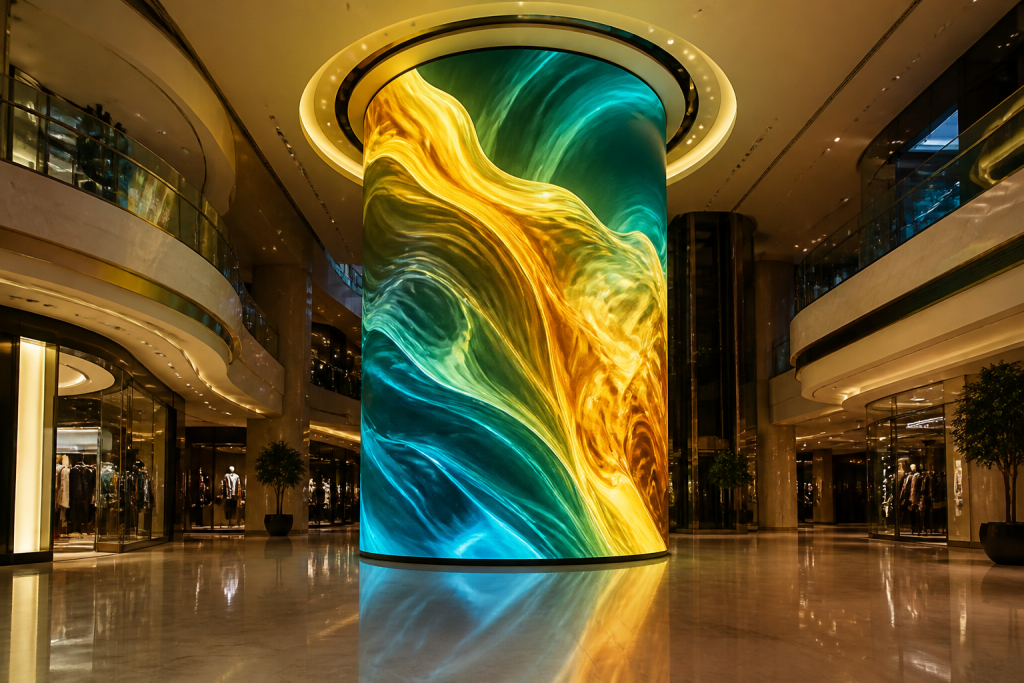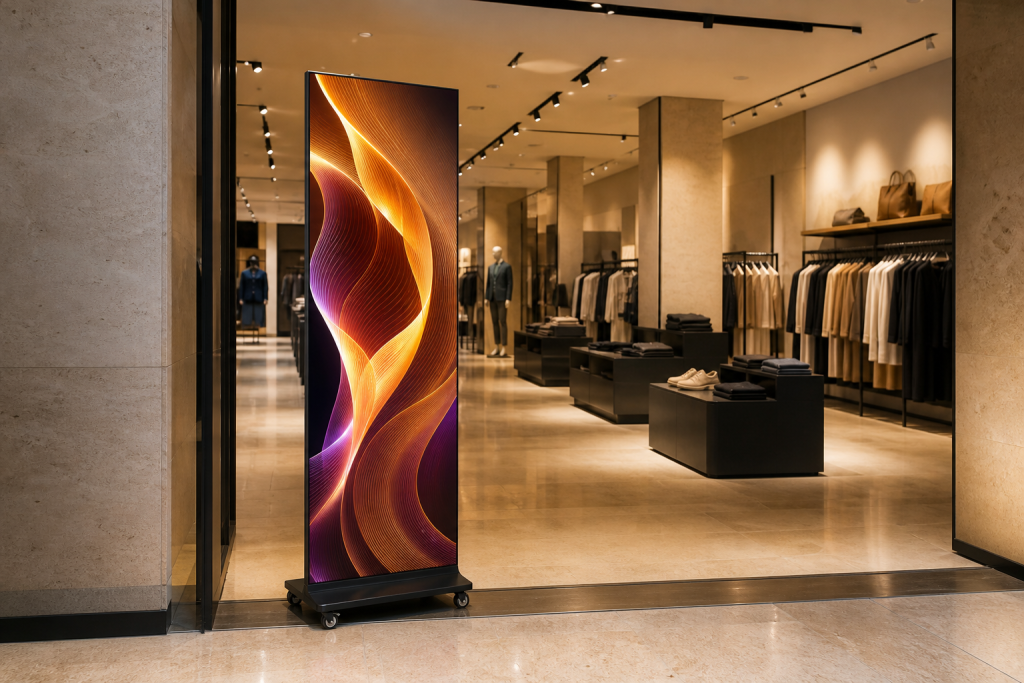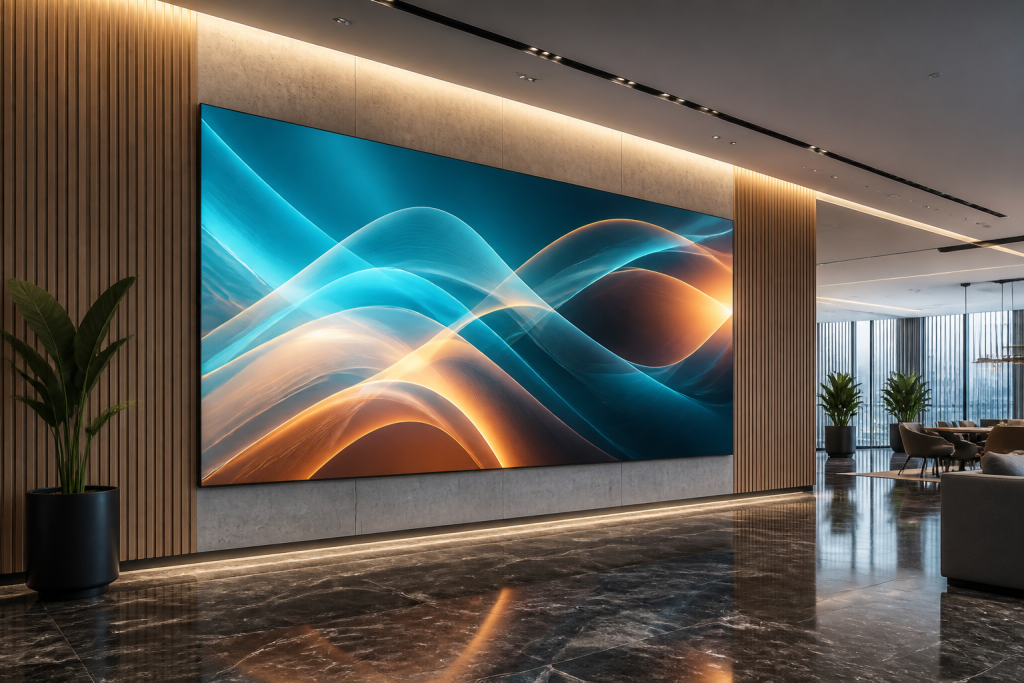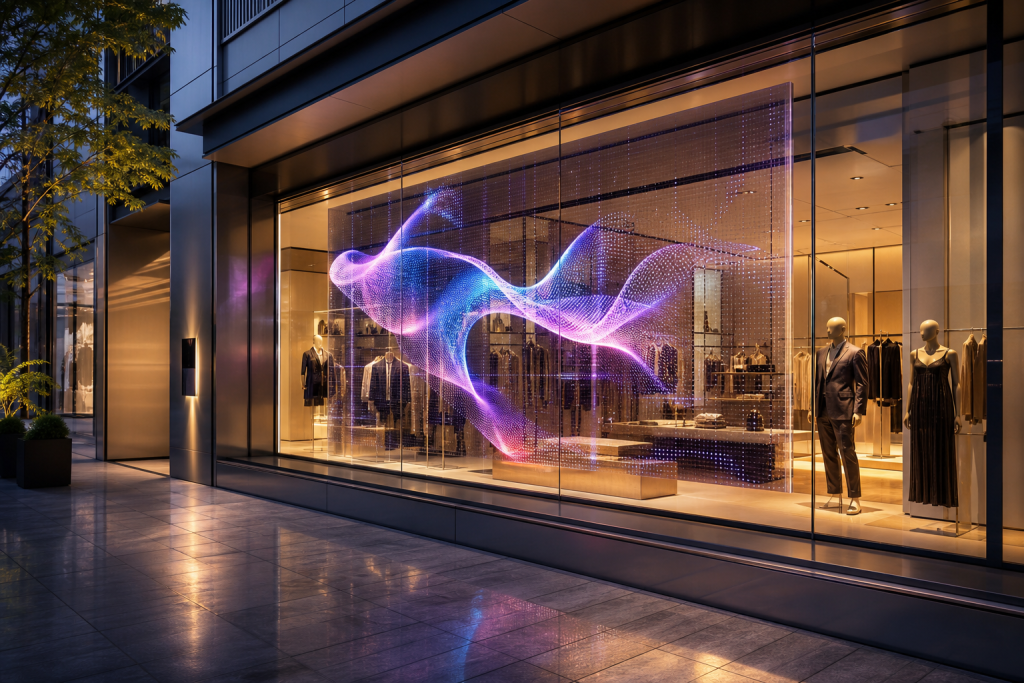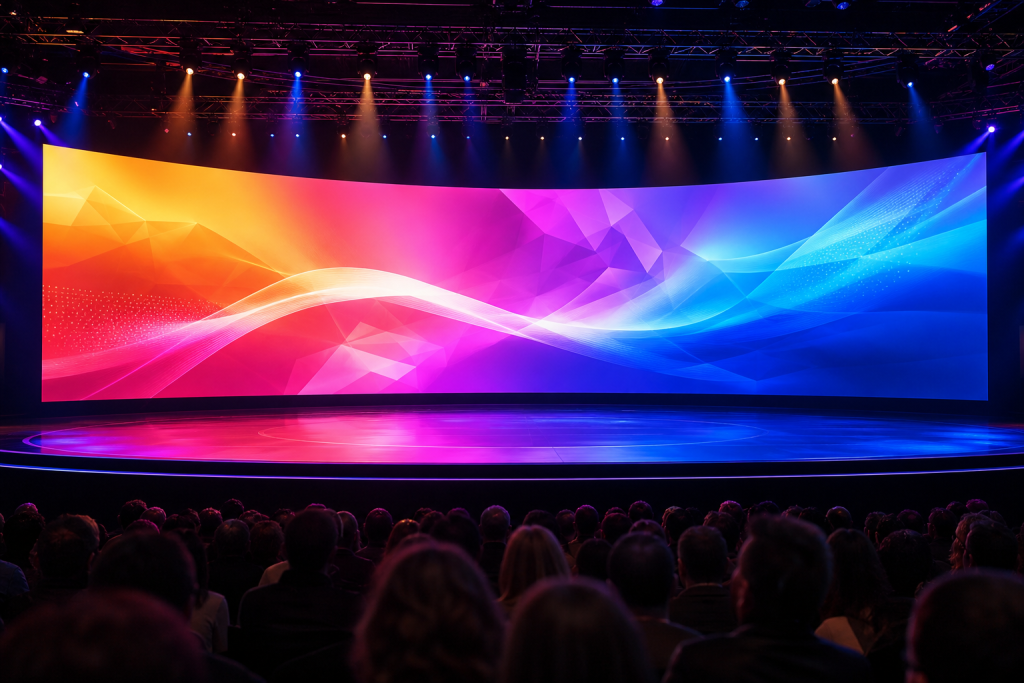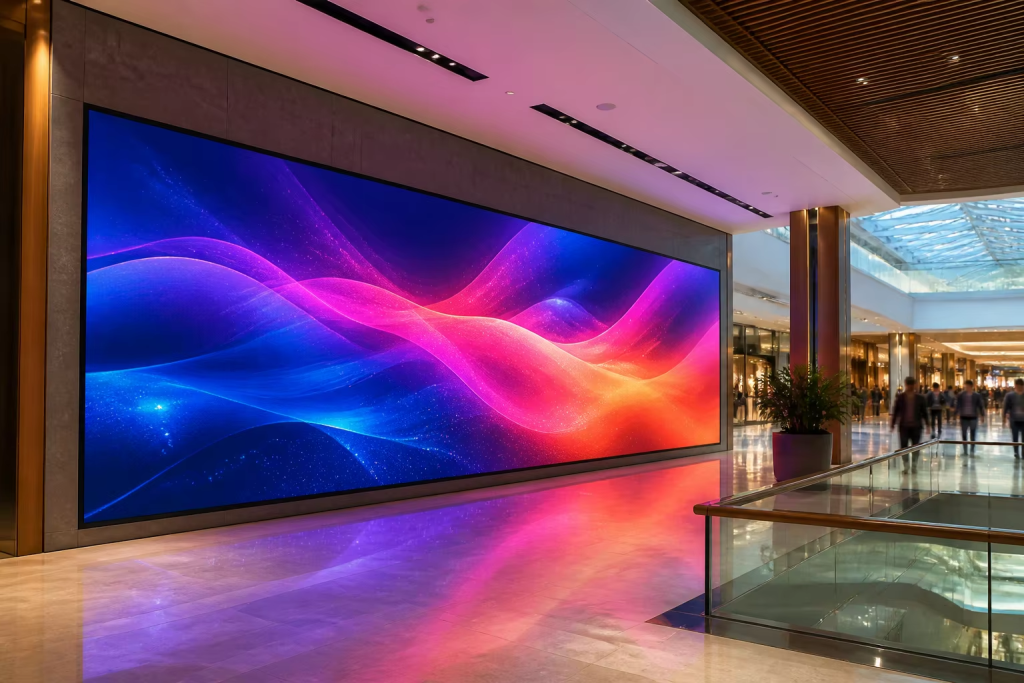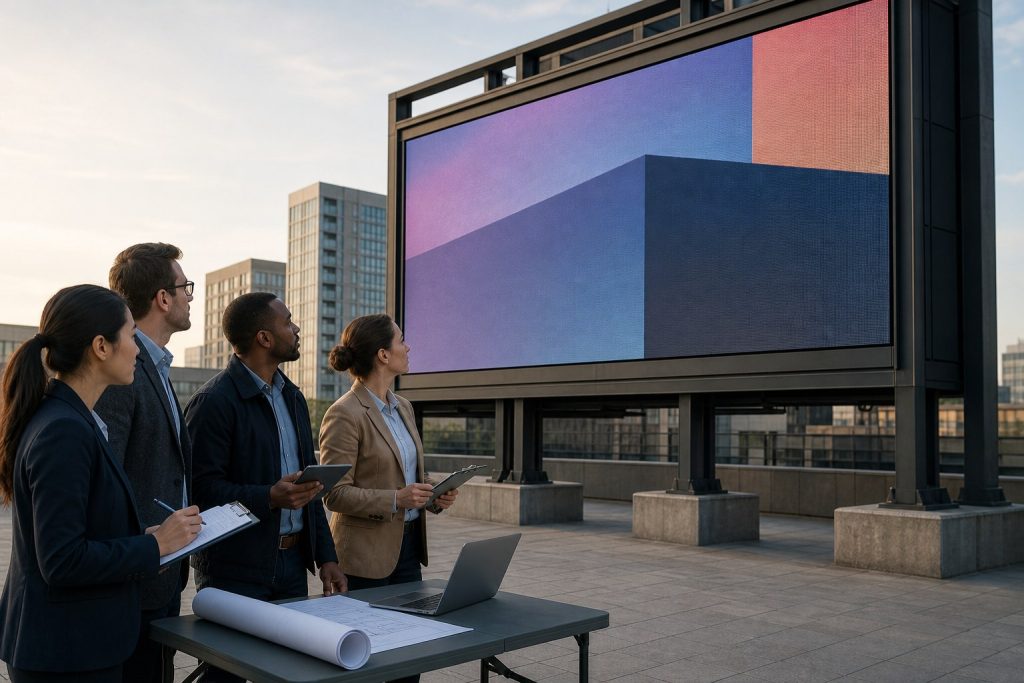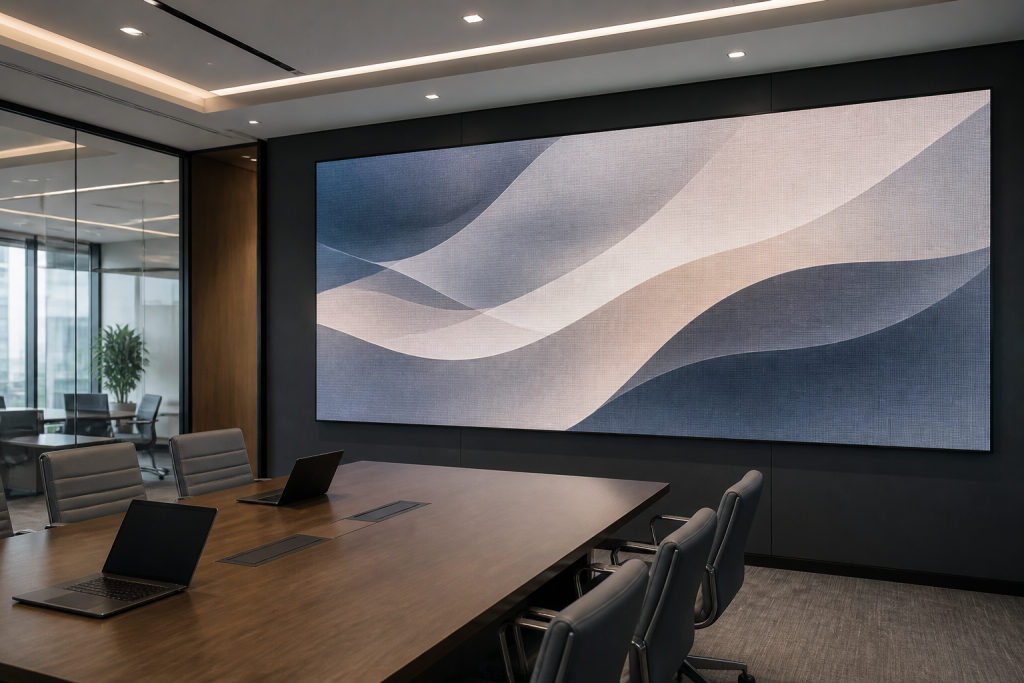
A conference room display should make presentations, data dashboards and video calls easy to see from every important seat. For many B2B buyers, the decision comes down to an indoor LED display vs an LCD video wall. Neither technology is automatically right for every room. The better choice depends on viewing distance, screen size, content, room lighting, installation conditions, maintenance access and project budget.
This guide compares the two solutions from a project-planning perspective. It is intended for distributors, system integrators, AV contractors, corporate buyers and display solution providers who need to recommend a practical system rather than simply select a panel specification.
What Is the Difference Between an Indoor LED Display and an LCD Video Wall?
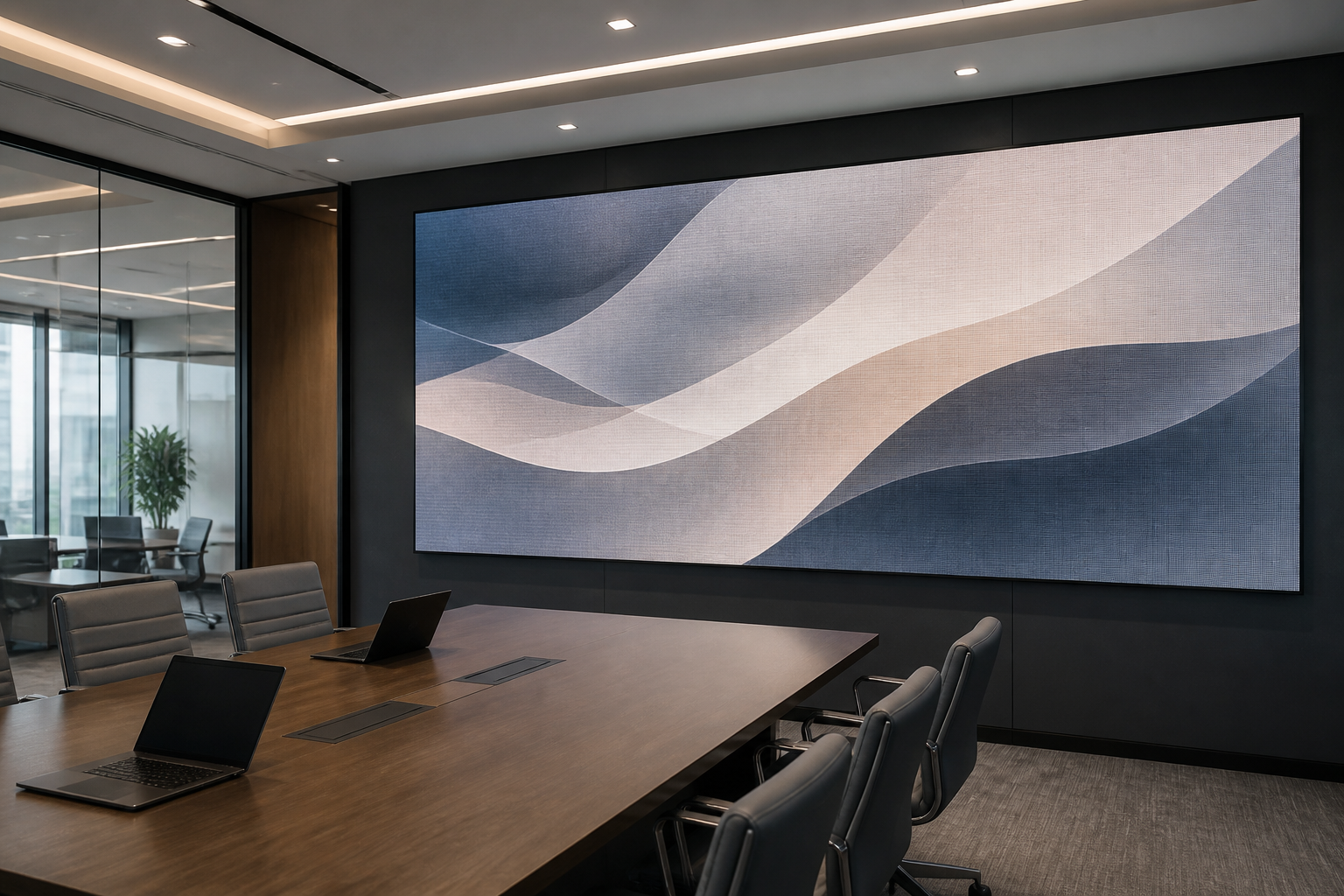
An indoor LED display is a modular direct-view display assembled from LED modules and cabinets. It can be built to a project-specific width and height, subject to the selected cabinet system and installation design. An LCD video wall uses multiple LCD panels arranged in a grid, usually with visible bezels between neighbouring panels.
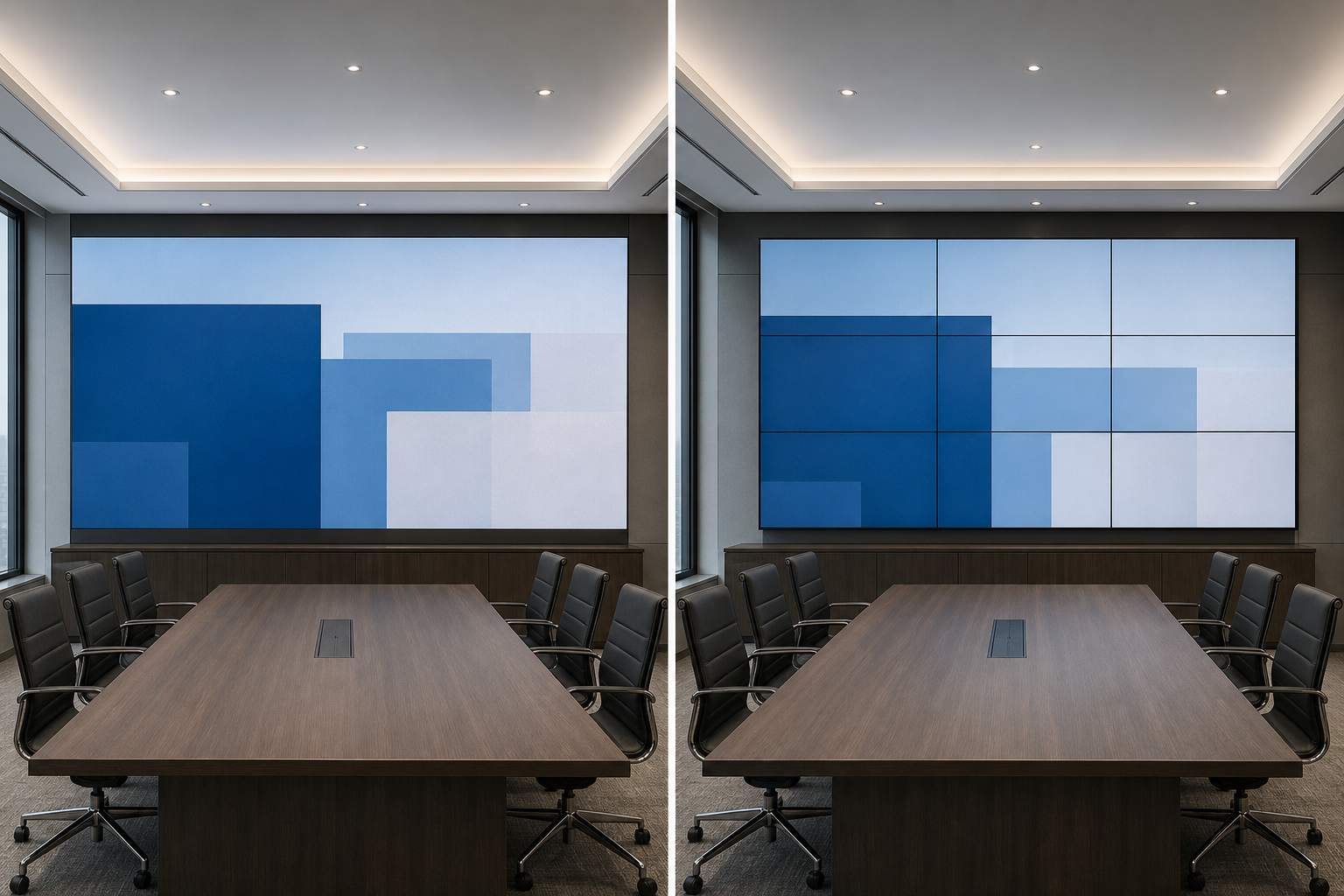
The most visible difference is the image canvas. A fine-pitch indoor LED display can create a continuous viewing surface without the grid lines associated with tiled LCD panels. An LCD video wall may offer a familiar panel-based workflow and can be practical for smaller, standard-format installations.
The technology choice should not be made from the word “seamless” alone. Buyers should also compare the actual viewing distance, required content detail, screen dimensions, maintenance plan, signal workflow and total installation scope. The most useful comparison is therefore a project brief that records the room layout, content priorities and support expectations before a supplier recommends a product. This keeps the discussion focused on suitability rather than on isolated headline specifications.
When Is an Indoor LED Display a Better Fit?
An indoor LED display can be a strong option when the project requires a large, continuous image surface or a custom screen format. It is often considered for boardrooms, executive briefing rooms, control rooms, auditoriums, corporate lobbies and multi-purpose collaboration spaces.
An indoor LED display may be worth evaluating when the project requires:
- A large screen without visible LCD panel bezels;
- A custom width-to-height ratio rather than a fixed panel grid;
- Detailed presentations viewed from relatively close distances;
- A clean architectural appearance across a broad wall;
- Front-service access because the rear of the wall is difficult to reach;
- A display that can support presentations, dashboards, video and conferencing content on one canvas.
Pixel pitch is central to this decision. Smaller pixel pitch can support closer viewing, but it may also increase the project cost. The right approach is to measure the nearest normal viewing position and evaluate the real content that participants need to read. Do not specify the smallest pitch available if the room layout does not require it.
USER’s public indoor small-pitch LED product page lists 0.93 mm, 1.25 mm, 1.56 mm and 1.87 mm options, along with front maintenance and indoor application information. The exact configuration, brightness, cabinet design and other specifications still need to be confirmed for the selected project model.
When Is an LCD Video Wall a Better Fit?
An LCD video wall can be suitable when the project uses a smaller or more standardized display area, when panel-based replacement is preferred, or when the content workflow is designed around several individual screens. It may also be considered when the procurement team has existing LCD infrastructure, compatible processors or a defined panel replacement process.
An LCD video wall may fit a project when:
- The display area is moderate and a standard panel layout is acceptable;
- The budget prioritizes a familiar panel-based solution;
- The team already has LCD maintenance and replacement procedures;
- The content can tolerate visible bezels between panels;
- Service access and panel replacement can be planned around the wall structure;
- The system integrator needs to use existing AV components and workflows.
The key point is not that LCD is a low-quality option. For some rooms, an LCD video wall may be a sensible and cost-conscious choice. The buyer should assess whether the visible bezels, fixed panel dimensions and replacement method are acceptable for the room’s purpose.
Indoor LED Display vs LCD Video Wall: Key Comparison Factors
1. Viewing Distance and Content Detail
Start with the front row, not the back wall. Participants may need to read spreadsheets, diagrams, subtitles, product designs or small interface elements. A fine-pitch LED solution can be considered when close viewing and a large seamless canvas are important. An LCD solution may be sufficient when the screen is smaller or the viewing distance is longer.
Test representative content before final approval. A slide with large text may look acceptable on both technologies, while a detailed dashboard or multi-window layout may reveal differences more clearly.
2. Bezels and Screen Geometry
LCD panels create a tiled layout. Even narrow bezels remain part of the viewing experience, especially when content crosses from one panel to another. Indoor LED displays are assembled from modules and cabinets, allowing more flexibility in overall dimensions and a continuous image surface.
However, the final LED geometry still depends on the cabinet format, module arrangement and installation design. Ask the supplier for a cabinet layout instead of assuming that every dimension can be produced without adjustment.
3. Room Lighting and Camera Use
Conference rooms often combine ceiling lights, windows and cameras. The display should remain readable without creating uncomfortable glare or excessive brightness. Refresh rate and image processing also deserve attention when meetings are recorded, streamed or captured by conferencing cameras.
Request a content test with the actual camera system when possible. A specification on paper cannot fully represent how a display will look in the finished room.
4. Installation and Maintenance
Compare the full installation scope, not only the display hardware. Review the wall structure, power distribution, data cabling, controller position, ventilation, access route and future service method.
USER’s indoor small-pitch product information describes front maintenance for the listed series. This can be useful where the display is close to a wall or integrated into an architectural finish, but buyers should confirm the maintenance method for the exact model and cabinet selected.
For LCD, confirm how panels can be removed, replaced and colour-matched over time. For LED, confirm spare modules, power supplies, receiving cards and calibration responsibilities. These details affect downtime and long-term project management.
How to Choose the Right Conference Room Display
Use the following process before requesting final quotations:
- Map the room. Record room dimensions, seating positions, the nearest and farthest viewing points, wall depth and maintenance access.
- Define the content. List presentations, spreadsheets, video calls, dashboards, video playback and any camera or broadcast requirements.
- Set the image target. Decide whether the project needs a continuous large canvas, a standard panel grid or a custom aspect ratio.
- Shortlist the technology. Compare an indoor LED display and LCD video wall using the same screen area and content examples.
- Request an itemized scope. Include panels or cabinets, controller, mounting, power, data, spare parts, installation, commissioning, shipping and support.
- Confirm the service plan. Ask who handles installation, testing, training, troubleshooting and replacement parts in the destination market.
- Approve a real content test. Review text, charts, video-conference faces and camera footage before mass production or final installation.
For distributors and OEM/ODM buyers, also confirm whether the manufacturer can support repeated cabinet configurations, documentation, packaging, labelling or other project-specific requirements. Any customization, minimum order condition or delivery commitment should be confirmed in writing before it is included in a customer proposal.
Frequently Asked Questions
Is an indoor LED display always better than an LCD video wall for a conference room?
No. An indoor LED display may be a better fit for a large seamless canvas, custom geometry or close-viewing application. An LCD video wall may be practical for a smaller standard layout or a project built around existing panel-based infrastructure. The right choice depends on the room and content.
What pixel pitch should a conference room LED display use?
There is no single answer for every room. Pixel pitch should be selected after measuring the nearest normal viewing distance and testing the content participants need to read. The exact recommendation should be confirmed by the supplier against the room drawings and selected product series.
Which solution is easier to maintain?
Maintenance depends on the design, access method, local support and spare-part plan. Ask for a written service procedure for both options. An indoor LED display may support module-level service, while an LCD wall uses panel-based replacement; the selected installation can change the practical experience.
Can an indoor LED display support video conferencing?
Yes, an indoor LED display can be used for presentations and video-conferencing content when the signal chain, image processing, camera position and screen configuration are planned correctly. Confirm the complete AV integration scope rather than evaluating the display in isolation.
Conclusion
The choice between an indoor LED display and an LCD video wall should be based on the room’s viewing distances, content, screen geometry, lighting, camera use, installation constraints and maintenance plan. Choose indoor LED when a large seamless canvas, flexible geometry or close-viewing performance is central to the project. Consider LCD when a standard panel layout and established panel-based workflow meet the room’s needs.
For a project quotation, prepare room drawings, viewing distances, content examples and installation requirements. You can review USER’s indoor LED display solutions and fine-pitch LED wall information before requesting a configuration review. For a broader budgeting framework, see the existing indoor LED display price guide.
CTA: Contact USER to discuss your conference-room dimensions, viewing distance, content workflow and indoor LED display requirements. The final product configuration and project scope should be confirmed before quotation and installation.
Sources