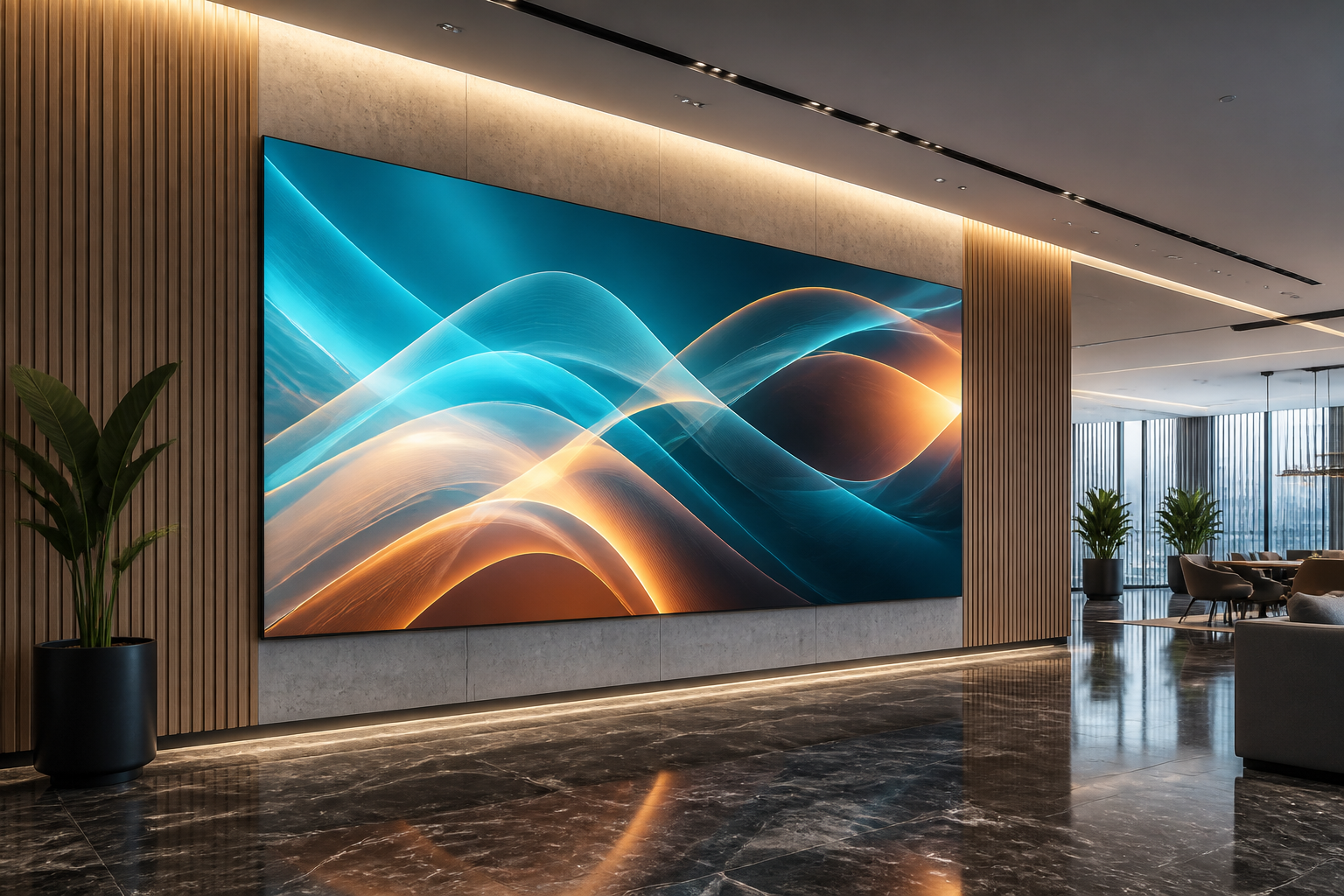
1. Introduction: Why Maintenance Access Defines Project Cost and Architecture
When evaluating commercial and indoor LED video walls, display buyers frequently focus on pixel pitch, brightness, and resolution. However, for project contractors, architects, and AV system integrators, the method of service access—specifically choosing a front service LED display versus a traditional rear-access cabinet—frequently determines total project feasibility, structural engineering costs, and ongoing operational overhead.
Traditional rear-maintenance LED video walls require dedicated walkways or rear service corridors (typically 600 mm to 1,000 mm of clearance behind the screen) to allow technicians to access power supplies, receiving cards, and ribbon cables. In modern commercial spaces—such as corporate boardrooms, retail storefronts, hotel lobbies, transit corridors, and control rooms—sacrificing square footage for a rear service corridor is either prohibitively expensive or structurally impossible.
A purpose-built front service LED display (also known as a front maintenance LED screen or front access LED video wall) solves this architectural challenge by allowing all LED modules, power supply units (PSUs), receiving cards, and internal cabling to be inspected, serviced, and replaced entirely from the front viewing side. This guide examines the engineering mechanics of front maintenance, provides an objective technical comparison with rear access, details key commercial use cases, and outlines practical procurement criteria for international B2B buyers.
2. Key Differences: Front Service vs. Rear Service LED Displays
Understanding the core differences between front access and rear access display architectures is critical during the initial engineering and architectural design phase of any fixed installation project:
| Feature Dimension | Front Service LED Display | Rear Service LED Display |
|---|---|---|
| Required Maintenance Space | Zero rear clearance required; mounts directly against walls | Requires 600 mm – 1,000 mm rear service space |
| Cabinet Total Depth | Ultra-slim profile (typically 40 mm – 80 mm total depth) | Thicker installation profile (often 150 mm – 200 mm + corridor) |
| Structural Frame Cost | Lightweight, direct-to-wall mounting brackets | Heavy custom steel catwalks and rear sub-structures |
| Module Replacement Method | Front vacuum suction tool or magnetic front-release tool | Screws and latches loosened from behind the cabinet |
| Average Module Swap Time | 20 to 60 seconds per module | 5 to 15 minutes (requires rear access entry) |
| Usable Floor Space Impact | Maximizes room floor area; zero wasted back space | Consumes usable indoor square footage for maintenance access |
| Core Application Suitability | Direct wall-mounts, recessed niches, pillars, retail showcases | Free-standing billboards, large stadium scoreboards, open trusses |
3. How Front Maintenance Works: Engineering and Extraction Mechanisms
Front maintenance LED screens utilize precision engineering to ensure seamless visual alignment while facilitating rapid mechanical extraction:
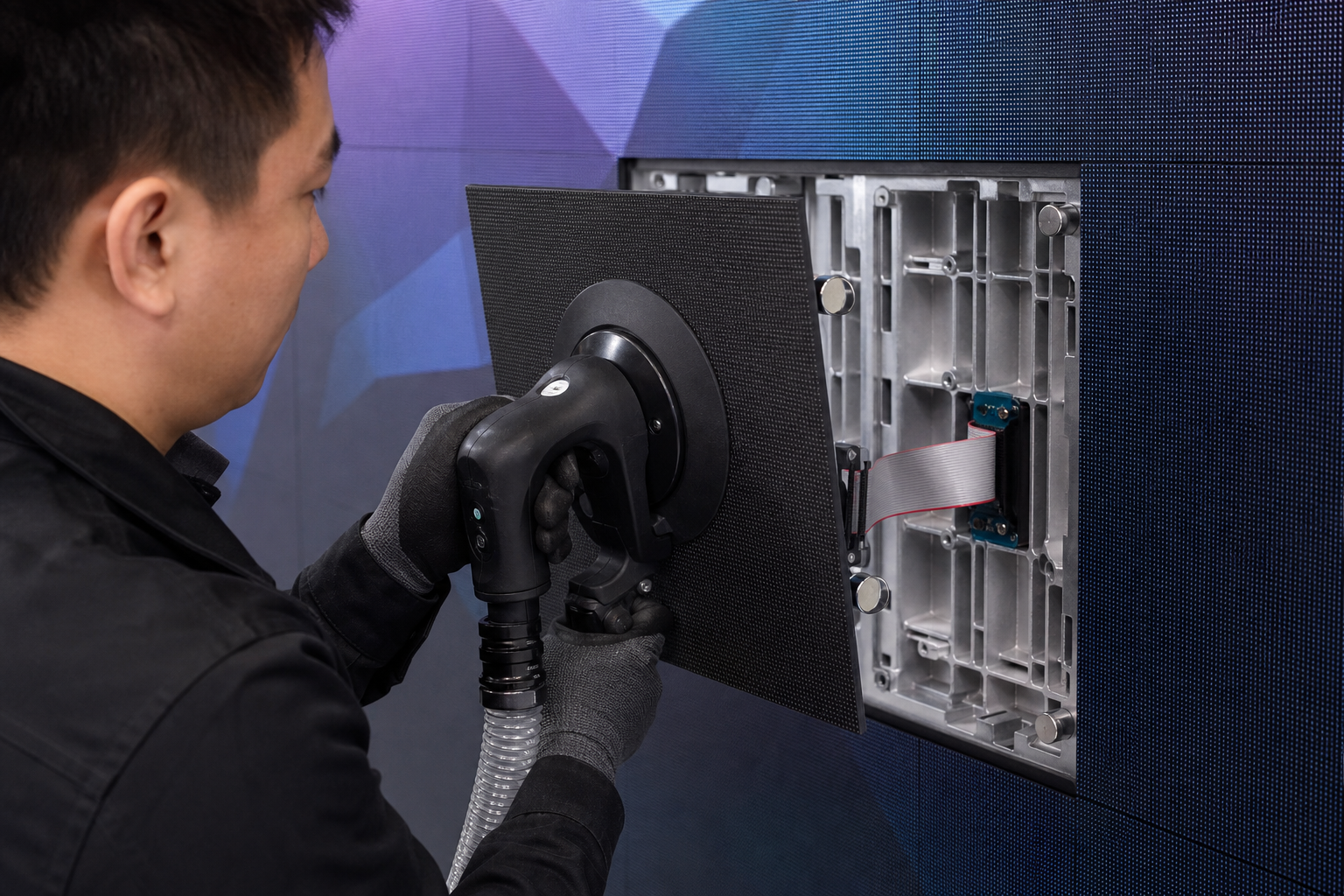
Magnetic Module Extraction with Vacuum Tools
For fine-pitch indoor LED displays (P1.25, P1.53, P1.86, P2.0, P2.5), LED modules are secured to precision die-cast aluminum or CNC-machined cabinets using high-strength neodymium magnets and locating positioning pins. Technicians use a dedicated electric or manual vacuum suction tool that adheres securely to the optical face of the module. Activating the vacuum allows the technician to pull the module forward smoothly in less than 30 seconds without applying uneven mechanical torque that could chip corner pixels or damage neighboring modules.
Front-Accessible Power Supplies and Receiving Cards
True full front maintenance requires that more than just the LED display modules be accessible from the front. Once the front modules are removed, the internal cabinet architecture reveals:
- Hot-swappable Power Supply Units (PSUs): Mounted directly behind the module matrix, secured with front-accessible thumbscrews or quick-release brackets.
- Hub Boards and Receiving Cards: Positioned for direct front removal and re-cabling without dismounting the entire display chassis from the wall.
- Internal Power and Data Jumpers: Pre-routed with accessible front-facing loops for rapid multimeter testing and diagnostics.
Outdoor Front-Maintenance Locking Mechanisms
For outdoor commercial installations (P3.91, P4.0, P5.0, P6.0, P8.0, P10), magnetic retention alone is insufficient due to wind shear and vibration. Outdoor front service displays utilize front-turn mechanical allen-key cam locks or front-hinged waterproof cabinet doors. Technicians insert a specialized hex key through subtle gaps in the front mask to unlock the module, swing the panel open, and service internal components while maintaining full IP65 ingress protection.
4. Key Commercial Benefits for System Integrators and Facility Managers
Investing in front maintenance LED display technology delivers measurable operational and financial returns across commercial installations:
- Massive Reduction in Structural and Construction Costs: By eliminating heavy rear steel framing, platforms, safety ladders, and rear access doors, project contractors can reduce sub-structure fabrication and installation labor costs by up to 40%–60%.
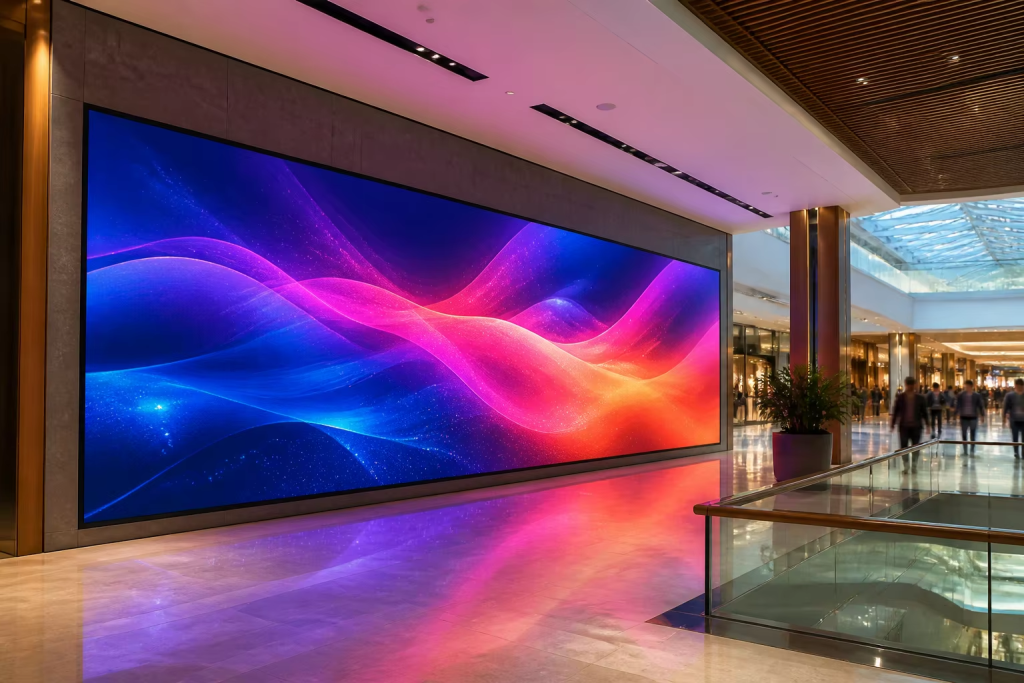
- Space Optimization in High-Value Real Estate: In premium retail stores, luxury shopping malls, and corporate headquarters, floor space commands high rental rates. Front service displays mount flat against existing plasterboard, concrete, or glass, preserving every square meter of usable interior space.
- Drastically Lower Downtime and Maintenance Labor: In live commercial environments like airport flight boards, retail flagships, and broadcast sets, screen outages must be resolved immediately. A technician can replace a damaged module or failed PSU directly from the floor with a portable vacuum tool in under two minutes, avoiding the disruption of closing corridors or entering restricted backrooms.
- ADA Compliance and Architectural Integration: Building codes (such as ADA standards in North America) frequently mandate that wall-mounted fixtures not protrude excessively into public pathways. Ultra-slim front service cabinets easily comply with thin-profile architectural mandates.
5. Primary Application Scenarios for Front Service LED Video Walls
Front access display systems are the engineering standard across spaces where rear access is structurally impractical:
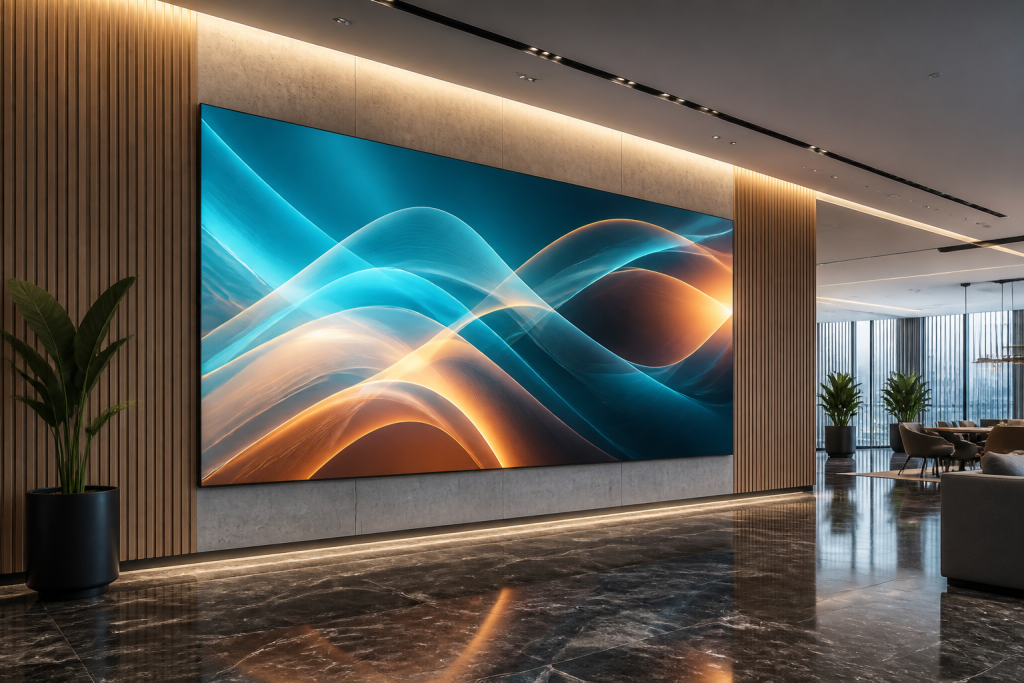
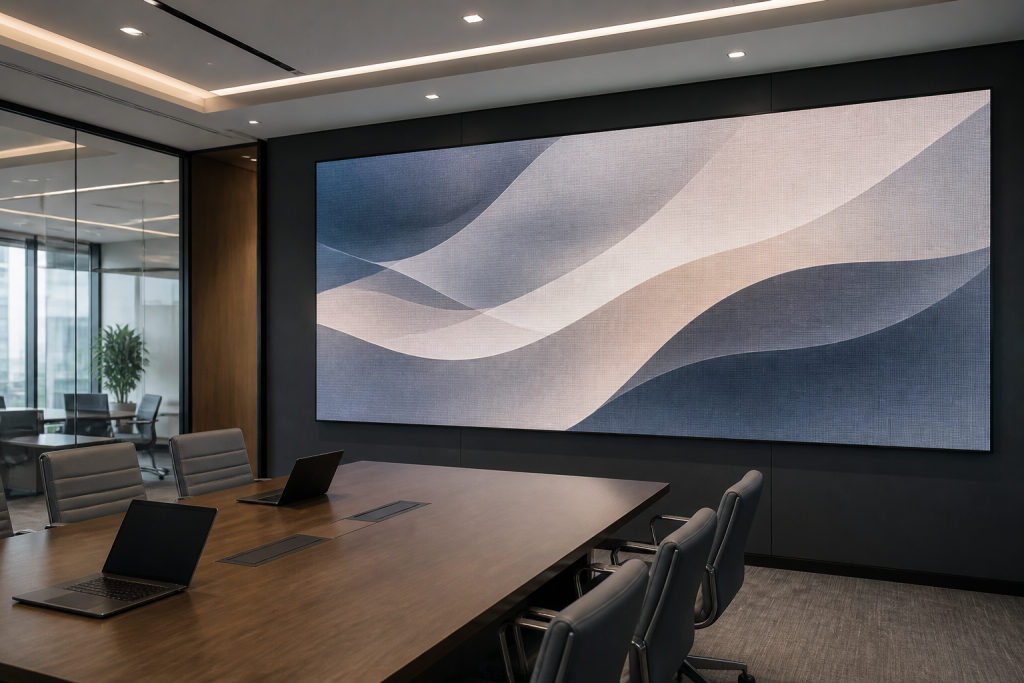
- Corporate Boardrooms and Executive Briefing Centers: Mounted flush against conference room drywall without requiring access into adjacent executive offices or service corridors.
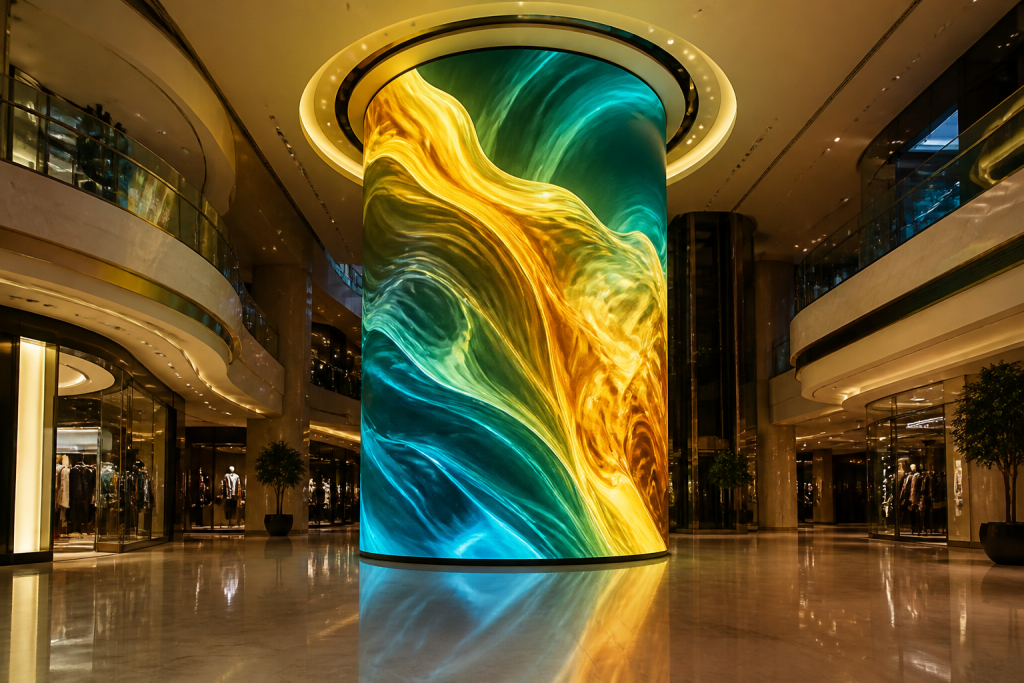
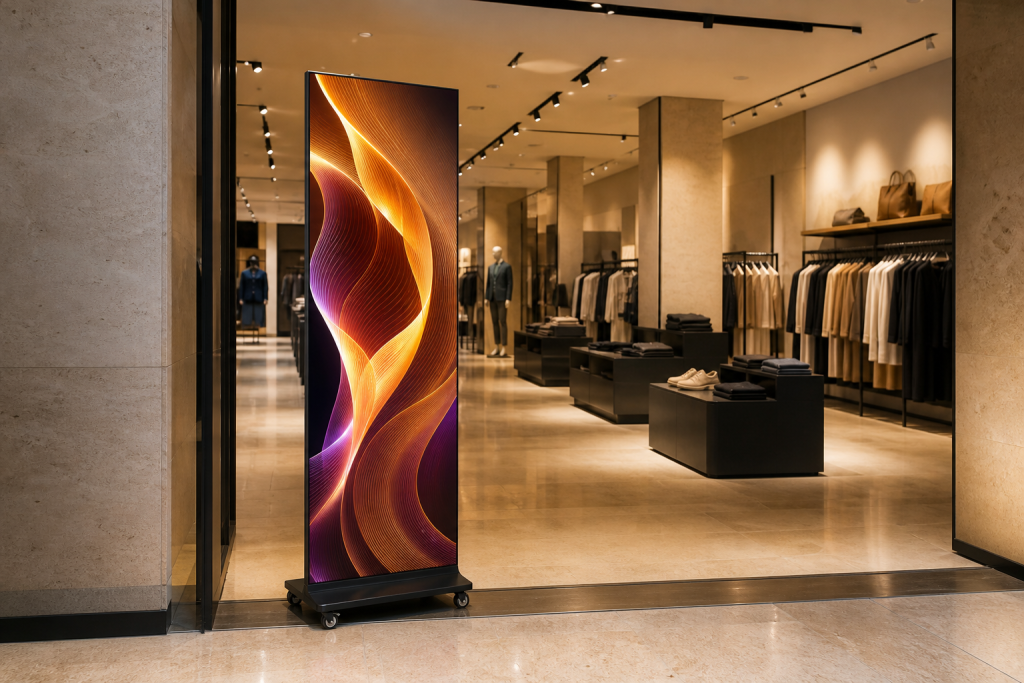
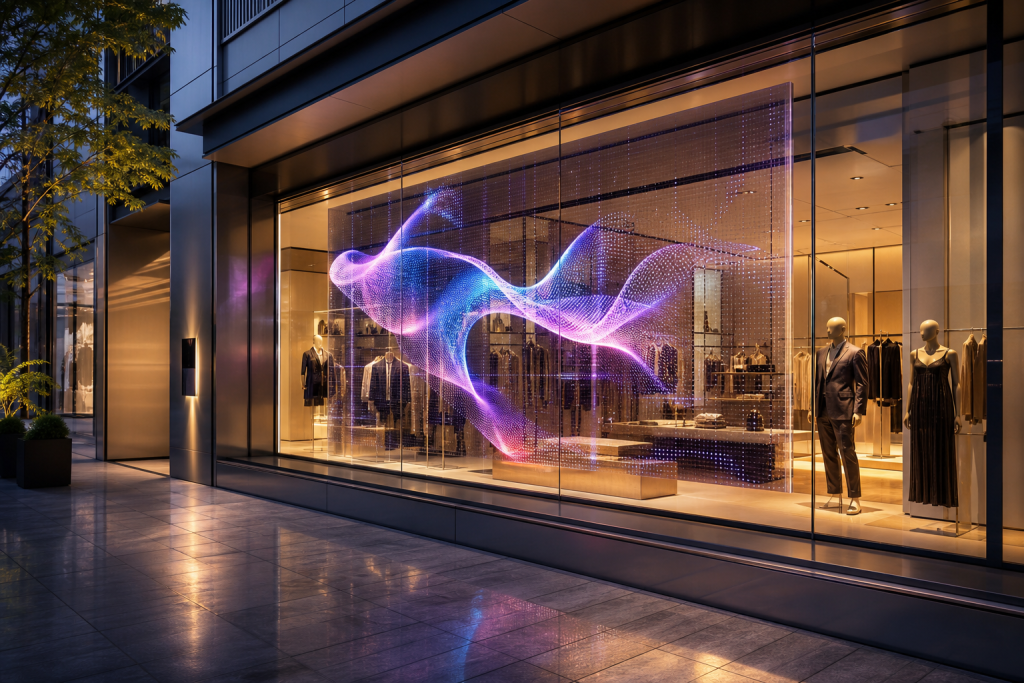
- Retail Storefronts and Department Stores: Positioned directly behind checkout counters, on interior structural columns, or inside window showcase niches where rear space is occupied by stockrooms or structural walls.
- Airport, Rail, and Transit Passenger Information Displays (PIDS): Mounted against busy concourse walls where servicing from behind would disrupt secure airport operations or require cutting into transit infrastructure.
- Broadcast Studios and Control Command Centers: Recessed into custom curved set cabinetry or control console walls where technicians require immediate front-side access without disrupting 24/7 mission-critical operations.
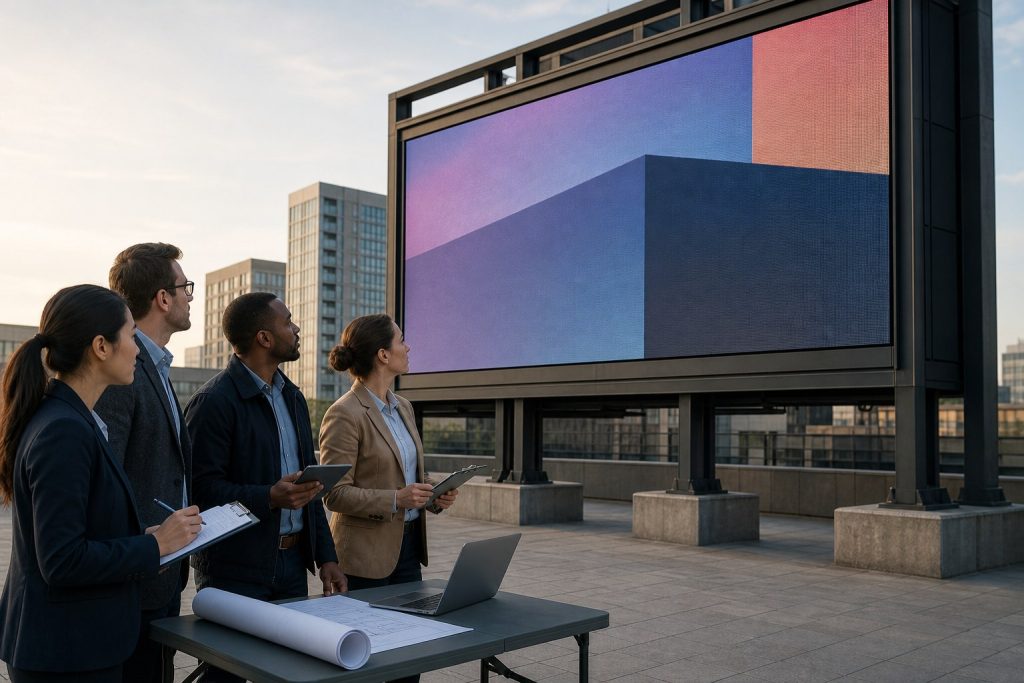
- Outdoor Wall-Mounted Commercial Billboards: Fixed directly onto the concrete facade of commercial shopping centers or multi-story buildings where creating rear catwalks is prohibited by municipal zoning or facade weight limits.
6. How to Choose the Right Front Service LED Display: B2B Procurement Criteria
When preparing an RFQ or comparing manufacturer specifications for front maintenance LED projects, global B2B buyers should evaluate the following technical parameters:
- Module Flatness and Precision CNC Machining: Front magnetic modules rely on precision cabinet contact. Ensure the manufacturer utilizes die-cast aluminum cabinets with CNC tolerances within ±0.1 mm to prevent module seam gaps or uneven edges.
- True Full-Front vs. Module-Only Front Service: Verify whether the PSUs, receiving cards, and power distribution boards are 100% serviceable from the front. Some low-cost displays only offer front module extraction, still requiring rear access to replace a failed power supply.
- Thermal Management and Front Heat Dissipation: Because front service video walls are mounted flush against building walls with limited rear air circulation, evaluate cabinet thermal conductivity. Look for efficient aluminum heat sinks and low-heat IC drivers to ensure long LED diode lifespan.
- Tool Compatibility and Anti-Collision Protection: Confirm that the manufacturer provides industrial-grade electric vacuum extraction tools and that modules incorporate GOB (Glue-on-Board) surface encapsulation or 4-corner mechanical protectors if installed in high-traffic public areas.
- Spare Parts Batching (Calibration and Binning): Ensure the supplier provides 3%–5% spare modules, PSUs, and receiving cards manufactured from the exact same LED diode bin and batch to ensure 100% color and brightness uniformity during future module replacements.
7. Frequently Asked Questions (FAQ)
Q1: Are front service LED displays as flat and seamless as rear service displays?
Yes. High-quality front service LED displays utilize high-precision locating pins and precision-machined die-cast aluminum cabinets. When installed correctly by experienced technicians, front-magnetic modules align seamlessly with zero visible panel gaps, matching the visual planarity of traditional rear-bolted screens.
Q2: What tools are required to remove a front service LED module?
For indoor magnetic front service displays, a dedicated handheld electric or manual vacuum suction extraction tool is used. For outdoor front service cabinets, a specialized front-access T-handle hex key is used to unlock the mechanical cam locks located on the front face of the module.
Q3: Can a front service LED display be mounted directly onto drywall or timber stud walls?
Yes. Because front service cabinets are lightweight and do not require rear access corridors, they can be mounted directly onto standard structural wall studs, concrete masonry, or unistrut channels using slim-profile wall brackets. Always verify wall load-bearing capacity with project structural engineers.
Q4: Are outdoor front service LED displays fully waterproof?
Yes. Outdoor front maintenance cabinets feature individual module silicone sealing gaskets and IP65-rated front module enclosures, ensuring complete protection against heavy rain, dust, and environmental humidity.
8. Conclusion and Sourcing with USER SDT
Choosing a front service LED display eliminates expensive structural framing, saves valuable interior commercial space, and enables effortless front-side maintenance. Whether you are outfitting an executive corporate boardroom with fine-pitch P1.53/P1.86 video walls or installing an outdoor P4/P5 front-maintenance commercial billboard, front access engineering delivers superior long-term project ROI.
As a dedicated Shenzhen LED display manufacturer with over 15 years of OEM/ODM engineering expertise, USER SDT designs and manufactures comprehensive front-maintenance indoor and outdoor LED display solutions tailored for global distributors, AV system integrators, and project contractors.
- Explore Our Front Service Products: Inquire about our high-precision P1.25–P2.5 indoor front-access video walls and IP65 outdoor front-maintenance commercial display series.
- Custom OEM/ODM Engineering: Receive customized cabinet dimensions, direct wall-mount brackets, power redundancy options, and complete vacuum extraction toolkits.
Contact our engineering and sales team today to request technical drawings, project quotes, and product specifications for your next installation:
- Website: USER SDT Official Site
- Email: jacky@usersdt.com
- WhatsApp: +86 18923710941