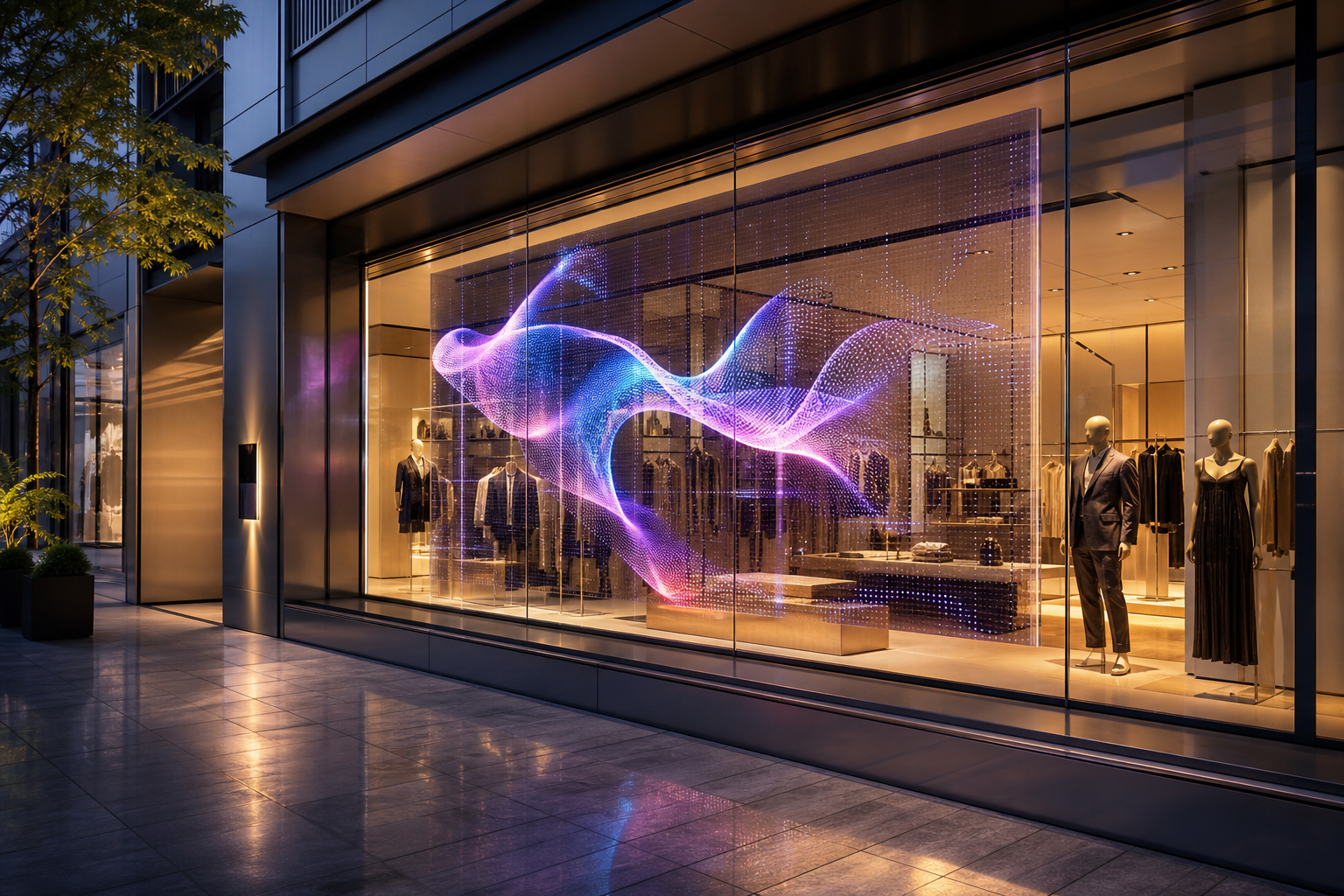
Modern commercial architecture and high-end retail environments increasingly rely on expansive glass storefronts and curtain walls to attract pedestrian traffic and create open, light-filled interior spaces. However, standard traditional LED video walls, when placed behind storefront glass, act as solid opaque barriers—completely blocking incoming natural daylight, obscuring interior merchandising, and obstructing sightlines.
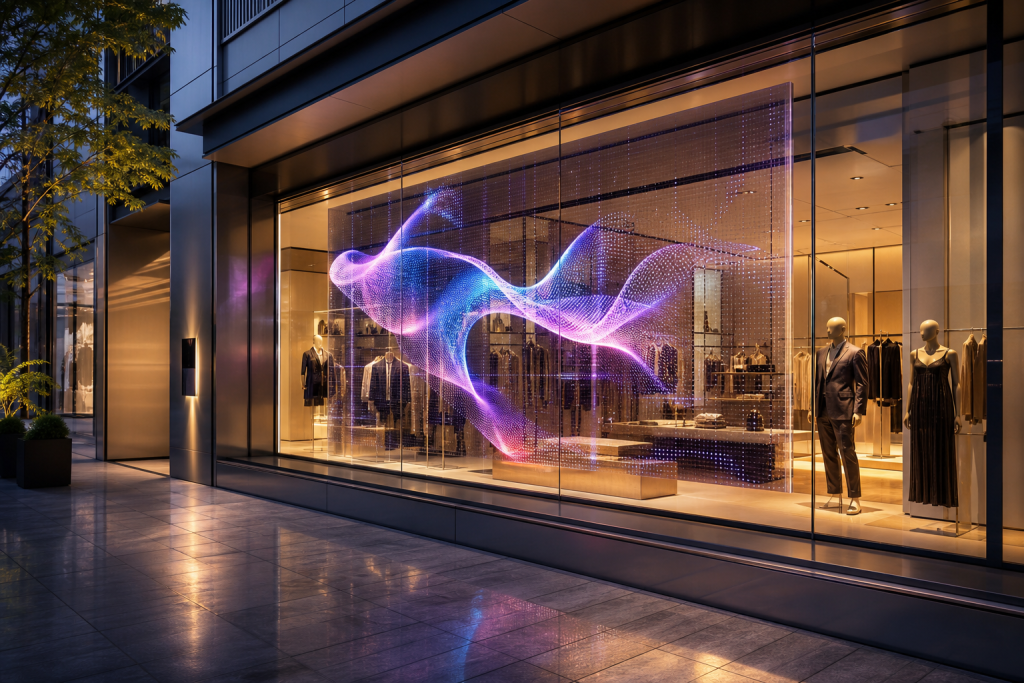
To resolve this aesthetic and commercial conflict, transparent LED displays have emerged as the premier architectural digital signage solution. Offering transparency rates ranging from 80% to 95%, these lightweight, high-brightness visual systems turn standard architectural glass into dynamic, floating digital advertising surfaces without sacrificing natural light or interior store visibility.
For overseas commercial display distributors, retail store designers, architects, and audio-visual (AV) system integrators, selecting the ideal transparent LED display requires careful evaluation of transparency ratios, daylight viewing brightness, pixel pitch tradeoffs, structural mounting methods, and thermal management. This B2B buyer’s guide breaks down the essential technical considerations and engineering specifications needed to make informed procurement decisions.
1. What Is a Transparent LED Display and How Does It Work?
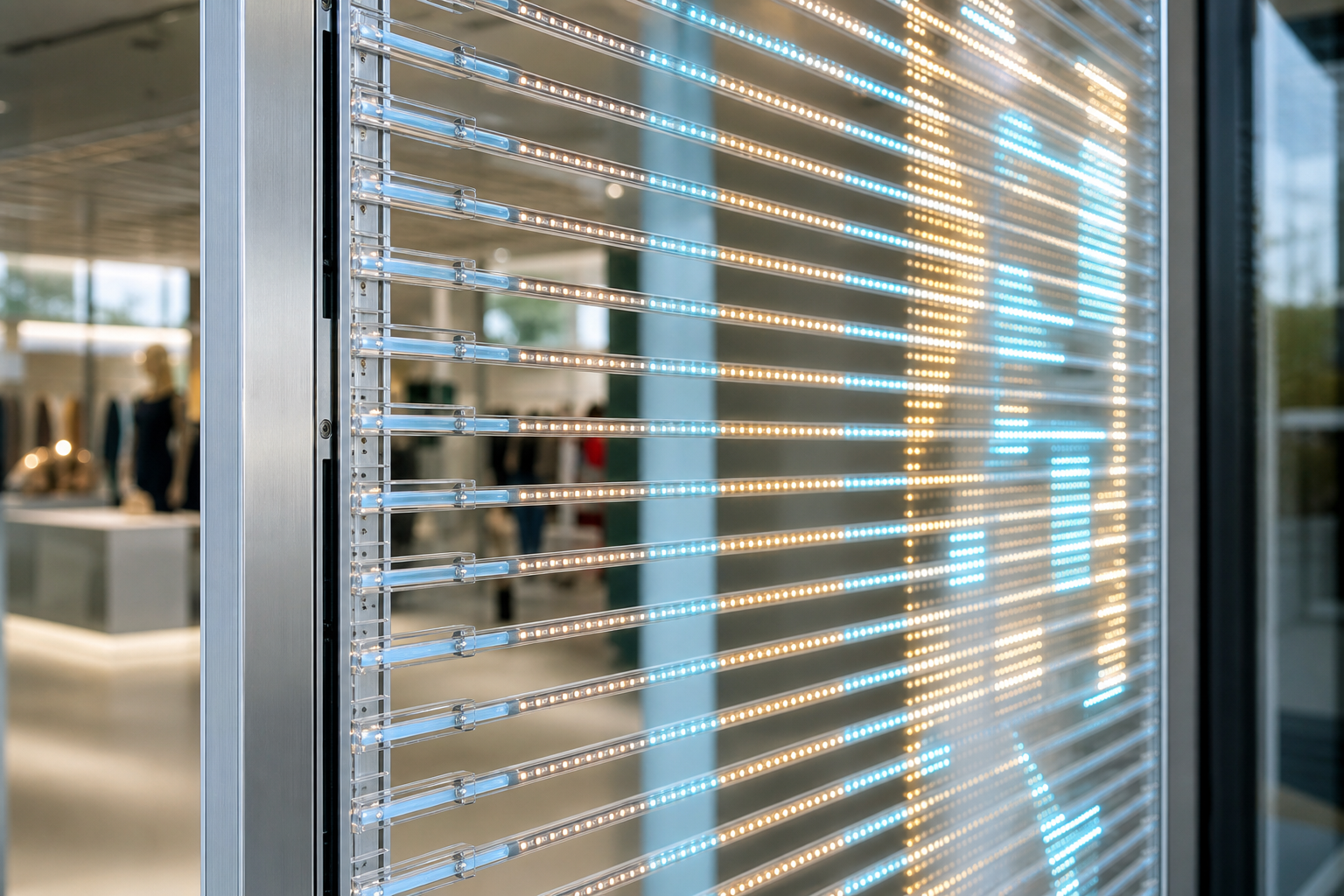
A transparent LED display is an advanced digital video wall constructed using ultra-thin horizontal LED light bars, hollowed-out aluminum profile frames, or micro-embedded transparent PCB/film substrates. By maximizing the physical spacing between the illuminated pixel strips, the screen allows light to pass through unobstructed while still presenting high-contrast, full-color dynamic video content.
When viewing content with a black background, the dark pixels effectively turn off, rendering those areas completely transparent to the human eye. This creates an eye-catching “holographic” or floating 3D visual effect where graphics and product animations appear to suspend seamlessly in mid-air within the retail window.
Key structural and technical characteristics include:
- High Optical Transmittance: Typically between 75% and 95% transparency, ensuring interior showrooms remain bright and fully visible from the street.
- Ultra-Slim and Lightweight Profile: Modern transparent LED cabinets weigh significantly less than conventional cabinets (often only 6 kg to 10 kg per square meter), eliminating the need for heavy structural reinforcement behind window mullions.
- High Daylight Brightness: Operating at brightness levels between 2,500 nits and 5,500 nits to cut through direct midday sunlight and glass surface reflections.
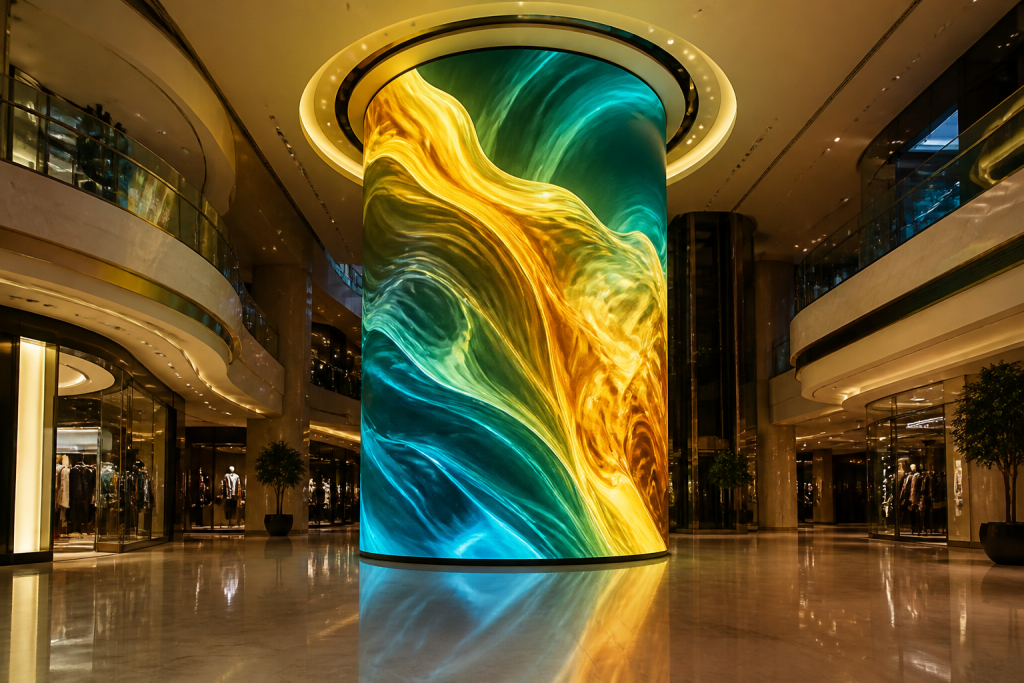
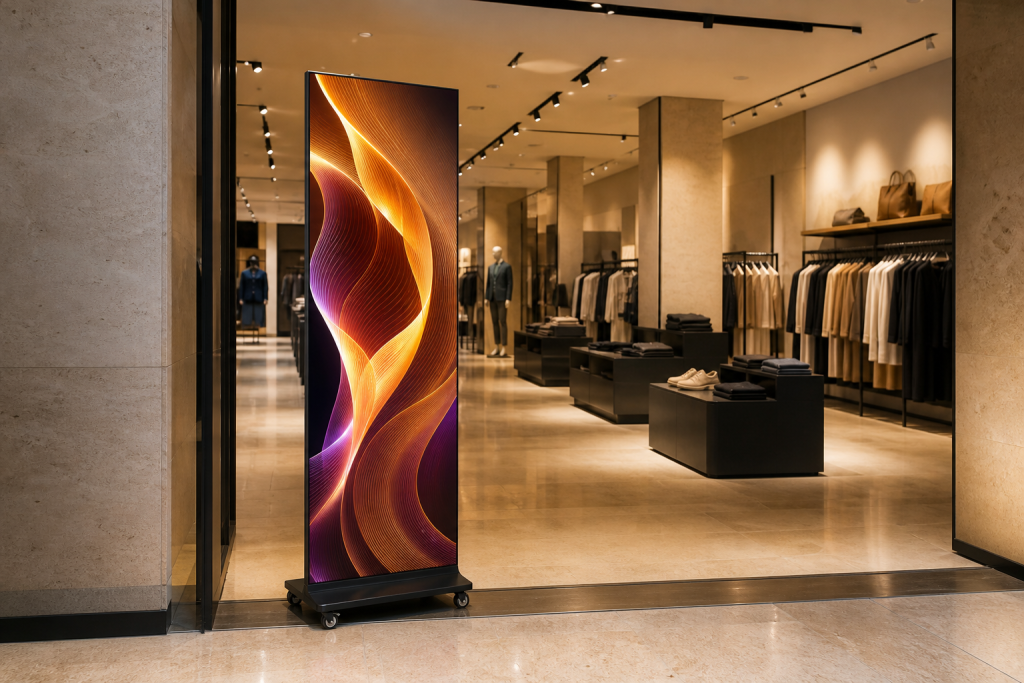
- Flexible Form Factors: Available as rigid modular cabinets, curved arc-shaped displays, foldable portable poster units, and ultra-flexible adhesive LED transparent films.
2. Key Benefits of Transparent LED Screens for Commercial Spaces
Deploying transparent LED displays behind commercial glass facades and retail storefronts delivers distinct commercial, architectural, and operational advantages:
- Preservation of Natural Ambient Light: Unlike opaque video walls, transparent screens do not block daylight from entering interior retail floors or corporate lobbies, preserving architectural aesthetics and maintaining a welcoming, open ambiance.
- Preserved Sightlines and Double-Sided Visibility: Pedestrians can view high-impact promotional advertising from the street while still seeing physical product displays and merchandise arrangements inside the showroom.
- Unrestricted Urban Planning Compliance: Many international cities and heritage commercial zones enforce strict outdoor billboard regulations that prohibit opaque screens on building exteriors. Transparent LED displays installed on the interior side of glass windows generally comply with municipal advertising codes while delivering outdoor-facing impact.
- Simplified Installation and Lower Structural Costs: Because transparent cabinets feature hollow, low-wind-resistance structures with minimal dead load, they can be suspended from ceiling trusses or mounted directly along existing window frames without heavy steel substructures.
3. Critical Technical Factors to Evaluate Before Purchasing
Selecting the right transparent LED screen configuration requires matching technical hardware parameters to specific ambient lighting conditions and architectural viewing distances.
Balancing Pixel Pitch and Transmittance Rates
In transparent display engineering, pixel pitch and optical transparency are directly interrelated:
- Fine Pixel Pitch (P2.5 to P3.91mm): Provides superior image resolution and crisp graphic details suitable for close-range retail viewing (2 to 5 meters). Transparency typically ranges from 70% to 80%. Ideal for luxury boutiques, cosmetics counters, and shopping mall interior atrium railings.
- Medium Pixel Pitch (P3.91/P6.25mm to P7.8mm): The industry standard for medium-to-large retail windows and car dealerships. Delivers an optimal balance of sharp visual impact from 5 to 10 meters away with high optical transparency of 80% to 88%.
- Large Pixel Pitch (P10mm to P16mm): Designed for large architectural glass curtain walls and building facades viewed from 15+ meters across major plazas or highways. Offers maximum transparency (85% to 95%) and minimal structural weight.
Brightness Selection for Direct Sunlight vs. Shaded Windows
Because transparent displays are frequently positioned directly behind glass facing the exterior street, calculating ambient solar lux is crucial:
- Indoor / Shaded Glass (1,500 to 2,500 nits): Suitable for glass windows inside covered shopping malls, subway retail concourses, or storefronts protected by deep architectural awnings.
- Direct Sunlight Exposure (3,500 to 5,500+ nits): Required for exterior-facing street windows subjected to direct midday sunlight and glass glare. High-brightness Nichia or Nationstar pure black/gold-wire SMDs ensure content remains vivid and readable even under strong ambient light.
Cabinet Engineering, Folding Mechanisms, and Form Factors
Depending on the permanence of the project, commercial buyers can select between several distinct hardware form factors:
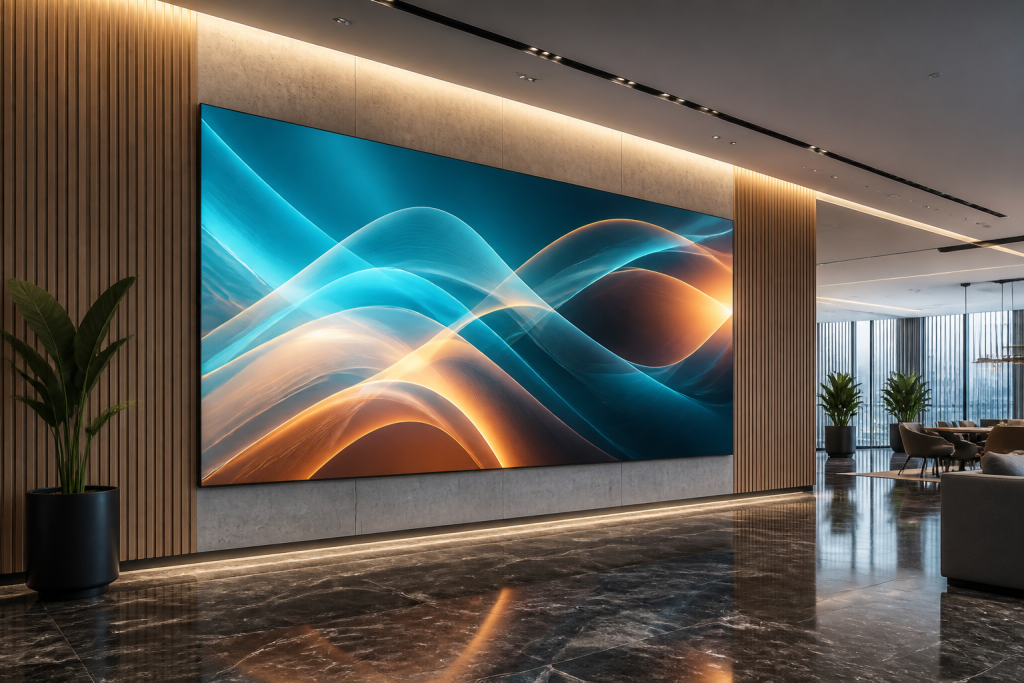
- Modular Rigid Aluminum Cabinets (e.g., 500×1000mm or 750×1500mm): Engineered from precision aluminum profiles for permanent architectural video walls, offering fast inter-cabinet locking and seamless flat splicing.
- Foldable & Portable Hologram Poster Displays: Standalone plug-and-play units equipped with integrated lockable caster bases, tool-free folding frames, and Wi-Fi/Cloud content management for rapid redeployment across retail chains, trade shows, and pop-up events.
- Flexible Adhesive Transparent LED Film: Ultra-thin transparent polymer film screens that adhere directly onto existing glass surfaces without structural frames, ideal for curved glass partitions and architectural elevator shafts.
4. Primary Commercial Application Scenarios
Transparent LED displays are transforming customer engagement across high-value commercial sectors:
- Flagship Retail and Fashion Boutiques: Dynamic window backdrops displaying seasonal runway videos and branding campaigns while allowing passersby to see physical mannequin displays.
- Automotive 4S Dealerships and Showrooms: High-luminance street-facing video walls showcasing new vehicle performance footage without blocking natural light over showroom vehicles.
- Shopping Mall Atriums and Glass Railings: Suspended transparent LED video cubes and balustrade displays that broadcast sponsor advertisements without obstructing sightlines across multi-tier retail levels.
- Corporate Headquarter Glass Facades: Sleek digital media facades integrated into modern glass curtain walls for corporate identity broadcasting and architectural night illumination.
- Bank Branches, Airports, and Transit Terminals: Public information and promotional displays integrated into security glass and departure lounge windows.
5. Maintenance, Serviceability, and Long-Term Reliability
Ensuring long-term operational uptime and low maintenance costs requires robust component selection and service-friendly mechanical design:
| Maintenance Feature | Technical Requirement | B2B Value & Impact |
|---|---|---|
| Front or Rear Strip Replacement | Snap-in modular light strips with quick-disconnect connectors. | Allows technical crews to replace an individual LED bar in under 2 minutes without removing the entire cabinet. |
| Integrated Cable Concealment | Internal power and data routing through cabinet side-profiles. | Keeps transparent glass installations visually clean from both the street and the interior store floor. |
| Efficient Heat Dissipation | Hollow structural design with passive aluminum heat convection. | Eliminates noisy cooling fans, ensuring silent operation in quiet luxury retail and corporate environments. |
| Encapsulation Protection (GOB / Glue Coating) | Optical epoxy or silicone conformal coating on LED chips. | Shields delicate micro-LEDs from physical impact, dust accumulation, and cleaning chemical contact. |
6. Factory Excellence and OEM/ODM Customization Capabilities
For overseas LED display distributors, retail branding agencies, and commercial project contractors, sourcing directly from an experienced Shenzhen manufacturing partner ensures competitive pricing, stringent quality control, and tailor-made engineering support.
Manufacturers like USER SDT engineer high-transmittance transparent LED displays—including rigid transparent video walls, flexible curved film displays, and high-transmittance foldable hologram poster screens (e.g., P3.91/P6.25 models achieving 80% to 95% transparency and brightness up to 2,500–5,500 nits). Leveraging automated SMT production, advanced optical binning, and strict 72-hour aging stress tests, factory-direct partners provide the build consistency required for multi-store retail rollouts.
Whether your project requires custom-dimensioned cabinet frames to match existing window mullions, specialized ceiling suspension brackets, synchronized multi-screen cloud content controllers, or dedicated OEM/ODM branding, direct manufacturer collaboration guarantees long-term technical support and spare part availability.
7. Frequently Asked Questions (FAQ)
Can a transparent LED display be clearly seen under direct outdoor sunlight?
Yes, provided you specify a screen with adequate luminance. For storefront windows exposed to direct sunlight, a minimum brightness of 3,500 to 5,000 nits is recommended to overpower ambient daylight reflections and maintain vibrant contrast.
How is content designed for a transparent LED screen?
To maximize the floating holographic visual effect, video content should be produced with a solid pure black background. The transparent LED controller automatically turns off black pixels, allowing the background glass to remain transparent while colored graphics and animations appear to float.
Can transparent LED displays be installed on curved glass surfaces?
Yes. Flexible transparent LED screens and soft adhesive LED films can adapt to curved architectural glass surfaces, cylindrical shopping mall columns, and custom architectural contours.
How difficult is it to maintain a transparent LED video wall?
Professional transparent LED cabinets utilize modular horizontal light bars. If a pixel fails, technicians can replace an individual light strip from the front or rear in minutes using standard tools, avoiding the cost and downtime of replacing entire cabinet frames.
Conclusion & Next Steps for Your Commercial Project
Transparent LED displays represent the perfect fusion of architectural aesthetics and high-impact digital advertising. By selecting the optimal balance of transparency, daylight brightness, pixel pitch, and modular maintenance, commercial buyers can transform ordinary glass storefronts into high-converting visual landmarks.
If you are planning a retail window upgrade, architectural facade project, or expanding your digital signage product catalogue, contact the USER SDT engineering team to receive customized CAD layout drawings, optical sample evaluation units, and factory-direct commercial quotations.
Sources & References
- USER SDT High Transmittance Foldable Transparent LED Display
- USER SDT Flexible Curved Transparent LED Display Guide
- USER SDT LED Screen Catalogue
- Global Retail Digital Signage & Transparent Display Technical Guide