For overseas B2B buyers, an indoor LED display price is not determined by screen size alone. Pixel pitch, cabinet construction, brightness, control requirements, installation conditions, service access and project quantity can all change the final quotation. A low initial price may also exclude important items such as receiving cards, spare modules, mounting structures, shipping or commissioning.
This guide explains the main cost factors so distributors, system integrators, advertising companies, retail companies and project contractors can prepare a more complete request for quotation. It focuses on practical budgeting rather than publishing a fixed price that may not match your project.
What Determines Indoor LED Display Price?
The most useful way to compare quotations is to separate the display into its technical configuration, project requirements and commercial scope. Two screens with the same overall dimensions may have different prices because they use different pixel pitches, cabinet materials, service methods or control systems.
A professional quotation should clearly identify:
- Screen width, height and total display area;
- Pixel pitch and module resolution;
- Cabinet dimensions, weight and material;
- Front-service or rear-service access;
- Brightness and refresh-rate requirements;
- Sending cards, receiving cards and control software;
- Mounting structure, installation and commissioning;
- Packaging, shipping and spare parts;
- Warranty, technical support and after-sales responsibilities.
For a multi-location rollout, consistency can also affect cost. A distributor may need the same cabinet size, module design, spare-part specification and software workflow across several projects. In this case, the supplier’s manufacturing and OEM/ODM coordination capability can be as important as the unit price.
Pixel Pitch and Viewing Distance
Pixel pitch is one of the most important technical factors in an indoor LED screen price. A smaller pixel pitch places LEDs closer together and can produce more detailed images at a shorter viewing distance. It may therefore be suitable for boardrooms, control rooms, premium retail spaces or other environments where viewers stand relatively close to the screen.
A larger pixel pitch may be more practical when the audience is farther away. It can provide an appropriate visual result without paying for a level of detail that the viewing environment cannot fully use.
Before asking for a quotation, define:
- The closest normal viewing distance;
- The farthest viewing position;
- Whether the screen will show text, data dashboards, video or advertising content;
- Whether cameras will capture the screen;
- Whether the display is intended for a premium close-viewing environment.
Do not choose pixel pitch from a catalogue alone. Ask the manufacturer to relate the recommendation to the room layout, content type and installation height. A technically suitable configuration is more valuable than simply selecting the smallest available pitch.
Screen Size, Cabinet Design and Service Access
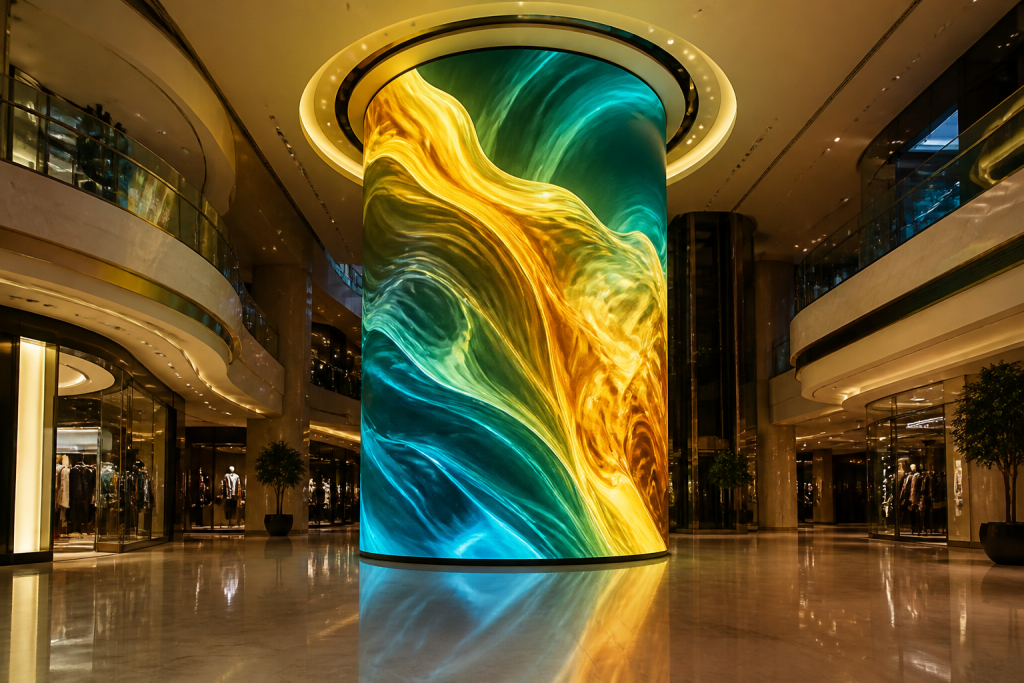
The total display area directly affects the number of modules and cabinets required, but the physical design also influences the indoor LED display cost. A standard rectangular wall may be easier to manufacture and install than an irregular shape, curved structure or display integrated into custom architectural elements.
Cabinet design affects handling, alignment and maintenance. Lightweight cabinets may be useful for projects with limited wall capacity or frequent installation work. A fixed commercial display may require a different structure from a rental display designed for repeated assembly and disassembly.
Service access should be decided before installation. Front-service cabinets can be useful when the rear of the display is blocked by a wall or architectural finish. Rear-service designs may provide more working space where a maintenance corridor is available. The correct choice can reduce future downtime, even if the initial quotation is not the lowest.
Include these details in the RFQ:
- Available wall depth;
- Maintenance clearance;
- Structural load limitations;
- Required cabinet dimensions;
- Screen aspect ratio;
- Access method for modules and power supplies;
- Whether the display must follow a custom wall or furniture design.
Brightness, Refresh Rate and Control System
Indoor LED displays normally operate in controlled lighting environments, but brightness still needs to match the site. A display near windows, strong spotlights or a glass storefront may need a different configuration from one installed in a darker conference room. Excessive brightness can reduce viewing comfort, while insufficient brightness may affect image visibility.
Refresh rate and image processing are also relevant for projects involving live cameras, broadcast content, fine text or fast-moving video. The required specification should be based on the content workflow rather than treated as a stand-alone number.
The control system can include sending equipment, receiving cards, processors, software and signal distribution components. A simple single-screen installation may have different control needs from a multi-screen retail network, corporate communication system or advertising display.
Ask suppliers to state whether the quotation includes:
- Video processor or sending system;
- Receiving cards and necessary accessories;
- Signal inputs and output requirements;
- Control software and user access;
- Content management compatibility;
- Calibration and commissioning;
- Training for the local operating team.
These items help prevent a quotation from appearing inexpensive simply because essential control components are listed separately or omitted.
Installation, Shipping and Project Support
An indoor LED display quotation may cover only the display hardware. For an accurate project budget, buyers should distinguish between product cost and total delivered project cost. Installation conditions, destination, packaging requirements, import arrangements and local labour can all affect the final amount.
A manufacturer may provide technical drawings, cabinet layouts, power information, installation guidance and remote support. Local installation may still be handled by the contractor or system integrator. Confirm the division of responsibilities before placing an order.
For international projects, clarify:
- The delivery term and destination;
- Packaging method and protection requirements;
- Required documentation;
- Installation responsibility;
- Testing and acceptance procedure;
- Spare-part recommendations;
- Response process for technical issues;
- Whether remote commissioning support is available.
For distributors and project contractors, an OEM/ODM-capable partner may also support branded cabinet finishes, product labelling, custom dimensions, documentation or project-specific configurations. Any customization should be listed separately so its effect on lead time and cost is transparent.
How to Compare Indoor LED Display Quotations
Comparing only the total amount can lead to the wrong supplier decision. Instead, normalize the quotations into the same technical and commercial scope.
Use this checklist:
- Is the pixel pitch identical?
- Is the display area calculated in the same way?
- Are cabinets, modules and power supplies included?
- Are sending and receiving systems included?
- Is the same brightness and refresh-rate requirement used?
- Are mounting structures included or excluded?
- Does the price include testing and commissioning?
- Are spare modules and power supplies listed?
- Are shipping, packaging and local installation separate?
- Are warranty and technical support terms clear?
Then evaluate the supplier’s ability to deliver the complete solution. A manufacturer with in-house design, assembly and customization processes may be better positioned for repeated orders or a multi-site project, but buyers should confirm the exact scope, inspection process and support arrangement for the selected model.
Frequently Asked Questions About Indoor LED Display Price
What is included in an indoor LED display quotation?
The scope varies. A quotation may include the LED cabinets and modules only, or it may also include control equipment, structure, spare parts, shipping, installation and commissioning. Request an itemized quotation before comparing suppliers.
Is a smaller pixel pitch always more expensive?
A smaller pixel pitch often requires a denser LED configuration and may increase hardware cost, but the final price also depends on screen size, cabinet design, control requirements and quantity. Select pixel pitch according to viewing distance and content needs.
How can buyers get a more accurate price?
Provide the supplier with the screen dimensions, application, viewing distance, installation location, content type, destination, quantity and service-access requirements. Drawings or site photos can help the supplier identify structural and installation issues earlier.
Should distributors ask about OEM/ODM support?
Yes, when the project involves a private label, repeated configurations, custom cabinet designs or a branded product range. Confirm what can be customized, the documentation provided, quality-control process, spare parts and minimum order requirements.
Conclusion
Indoor LED display price should be evaluated as part of a complete project configuration, not as a simple price-per-square-meter figure. Pixel pitch, screen dimensions, cabinet design, brightness, control equipment, service access, installation and support all influence the budget.
For a reliable comparison, prepare a detailed RFQ and ask each supplier to quote the same scope. If you need help matching a display configuration to your viewing distance, application or OEM/ODM requirements, contact an LED display manufacturer for a project review and quotation.
Before approving a purchase, make sure the quotation identifies the exact model, pixel pitch, screen area, cabinet arrangement, control system, service method, delivery scope and acceptance responsibilities. This final review helps distributors, integrators and contractors compare equivalent solutions and avoid unexpected project costs after the order is officially placed. It also creates a clearer basis for future repeat orders, spare-part planning and consistent deployment across multiple sites.