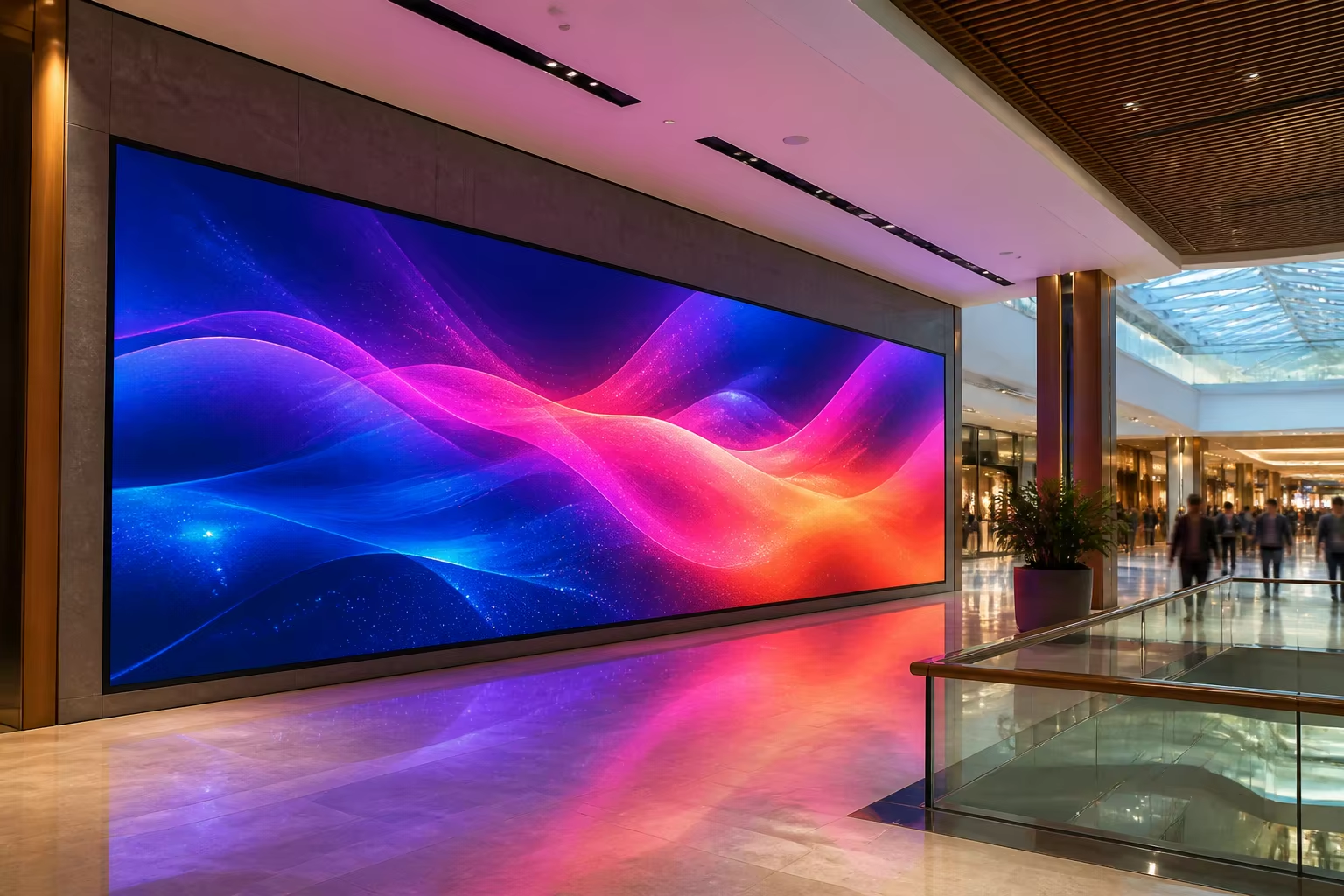
Investing in a commercial LED display for advertising requires balancing visual impact with long-term operating costs. For overseas distributors, advertising media companies, retail operators, system integrators, and project contractors, choosing the right display is not simply a matter of picking the highest resolution available. It requires matching pixel pitch, brightness, ingress protection, and service access to the physical viewing environment and target commercial goals.
A well-planned LED advertising display delivers high daytime visibility, reliable 24/7 continuous operation, and efficient content management. However, improper configuration can lead to washed-out visuals in sunlight, excessive power consumption, or costly maintenance access issues. This practical buyer’s guide explains the core technical parameters, application scenarios, and procurement checklists to help you evaluate solutions and maximize project return on investment (ROI).
1. What Is a Commercial LED Display for Advertising?
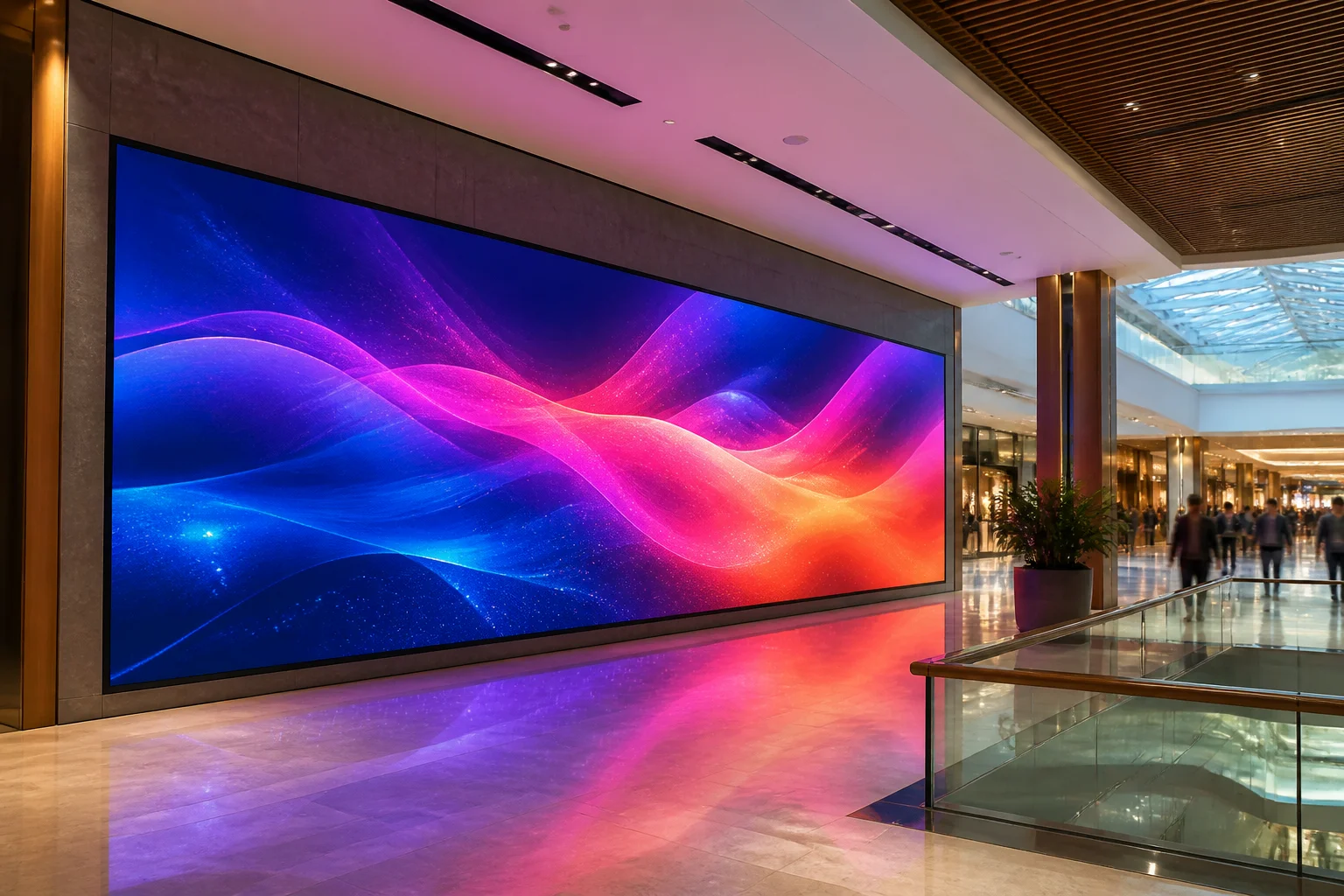
A commercial LED display is a modular digital signage solution engineered specifically for high-brightness, large-format commercial messaging. Built from individual LED cabinet panels, these displays create seamless video walls without visible grid lines or bezels, enabling brands to present uninterrupted high-impact visuals across virtually any architectural scale.
Unlike consumer television panels or standard LCD video walls, commercial LED display panels offer:
- True Seamless Viewing: No distracting bezel lines across expansive advertising canvases, ensuring graphics, video content, and branding assets retain maximum visual cohesion.
- High Brightness Output: Ranges from 800 to 1,500 nits for indoor commercial environments and 4,500 to 7,500+ nits for direct outdoor sunlight, overcoming harsh glare and daytime ambient reflection.
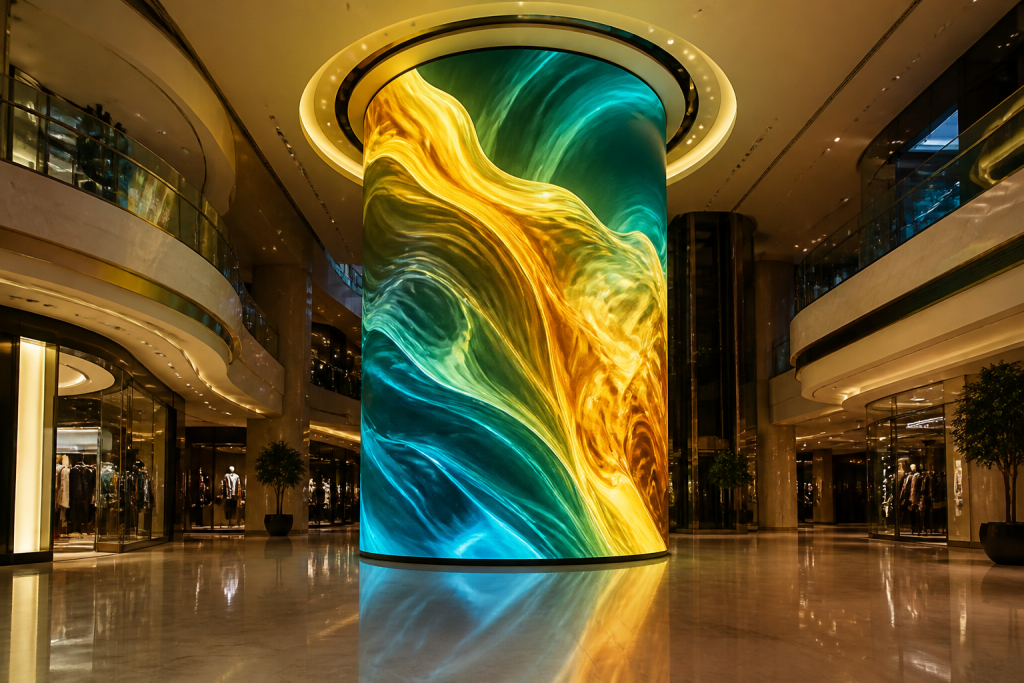
- Customizable Form Factors: Modular cabinet architectures support flat, curved, 90-degree corner-wrapping, or customized building-facade installations tailored to architectural contours.
- Long Operating Lifespan: Engineered for continuous 24/7 commercial operation with modular component serviceability, allowing individual modules, power supplies, or receiving cards to be swapped quickly without replacing the entire screen.
Understanding whether your advertising site requires an indoor or outdoor architecture is the foundation for every subsequent specification decision. While indoor units prioritize fine pixel pitch and acoustic comfort, outdoor solutions focus heavily on weatherproof sealing, structural wind resistance, and extreme thermal resilience.
2. Key Benefits of Commercial LED Displays in Advertising
Digital out-of-home (DOOH) and commercial retail advertising rely on visual dominance, immediate message relevance, and dynamic scheduling. Commercial LED screens deliver several measurable business advantages over traditional static signage and conventional display panels:
- Higher Engagement and Recall: Dynamic video content, vibrant color contrast, and motion graphics capture significantly more pedestrian and vehicular attention than static billboards. Field studies consistently indicate that illuminated motion displays generate higher brand retention among shoppers and commuters.
- Flexible Programmatic Scheduling: Advertisers can rotate multiple brand campaigns, display time-sensitive promotions, or update content remotely via cloud-based content management systems (CMS). This flexibility allows venue owners to monetize a single physical display location across dozens of advertising clients throughout the day.
- Lower Multi-Campaign Operating Costs: Digital updates eliminate recurring printing, physical installation, and disposal costs associated with traditional static vinyl banners. Campaign switchovers happen instantaneously via software rather than requiring labor-intensive manual changeouts.
- Scalable Architecture: Modular cabinets allow media owners to construct customized display ratios suitable for roadside totems, building facades, shopping mall atriums, or transit hubs, ensuring seamless integration into varied architectural contexts.
3. Important Factors to Consider Before Purchasing
Selecting the right commercial LED display requires a detailed review of site conditions, audience distances, and environmental factors.
Pixel Pitch and Viewing Distance
Pixel pitch (measured in millimeters, such as P2.5, P3.91, P4, P6, or P10) is the center-to-center distance between adjacent LED pixels. A smaller pixel pitch provides higher resolution and closer minimum viewing distances, but requires more LED diodes per square meter, increasing manufacturing cost.
Use this practical rule of thumb: Minimum comfortable viewing distance (meters) ≈ Pixel Pitch (mm) × 1 to 1.5.
- Indoor Retail & Atriums (P1.8 to P3.91): Ideal for close-proximity foot traffic (2 to 5 meters).
- Outdoor Building Facades & DOOH (P4 to P8): Suitable for commercial streets and pedestrian plazas (5 to 15 meters).
- Highways & Large Billboards (P8 to P10+): Recommended for long-distance viewing from moving vehicles (15+ meters), where ultra-fine pitch is unnecessary and adds needless expense.
Brightness and Ambient Light Control
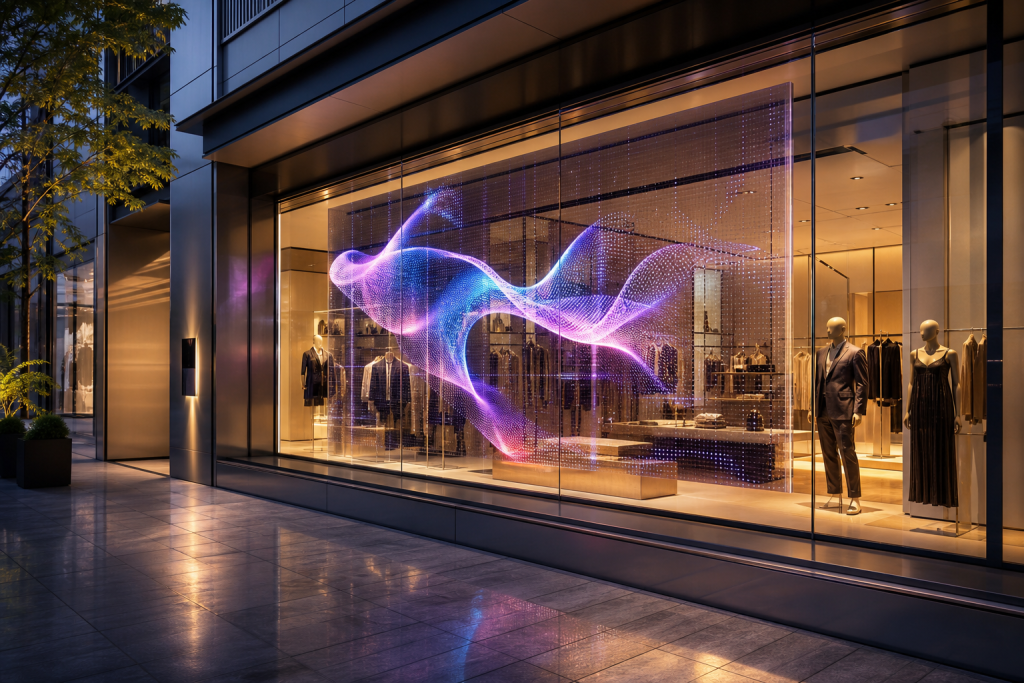
- Indoor Commercial Displays: 800 to 1,500 nits is standard. For storefront window displays facing outdoors, 2,500 to 3,500 nits prevents direct sunlight washout.
- Outdoor Advertising Screens: 5,000 to 7,500+ nits ensures crystal-clear readability under bright midday sunlight. Displays should feature automatic ambient light sensors that reduce brightness at night to save power and comply with local municipal light-pollution regulations.
Ingress Protection (IP Rating) and Thermal Management
- Indoor Units: IP30 to IP43 provides standard dust and splash protection.
- Outdoor Displays: IP65 front and IP54/IP65 rear ingress protection prevents damage from heavy rain, humidity, dust, and coastal salt spray.
- Thermal Design: Quality outdoor cabinets use die-cast aluminum or extruded aluminum profiles with efficient heat dissipation to prevent premature diode aging without excessive air-conditioning costs.
Serviceability: Front Access vs. Rear Access
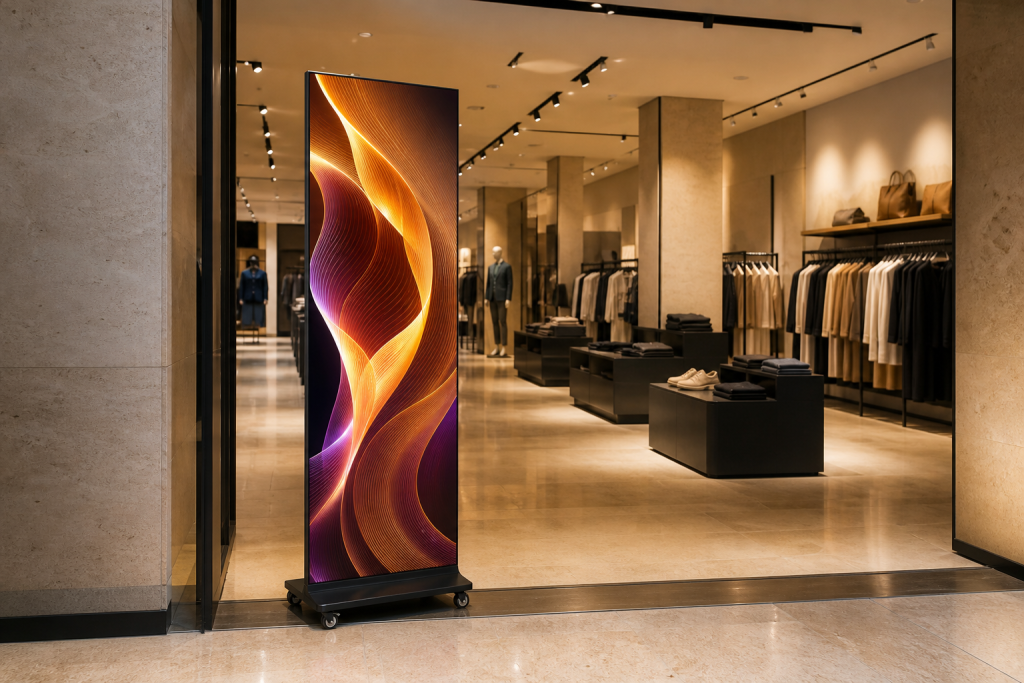
- Front Service (Magnetic Modules): Essential for wall-mounted displays in retail stores, indoor video walls, or slim outdoor totems where rear access space is unavailable.
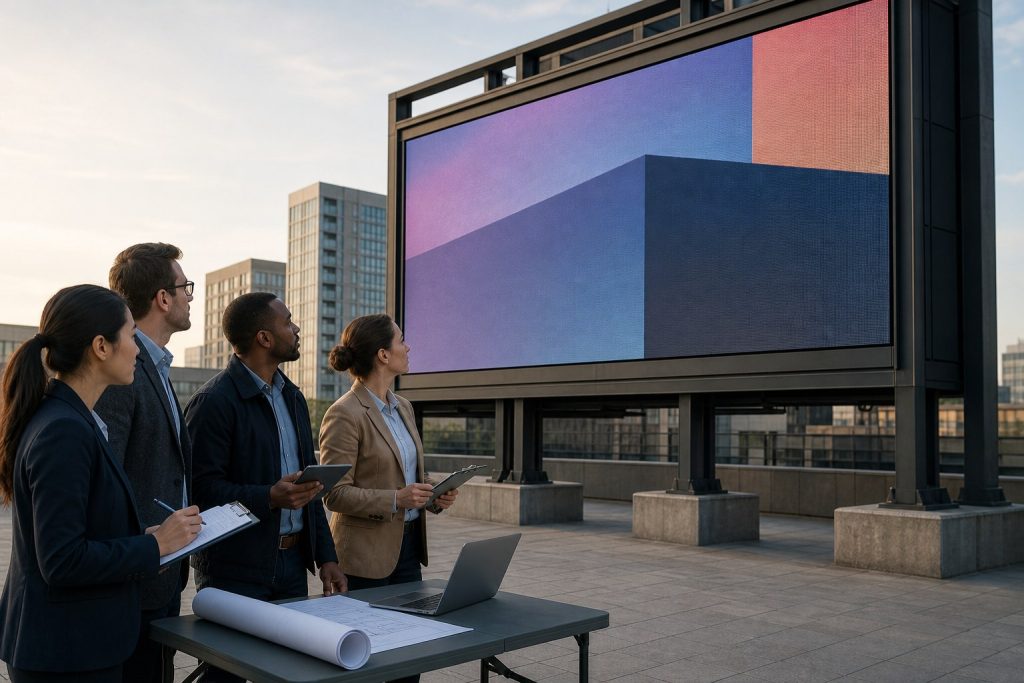
- Rear Service (Door Cabinets): Commonly used on large outdoor steel structures and rooftop billboards with dedicated maintenance catwalks.
4. Primary Commercial Applications
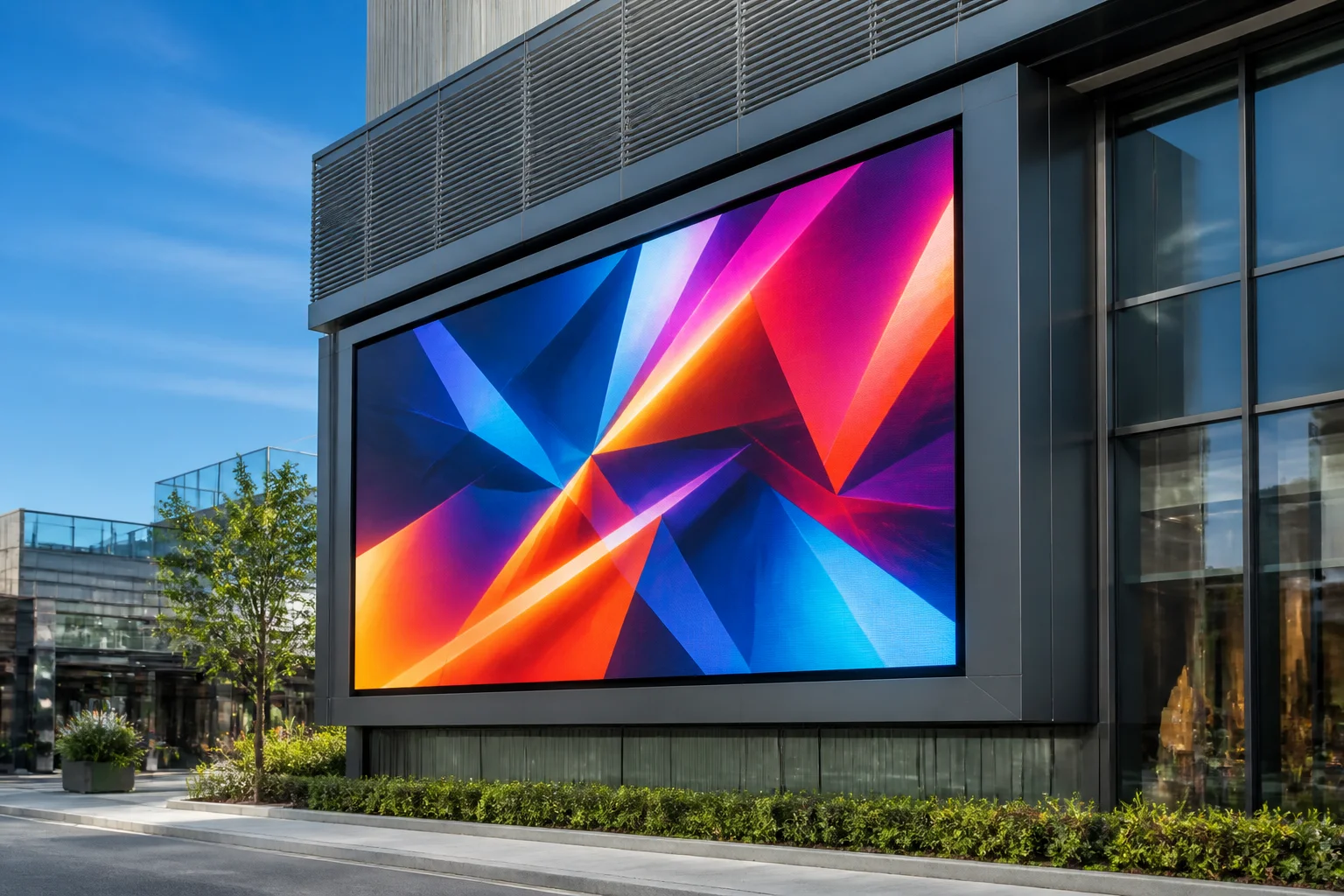
Commercial LED screens provide tailored visual communication across diverse commercial and public sectors, serving as high-revenue media assets or customer-engagement platforms:
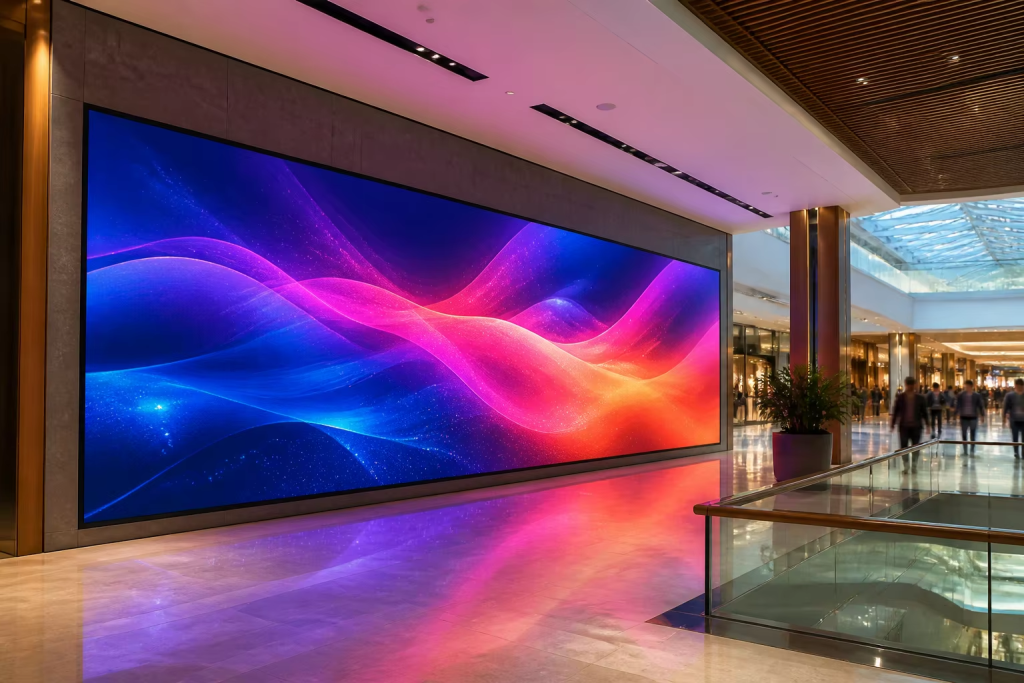
- Retail Stores and Shopping Malls: Atrium video walls, store entrance displays, and digital window signage drive foot traffic, promote seasonal collections, and elevate store aesthetics. High-brightness window displays ensure promotions remain legible against street-level glare.
- DOOH Advertising and Digital Billboards: Roadside digital billboards, building-mounted advertising screens, and transit station networks generate steady advertising revenues for media operators through automated programmatic ad delivery and high daily impression counts.
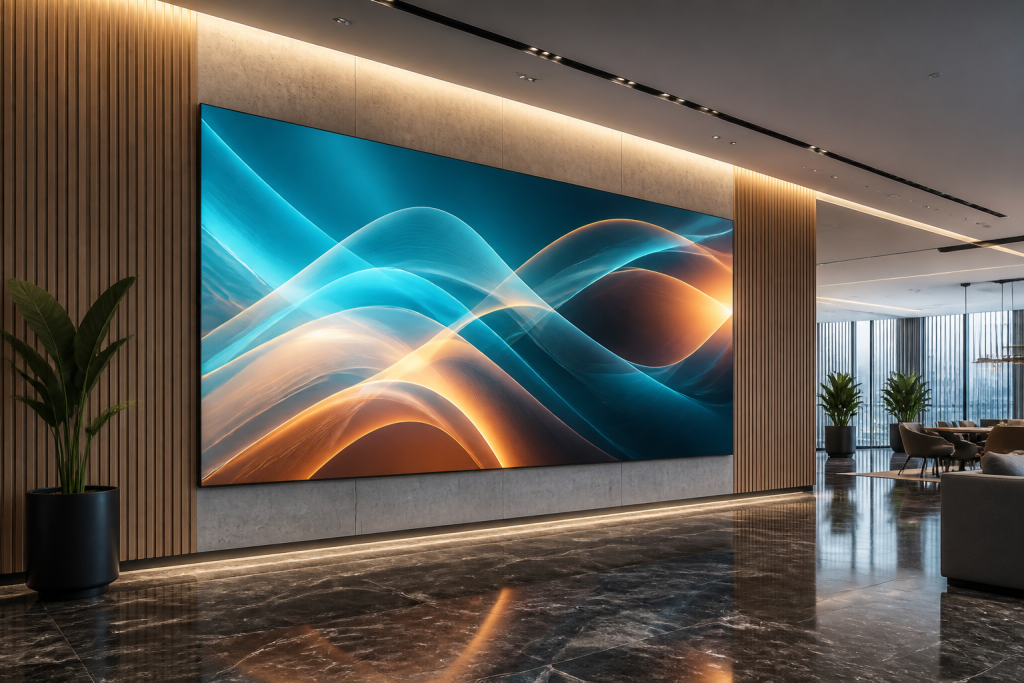
- Corporate and Commercial Real Estate: Lobby feature video walls, commercial showroom displays, and interactive corporate welcome centers establish brand authority, impress visiting clients, and facilitate internal corporate messaging.
- Hospitality, Arenas, and Entertainment Venues: High-impact dynamic backdrops, casino promotional displays, and digital venue sponsor boards deliver immersive visuals that enhance visitor experiences while generating lucrative event sponsorship opportunities.
5. How to Calculate Project ROI and Total Cost of Ownership
Savvy B2B buyers look beyond the initial purchase price to calculate the Total Cost of Ownership (TCO). A comprehensive commercial display budget should account for all capital expenditures and operational lifecycle costs:
| Cost Component | Key Considerations | Typical Impact |
|---|---|---|
| Display Hardware | High-grade LED modules, receiving cards, reliable power supplies, and structural cabinet frames. | 50% – 60% of total initial capital expenditure. |
| Control System & Video Processing | Multi-window video processors, sending cards, cloud CMS media players, and remote monitoring sensors. | 5% – 10% of hardware investment. |
| Mounting Structure & Civil Engineering | Custom steel framing, load-bearing engineering calculations, wall brackets, foundation concrete, and municipal permits. | 15% – 25% depending on outdoor structural complexity. |
| Power Infrastructure & Electricity | Maximum versus average power consumption; selecting energy-saving drive ICs significantly lowers ongoing monthly OPEX. | Major recurring operational cost over 5–7 years. |
| Spare Parts & Ongoing Maintenance | Dedicated spare module batches from the same production bin (to ensure uniform color matching), spare receiving cards, and backup power units. | 3% – 5% recommended spare part package. |
Investing in energy-efficient power supplies and premium driver ICs can reduce continuous power consumption by 20% to 35%, generating substantial operating savings across multi-screen commercial deployments.
6. Manufacturing Excellence and OEM/ODM Customization
For distributors, AV system integrators, media owners, and project contractors seeking dependable global manufacturing partners, factory production discipline and strict quality verification are critical to long-term project success.
Shenzhen display manufacturers like USER SDT support comprehensive display production lines encompassing structural product design, high-speed SMT surface mounting, precision module assembly, metal cabinet fabrication, optical calibration, and mandatory 72-hour continuous aging tests under varied thermal conditions. Strict batch control ensures consistent color temperature and chromatic uniformity across every production run, eliminating color discrepancies between neighboring panels.
Whether your commercial project requires custom cabinet dimensions to fit an existing architectural alcove, branded distributor packaging, private-label control firmware, or specialized ultra-high-brightness outdoor modules, partnering with a genuine OEM/ODM manufacturer ensures direct engineering support and long-term spare-parts continuity throughout the display lifecycle. A reliable factory partner also assists with structural load calculations, thermal modeling, and power distribution diagrams prior to fabrication.
(Note: Specific certification marks, custom warranty terms, or regional electrical compliance requirements should be marked [需要公司确认] on the project quotation.)
7. Frequently Asked Questions (FAQ)
What is the lifespan of a commercial LED display?
High-quality commercial LED displays typically achieve 80,000 to 100,000 hours of operating life when properly configured with adequate heat dissipation, operating within normal brightness thresholds, and maintained with stable power supplies.
How do I choose between front and rear maintenance?
Choose front maintenance if the screen will be mounted directly against a wall, embedded in architectural recesses, or installed where space behind the screen is less than 0.8 meters. Choose rear maintenance for standalone outdoor billboards with accessible maintenance catwalks.
What information is required to receive a precise commercial quote?
To receive an accurate and comparable quotation, provide your supplier with: (1) target screen width and height (or active display area), (2) indoor or outdoor installation environment, (3) closest and farthest audience viewing distance, (4) preferred mounting method, and (5) any specific control or OEM branding preferences.
Conclusion & Project Consultation
A successful commercial LED display for advertising requires selecting a configuration tailored to your specific ambient light, viewing distance, structural limitations, and maintenance constraints. Prioritizing verified module quality, clear ingress protection, and energy-efficient drive electronics guarantees superior advertising impact and long-term project profitability.
If you are planning a commercial LED advertising project, upgrading retail digital signage, or seeking a reliable OEM/ODM manufacturing partner, contact our engineering team to receive detailed CAD layouts, optical recommendations, and customized commercial proposals.
Sources & References
- USER SDT LED Screen Product Overview
- USER SDT About Us & Manufacturing Overview
- Semrush Keyword Database: US Commercial LED Display Market Metrics (Sep 2026)