Why Malls Are Upgrading to Poster Indoor LED Screens
From Static Banners to Dynamic Displays
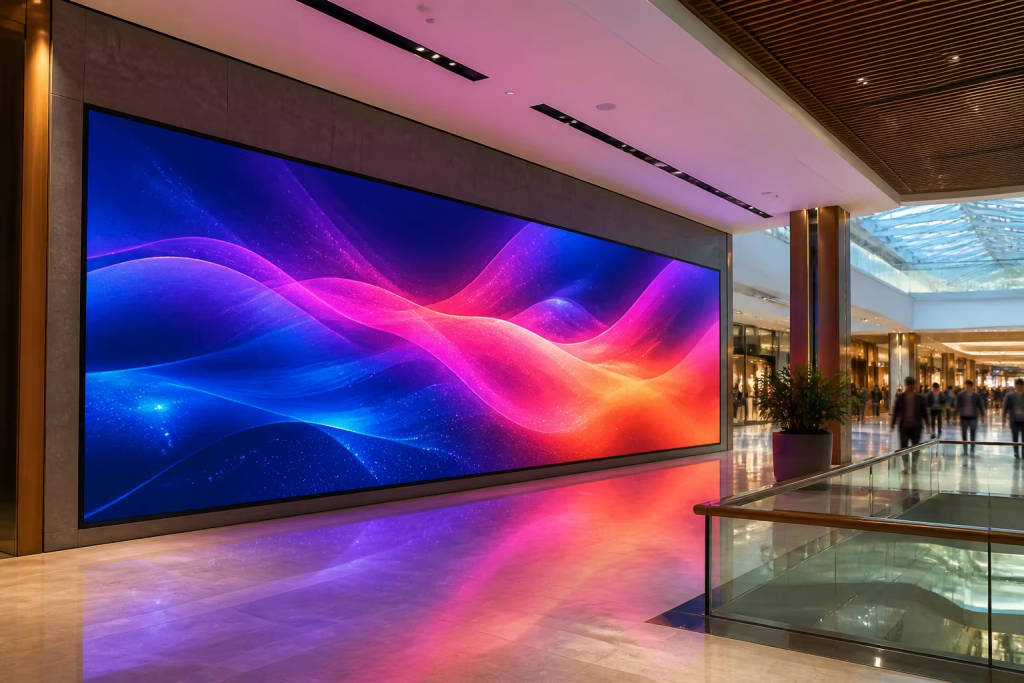
In modern shopping malls, static roll‑up banners and lightboxes are struggling to grab attention in crowded, visually noisy environments. A poster indoor led screen has become a practical upgrade because it delivers bright, moving content that is much harder for shoppers to ignore.
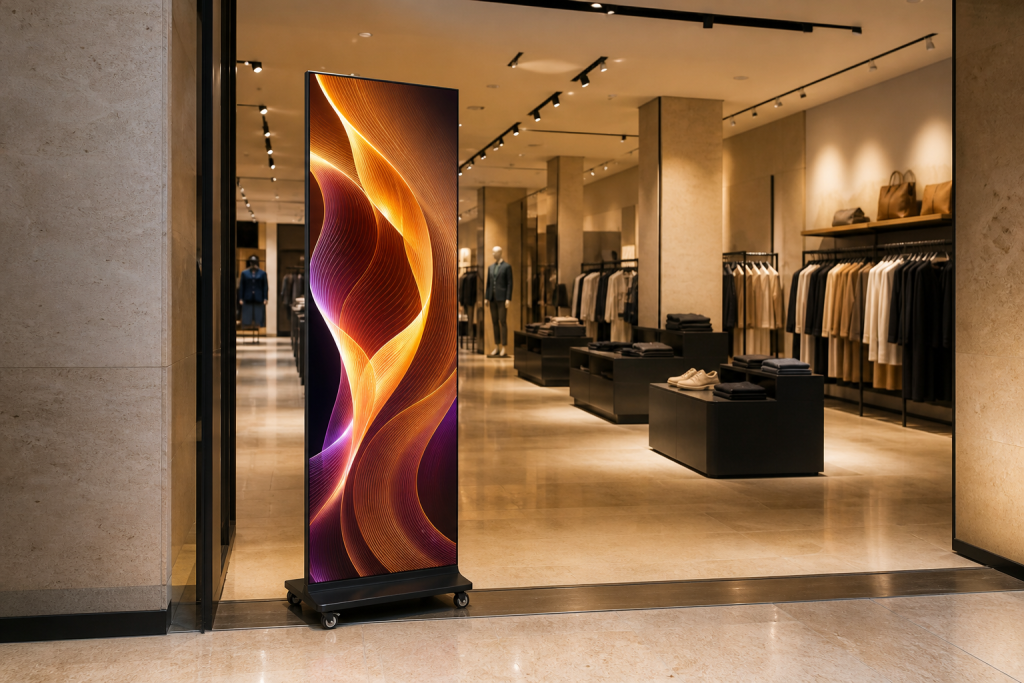
A poster indoor LED screen keeps the familiar shape of a vertical poster stand but replaces print with high‑brightness LED modules inside a slim cabinet. USER LED describes its solutions as integrated units that combine LED modules, power supply, control system, and frame into one plug‑and‑play body, making it easy for retailers and mall operators to deploy eye‑level digital signage near the point of purchase.
From “Nice‑to‑Have” to Performance Decision
For shopping malls that run frequent promotions—new store openings, seasonal campaigns, flash sales—this switch from print to digital is no longer just a visual “upgrade.” It is a performance decision that directly influences how many people notice, remember, and act on a promotion anchored by a poster indoor led screen.
What Is a Poster Indoor LED Screen?
Basic Definition and Form Factor
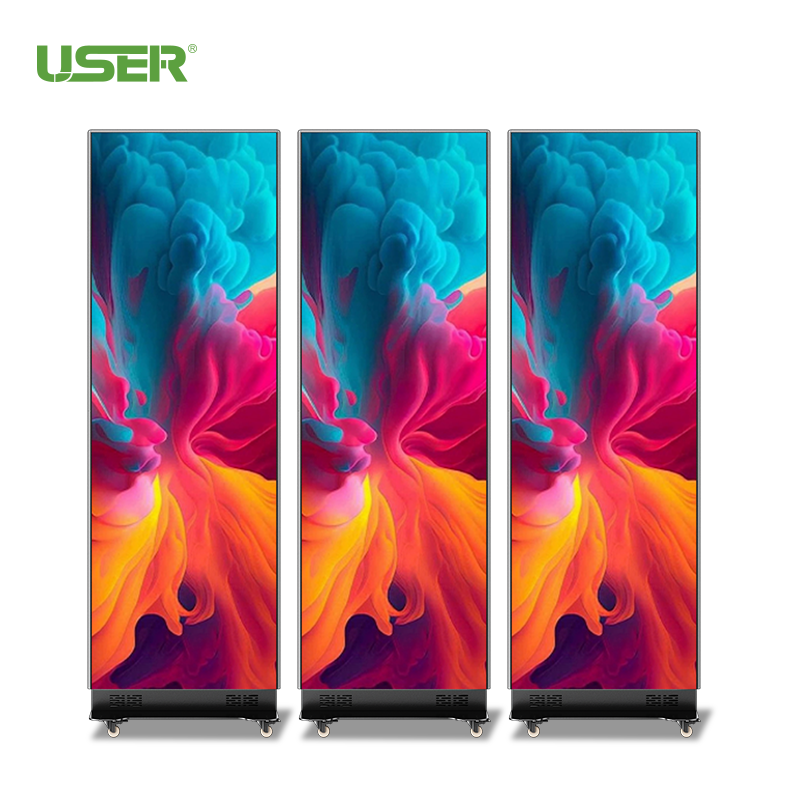
A poster indoor led screen is a vertically oriented LED display built to replicate the footprint of a traditional poster stand while enabling dynamic, programmable content. In USER’s product range, typical indoor poster screens use fine‑pitch SMD LEDs with a standard display area around 640 × 1920 mm, often mounted on a base that brings the total height to about 2030 mm.
This form factor is intentional: it matches existing poster locations in corridors, entrances, and store fronts, so mall tenants can replace printed stands one‑for‑one. USER’s specifications show that these units usually weigh around 50 kg, integrate one cabinet made of four LED modules, and are designed as freestanding units that can also be wall‑mounted or combined into a larger video wall.
Core Technology for Indoor Use
Technically, a poster indoor led screen uses the same core LED technology as larger indoor video walls, but optimized for indoor commercial use: fine pixel pitches for close viewing, medium brightness suitable for malls, high refresh rate for smooth motion, and wide viewing angles so content is clear from multiple directions. Because the power supply, receiving card, and control player are all built into a single slim body, users can control the screen via USB, Wi‑Fi, or networked systems without external hardware clutter.
Key Specifications That Matter in a Mall
Size and Pixel Pitch
When you select a poster indoor led screen for shopping mall promotions, several technical parameters directly affect the final result: size, pixel pitch, brightness, and refresh rate. USER’s own content and product pages provide a clear picture of what is considered a good configuration for indoor commercial use.
Screen size is the first consideration. USER’s indoor LED poster products commonly use a 640 × 1920 mm display area, paired with an overall unit height of about 2030 mm including base. This gives you a tall, eye‑level canvas that feels familiar to landlords and shoppers while delivering more visual impact than a paper poster.
Pixel pitch is equally important. Poster indoor led screen solutions from USER typically offer pixel pitches like P1.25, P1.53, P1.86, P2.0, and P2.5 mm. For a shopping mall, where people may stand only 2–4 meters from the display, pitches in the P1.86–P2.5 range are usually ideal, because they keep text and product images sharp without overspending on ultra‑fine pixels designed for control rooms. If the screen is viewed mainly from further away in a large atrium, P3 can also work well while reducing cost.
Brightness, Refresh Rate and Viewing Experience
Brightness determines whether your content can compete with ambient lighting and reflections. For indoor environments, USER’s SMD poster LED screens list brightness values roughly in the 400–800 cd/m² range, which is enough to stand out under overhead lighting and near glass façades while remaining comfortable to view at close distance. Some retail‑oriented SMD poster LED displays mentioned by USER can reach 800–1500 nits for more challenging semi‑outdoor or window‑facing conditions, but these higher levels are usually not necessary deeper inside a mall.
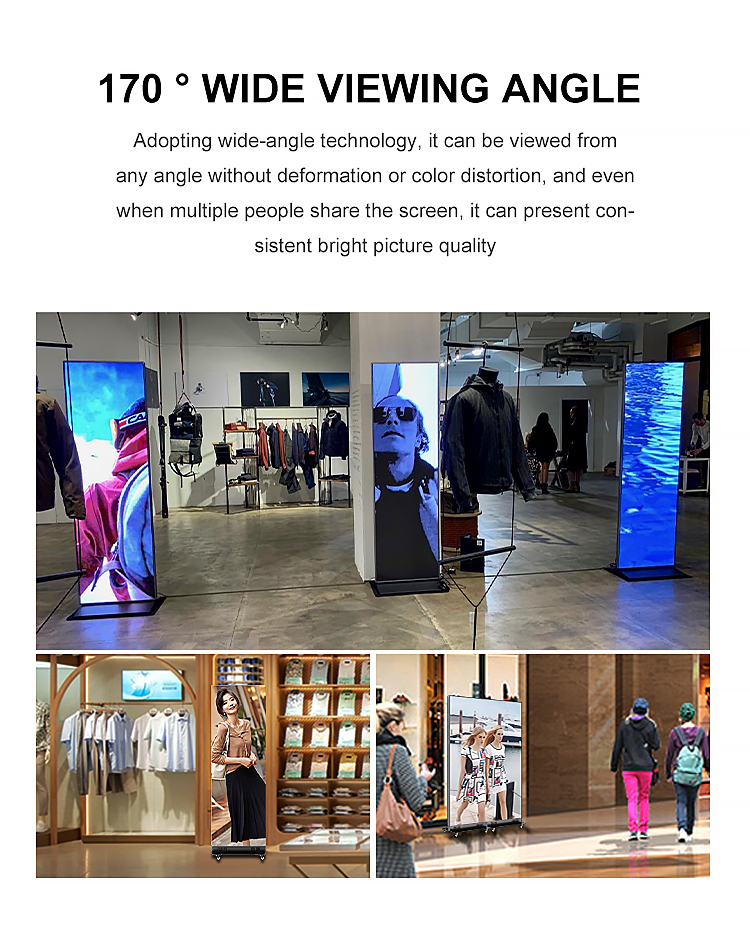
Refresh rate and contrast strongly influence perceived quality. USER commonly specifies refresh rates of 3840 Hz or higher on its poster indoor led screen products, along with contrast ratios around 5000:1 and wide 140°/140° viewing angles. These figures ensure that fast‑moving video remains smooth, camera flicker is minimized when shoppers take photos, and brand colors look rich from different directions in a busy corridor. In practical mall scenarios, that means your visuals stay sharp and consistent from day one to year five.
To bring these parameters together, you can think of a typical USER poster indoor led screen with a 640 × 1920 mm display area, pixel pitch around P1.86–P2.5, brightness about 400–800 cd/m², refresh rate up to 3840 Hz, and a freestanding design weighing roughly 50 kg and supporting floor, wall, or hanging installation.
Poster Indoor LED Screen vs Traditional Posters in Mall Campaigns
From One‑Off Printing to Reusable Media
From a marketing perspective, the biggest shift when you choose a poster indoor led screen is moving from static, one‑shot campaigns to dynamic, reusable campaigns. USER’s articles on SMD poster LED displays emphasize that traditional printed posters and lightboxes require repeated production and cannot show motion, whereas poster LED screens can host videos, animated prices, and time‑based offers.
For a fashion or electronics store in a mall, printed roll‑up banners demand new artwork, printing, shipping, and installation for every promotion—spring collection, summer sale, mid‑season discount, year‑end clearance—and old materials are often discarded after each campaign. Over a year, these repeated costs in design, print, and logistics add up, especially for tenants that run many short‑term offers.
By contrast, a poster indoor led screen is a reusable digital asset. The store invests once in the hardware and then updates visuals as often as needed with digital files. USER’s price and ROI discussions indicate that standard indoor poster LED displays, running for tens of thousands of hours, can pay back within one to two years in active commercial environments, because they eliminate recurring print costs while boosting engagement. Once installed, the marginal cost of an extra campaign becomes almost zero.
Visibility, Central Control and Real Impact
Visibility and impact also differ significantly. USER reports that advertising poster LED displays in commercial spaces tend to deliver much higher engagement than static media, with case examples showing notable increases in dwell time and sales when dynamic content is presented near the point of sale. A poster indoor led screen positioned near escalators, entrances, or checkout lines can loop brand stories, limited‑time offers, and cross‑selling messages that would never fit on a single printed banner.
From the mall landlord’s perspective, centralized control is another key advantage. Networked poster indoor led screen units can be managed from a central content management system, syncing mall‑wide themes such as “New Year Sale” or “Black Friday,” while selling time slots to different tenants. USER’s content highlights that SMD poster LED displays support video playback, animations, playlists, and cloud CMS integration, enabling real‑time updates without sending staff to manually change posters.
Overall, the shift from static print to a poster indoor led screen in a shopping mall is about turning promotional space into a programmable, measurable media asset instead of a disposable cost.
Why Choose USER for Shopping Mall Poster Indoor LED Screens
Integrated, Flexible Design for Commercial Spaces
Shenzhen USER Special Display Technologies Co., Ltd. positions itself as a high‑tech LED manufacturer with over 15 years of experience and exports to more than 80 countries, focusing on LED display solutions for commercial spaces. Its poster indoor led screen solutions are part of a broader indoor portfolio that includes small‑pitch video walls, fixed advertising screens, and specialty displays https://www.userledscreen.com/.
One reason malls and retail chains choose USER is the balance between integrated design and flexibility. USER’s indoor LED poster series is described as ready‑to‑use for commercial advertising, integrating LED modules, power, control, and frame into a slim, lightweight unit that fits directly into retail environments without major renovation. At the same time, these posters support multiple installation methods—vertical stand, wall‑mount, hanging, or cascaded into a larger video wall—so they adapt to corridors, atriums, and store façades.
Performance and OEM/ODM Support
Another advantage is performance tuned for indoor usage. USER’s poster indoor led screen designs highlight high brightness and contrast, high refresh rate, and wide viewing angles, ensuring vivid visuals that remain comfortable for shoppers who may stand very close. With average power consumption around 200–300 W/m² on many indoor models, they support long‑term use without excessive operating costs, which matters for malls running screens many hours a day.
For mall operators, system integrators, and distributors, USER’s OEM/ODM capability is also important. The company’s distributor‑focused content explains that standard poster LED configurations—640 × 1920 mm display, P1.2–P2.5 pixel pitches, 400–800 cd/m² brightness—can be adapted to different housing colors, branding, and mounting solutions. This allows a chain of shopping centers to maintain a consistent visual identity across multiple cities while still customizing details for each site.
To explore USER’s wider indoor LED portfolio, including poster and other indoor displays that can work together in the same shopping mall, you can refer to the indoor LED category on their official website: https://www.userledscreen.com/product-category/indoor-led-display/
FAQs About Poster Indoor LED Screens for Shopping Malls
What exactly is a poster indoor led screen?
A poster indoor led screen is a slim, vertical LED display designed to replace printed posters and roll‑up banners in indoor commercial spaces. USER describes it as an integrated unit combining LED modules, power, control system, and frame, optimized for retail, malls, hotels, and exhibitions where eye‑level digital signage is needed.
What pixel pitch should I choose for a shopping mall?
For most mall applications where viewers stand two to four meters from the screen, USER’s guides and product specs suggest fine pixel pitches around P1.86–P2.5 mm to balance clarity and cost. If your screen stands in a large atrium viewed mainly from further away, a pitch around P3 can also deliver good results while lowering the budget.
Are poster indoor LED screens bright enough under mall lighting?
Yes. USER’s indoor poster products list brightness levels of roughly 400–800 cd/m², which are suitable for typical shopping mall lighting conditions and glass storefront reflections. Higher‑brightness SMD poster models are available for extreme or semi‑outdoor environments, but standard indoor ranges are usually sufficient for most malls.
Can one poster indoor led screen handle multiple campaigns?
This is one of their biggest advantages. USER’s SMD poster LED displays support video, images, animations, scheduled playlists, and cloud CMS integration, so you can run many different campaigns—daily offers, seasonal promotions, branding content—on the same hardware throughout its 50,000+ hour lifespan.
How does cost compare with printed posters?
The upfront cost of a poster indoor led screen is higher than printing a single banner, but USER’s price and ROI discussions indicate that, over multiple campaigns, digital posters typically win. You avoid recurring print and logistics costs, gain higher engagement, and can often achieve payback within one to two years in active retail environments.
Is installation complicated inside a shopping mall?
USER designs its indoor LED poster series as lightweight, integrated units with floor stands and options for wall‑mounting or hanging, making installation relatively straightforward compared to custom video walls. For many sites, the process involves placing the stand, connecting power, and configuring content via USB or network—minimal structural work is required.