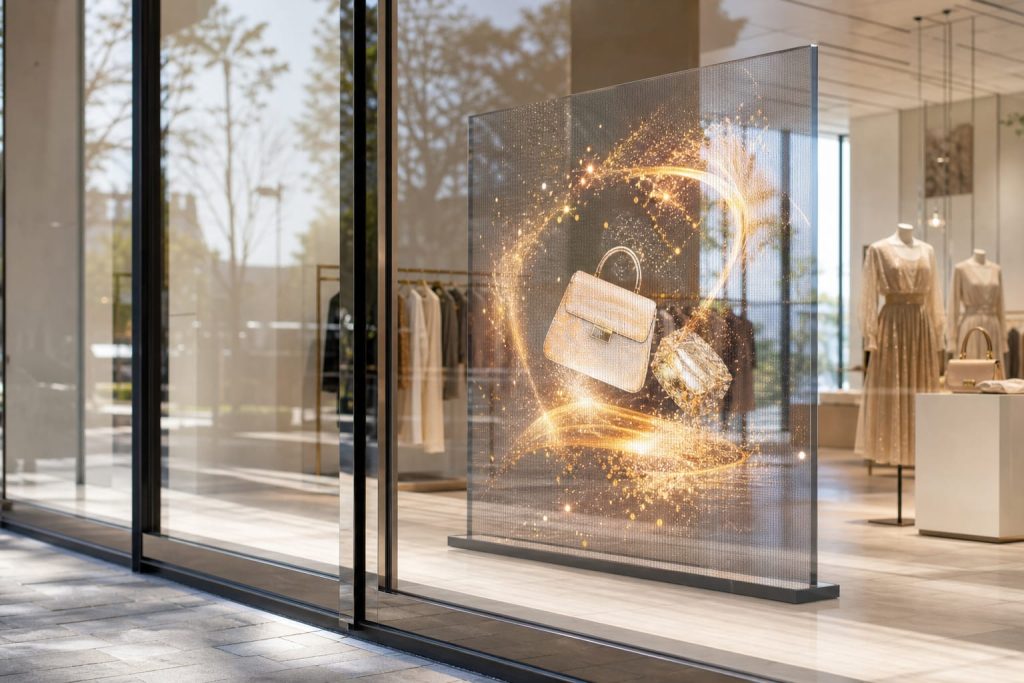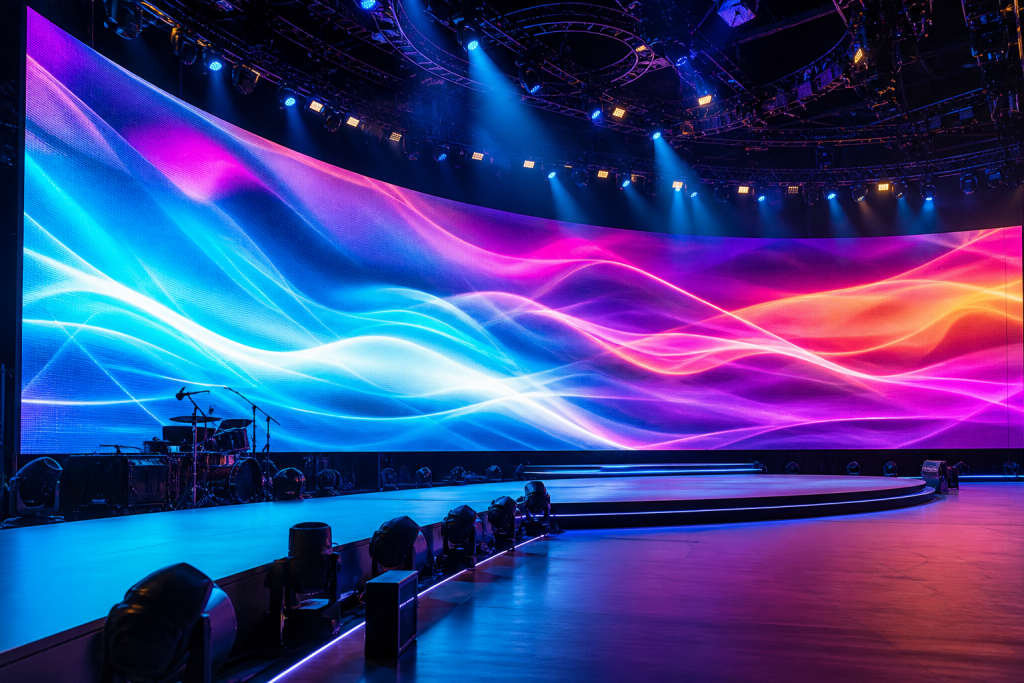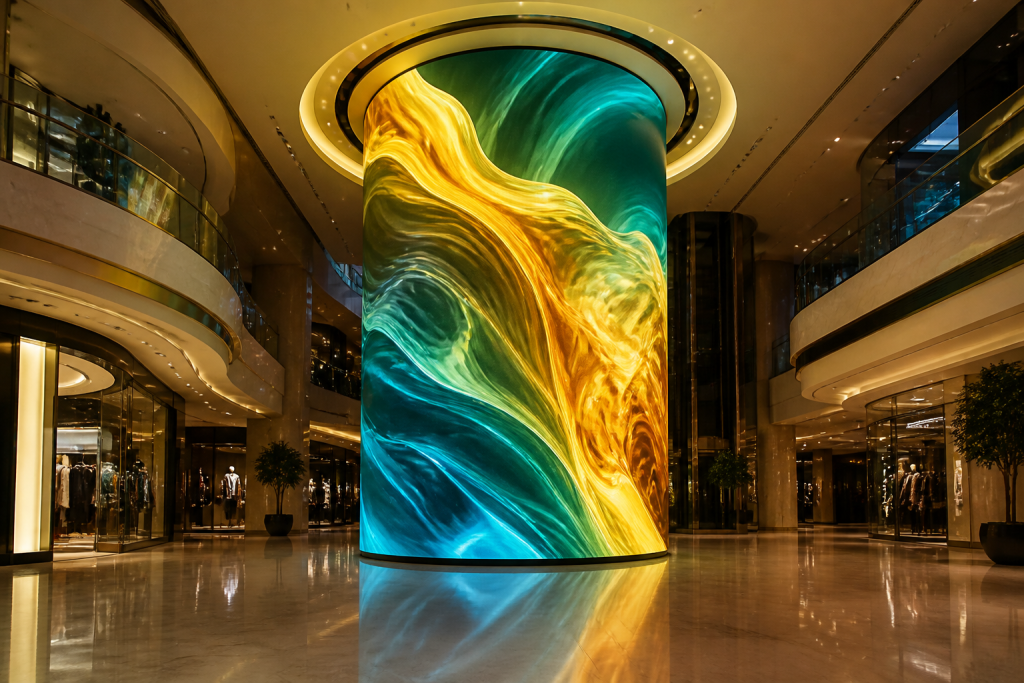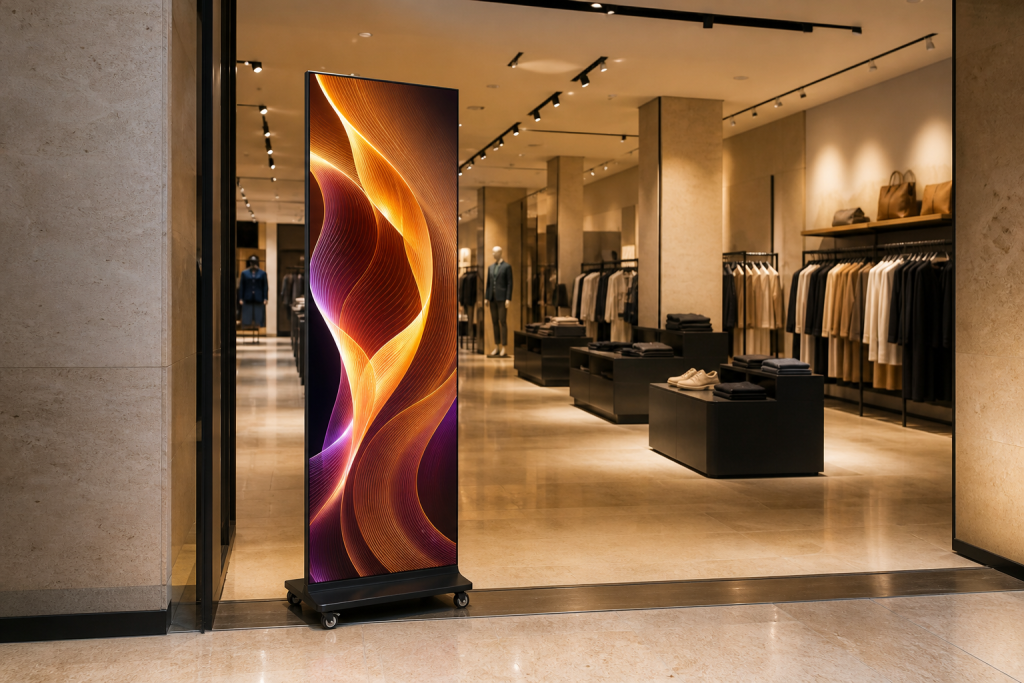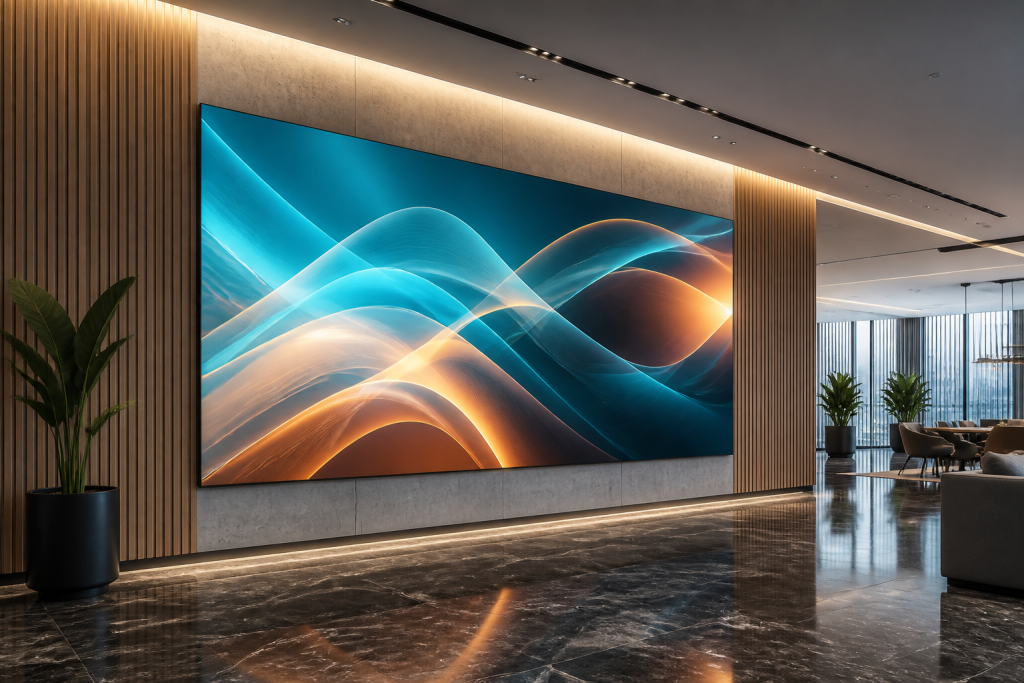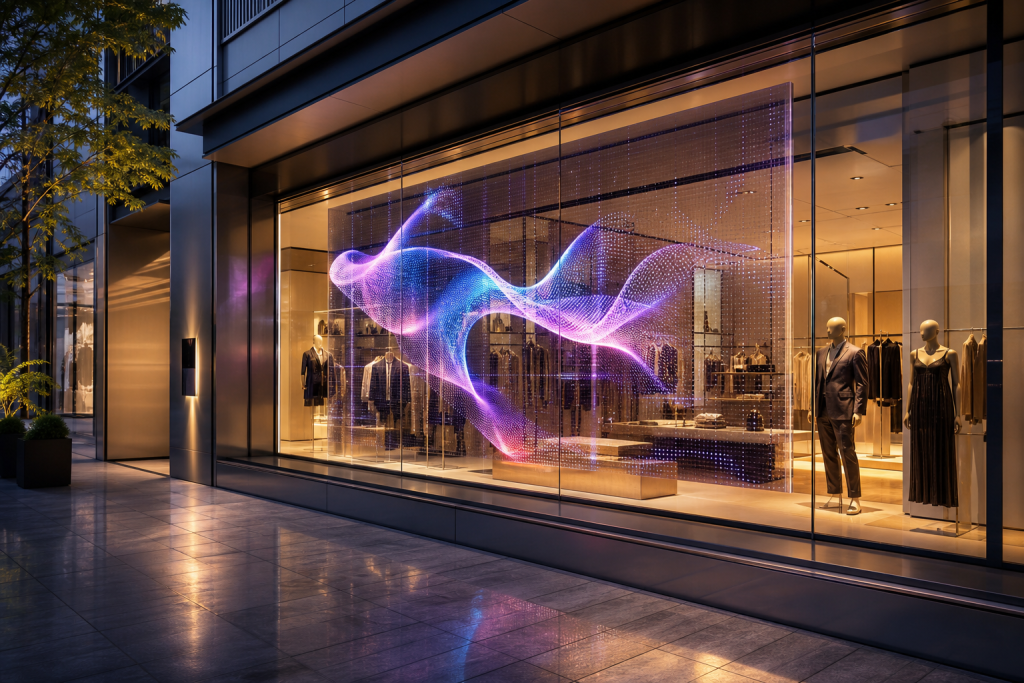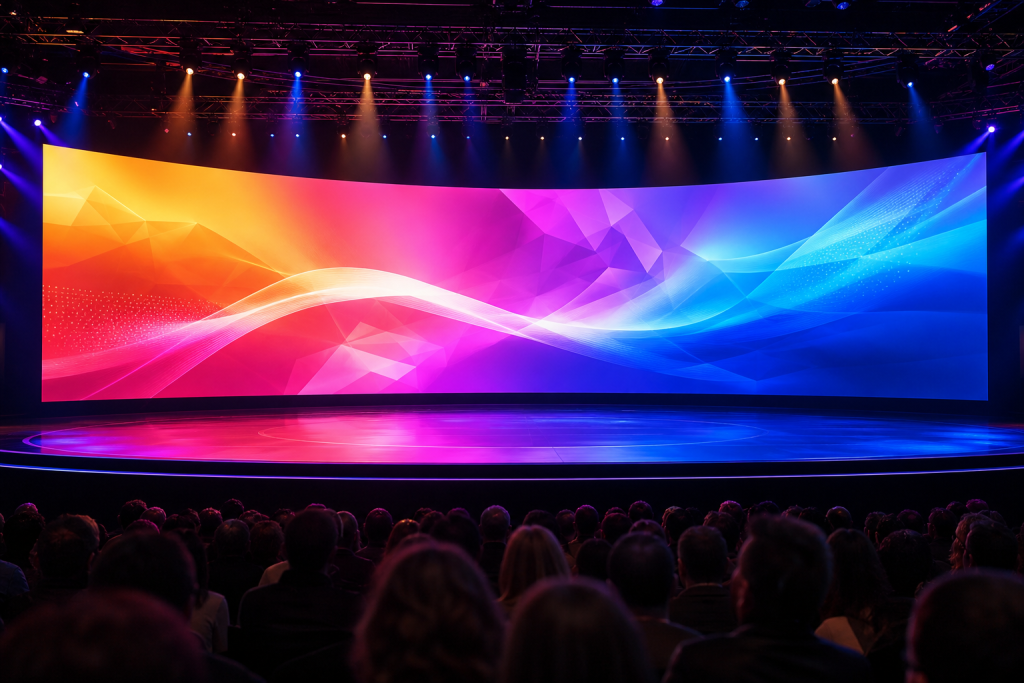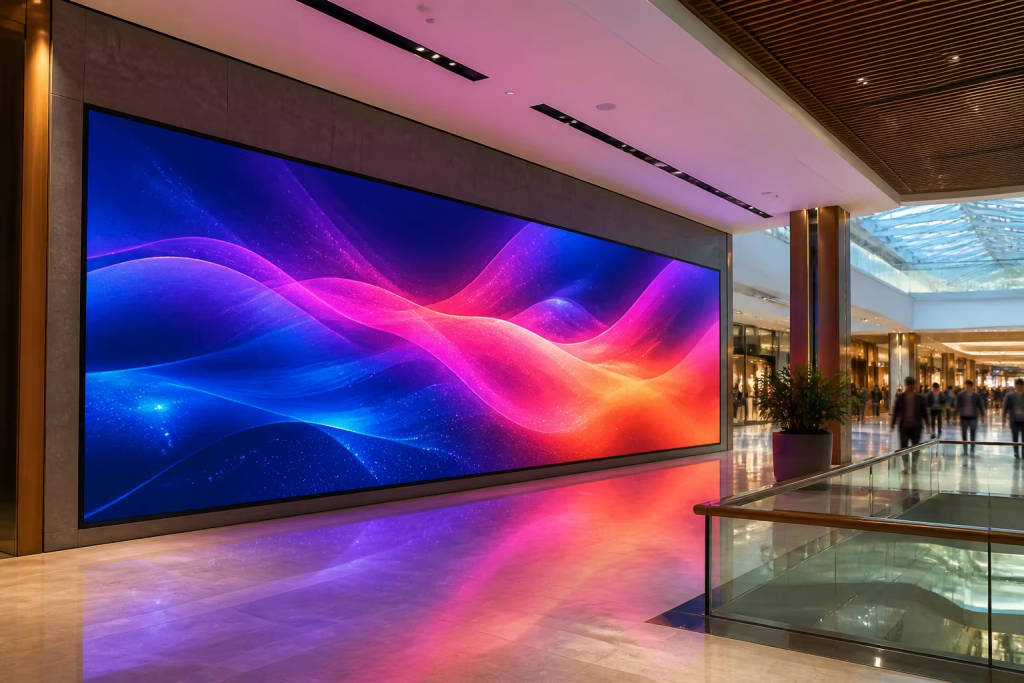
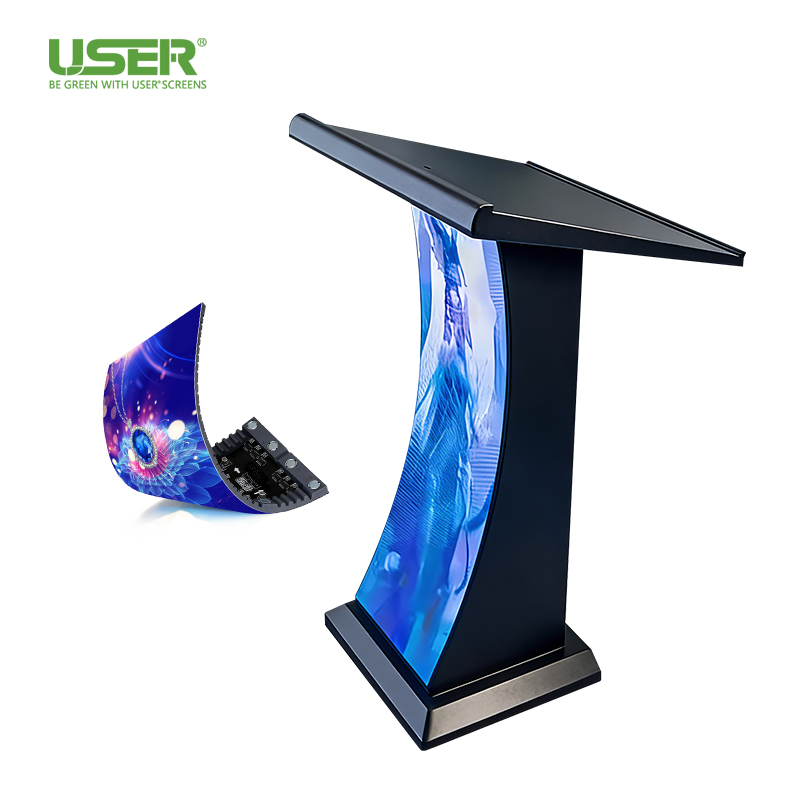
A flexible LED display uses soft LED modules that can bend, curve, and wrap around surfaces, enabling creative screen shapes such as columns, waves, arcs, and cylindrical installations. These modules often rely on flexible FPC (flexible printed circuit) boards and soft structural materials, allowing them to withstand repeated bending while maintaining electrical integrity and pixel stability.
Instead of being limited to flat walls, flexible LED screens unlock immersive visual experiences in shopping malls, luxury retail, museums, airports, hotels, and corporate lobbies. They can form 360‑degree cylindrical displays, curved banner screens, and artistic visual sculptures that attract more attention than traditional flat displays.
USER LED’s flexible soft module series covers pixel pitches such as P1.53, P1.86, P2, and P2.5, making it suitable for both close‑view indoor advertising and large creative surfaces. These modules support high refresh rates of up to 3,840 Hz, providing flicker‑free performance for camera shooting and premium brand environments.
Why the Right Flexible LED Display Supplier Matters
Selecting the right flexible led display supplier is critical because curved and irregular projects impose higher demands on reliability, mechanical design, and on‑site engineering compared with standard flat screens. When screens are bent, stress is placed on the PCB, LED solder points, and structural connections; if the supplier’s design and materials are inadequate, this can cause pixel failures, color non-uniformity, or module cracking.
A qualified supplier must therefore combine:
- Strong R&D in flexible PCB and structural design
- Rigorous component selection and testing
- Experience delivering curved and cylindrical LED projects worldwide
- Professional engineering support from design to installation
USER LED highlights these capabilities through its soft module series, which uses flexible FPC boards, over 10,000 fixed bending tests, and high refresh electronics to ensure long-term stability even in challenging curved installations.
Core Criteria for Evaluating a Flexible LED Display Supplier
When choosing a flexible led display supplier, evaluate candidates using goal‑oriented criteria.
- Technical design and bending performance
- Confirm bending radius: Leading suppliers specify minimum bending angles (such as up to 30 degrees per module) and radius limitations for safe operation.
- Ask about bending tests: Experienced suppliers perform tens of thousands of bending cycles in the lab to validate mechanical design and solder reliability.
- Pixel pitch options and visual performance
- For close viewing distances in retail or hospitality spaces, pixel pitches between P1.5 and P2.5 generally provide high detail and smooth images.
- Ensure the supplier offers consistent brightness, color uniformity, and high refresh rates (typically 1,920–3,840 Hz) across the flexible series.
- Module construction and materials
- Look for flexible FPC boards, soft rubber masks, and high‑quality LED packages designed specifically for bending applications.
- USER LED’s soft module series features light and thin modules with IP40 protection for indoor environments and uses SMD LEDs tuned for wide color gamut and stable performance.
- Factory capabilities and certifications
- A strong supplier maintains modern SMT lines, aging test areas, and clean production environments to ensure quality across volume production.
- International certifications such as ISO9001, CE, RoHS, FCC, UL, and CCC are key indicators for global commercial projects.
- References and global project experience
- Ask for case studies: curved shopping mall installations, cylindrical columns, museum features, or creative LED sculptures.
- USER LED has delivered flexible projects in regions including Singapore, Bosnia and Herzegovina, Ecuador, Japan, and the United States, demonstrating its capability to execute diverse curved installations.
- Engineering support and customization
- Reliable suppliers provide structure drawings, installation guidance, and remote or on‑site support for complex curves.
- They can tailor cabinet sizes, module layouts, and control systems to fit unique architectural conditions.
USER LED as a Flexible LED Display Supplier
Shenzhen USER Special Display Technologies positions itself as an integrated commercial display solution supplier with strong capabilities in flexible LED screens. The company operates a factory over 10,000 square meters, equipped with automated SMT, soldering, and aging lines to support both standard and customized projects.
Key strengths for flexible LED supply include:
- Soft Module Series USER’s soft module series covers pixel pitches P1.53, P1.86, P2, and P2.5, enabling fine‑pitch curved walls, cylindrical pillars, and wave‑shaped designs. Modules are lightweight, thin, and can achieve multi‑dimensional shapes with high refresh and wide viewing angles.
- Proven bending reliability Modules leverage flexible FPC boards, undergo more than 10,000 bending tests, and support up to around 30 degrees per single module, depending on configuration. This helps maintain surface flatness and module alignment when forming arcs and cylinders.
- High refresh and image quality With refresh rates up to 3,840 Hz and wide color gamut SMD LEDs, USER’s flexible displays provide smooth motion and reduced flicker for camera shooting and live events. They are suitable for premium retail, corporate lobbies, and brand activation zones.
- Integrated solution capability The company provides not only hardware but also design advice, power and data planning, cabinet drawings, and control system configuration. This integrated approach reduces risk during installation and commissioning.
- Global certifications and partners With ISO and safety certifications, USER LED meets typical compliance requirements for commercial and public projects in many countries.
To explore USER LED as your flexible led display supplier, you can visit https://www.userledscreen.com/ and review detailed articles such as “Commercial Advertising Flexible LED Display: The Complete Guide” and “What Makes a Flexible LED Display Reliable in Curved Projects.”
Application Scenarios for Flexible LED Displays
A strong flexible led display supplier should support diverse use cases, such as:
- Shopping malls and retail Cylindrical columns, curved corridor walls, and ceiling ribbons that enhance brand atmosphere and attract consumers.
- Museums and experience centers Immersive storytelling environments using wave‑shaped walls and curved panoramas for exhibitions.
- Hotels and casinos Artistic LED sculptures, curved lobby backdrops, and pillars that reinforce premium brand positioning.
- Transportation hubs and airports Curved information walls and passenger experience zones that combine information and branding.
USER LED’s global case portfolio includes flexible screens installed in shopping malls, retail stores, and creative environments across multiple regions, proving its capability to handle these scenarios.
How to Work with USER LED on a Flexible LED Project
To minimize risk and achieve the desired effect for your curved project, follow a structured approach when working with USER LED or another flexible led display supplier.
- Share design concepts early
- Provide sketches, 3D models, or photos of the target surface.
- Clarify whether you need 360‑degree cylinders, partial arcs, or free‑form waves.
- Define pixel pitch and viewing distance
- Discuss expected viewing distance and image content types (text, logos, video) to select the appropriate pitch from P1.5–P2.5 range for indoor projects.
- Confirm bending radius and structural design
- Work with USER LED’s engineers to confirm safe bending radius and cabinet segmentation along the curve.
- Ensure steel structures are designed with precise dimensions and mounting points.
- Plan content and control system
- Decide whether you will use synchronous controllers for live feed or asynchronous systems for scheduled advertising.
- Confirm how content will be mapped to curved surfaces to avoid distortion.
- Align on schedule and support
- Set realistic timelines for production, shipping, and installation.
- Clarify remote and on‑site support options for testing, calibration, and maintenance.
By choosing a flexible led display supplier like USER LED and following an engineering‑driven process, you can transform architectural spaces into dynamic visual landmarks that deliver measurable business impact.