Introduction: Why Airports Need the Right LED Video Wall Supplier
Modern airports depend on LED video walls for real‑time flight information, wayfinding, advertising, and brand image. A single failure on a large departure board or gate display can cause confusion, passenger complaints, and even operational disruption. To avoid this, airport operators must choose an LED video wall supplier that can design, deliver, and maintain mission‑critical systems—not just sell screens.
This guide explains how to evaluate an LED video wall supplier specifically for airport terminals. You will learn which technical specs matter for 24/7 operation, what service commitments to demand, and how a full‑solution manufacturer like USER LED structures turnkey airport projects.
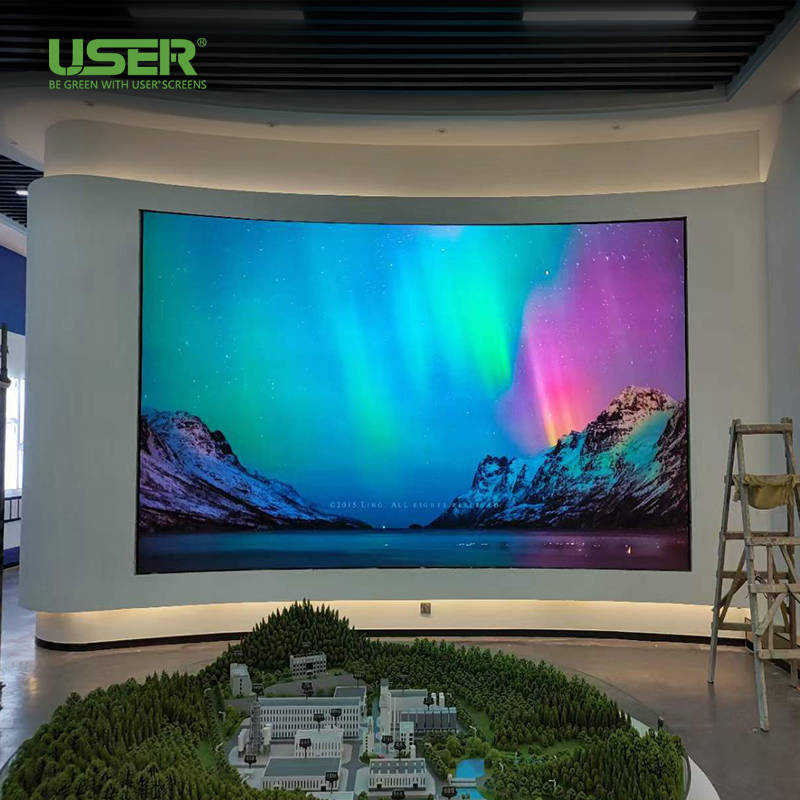
Typical LED Video Wall Scenarios in Airports
Airports use LED video walls in several high‑impact locations, each with different requirements.
Common Airport Use Cases
- Main departure and arrival boards in check‑in and public halls
- Wayfinding and gate‑area information walls
- Baggage claim information and advertising walls
- Duty‑free and retail LED walls for promotions
- VIP lounges and airline brand walls
A professional LED video wall supplier should be able to recommend different product series and pixel pitches for each of these zones, instead of pushing a one‑size‑fits‑all solution.
Core Technical Requirements for Airport LED Video Walls
When an airport evaluates an LED video wall supplier, technical performance must match around‑the‑clock operations and strict safety standards.
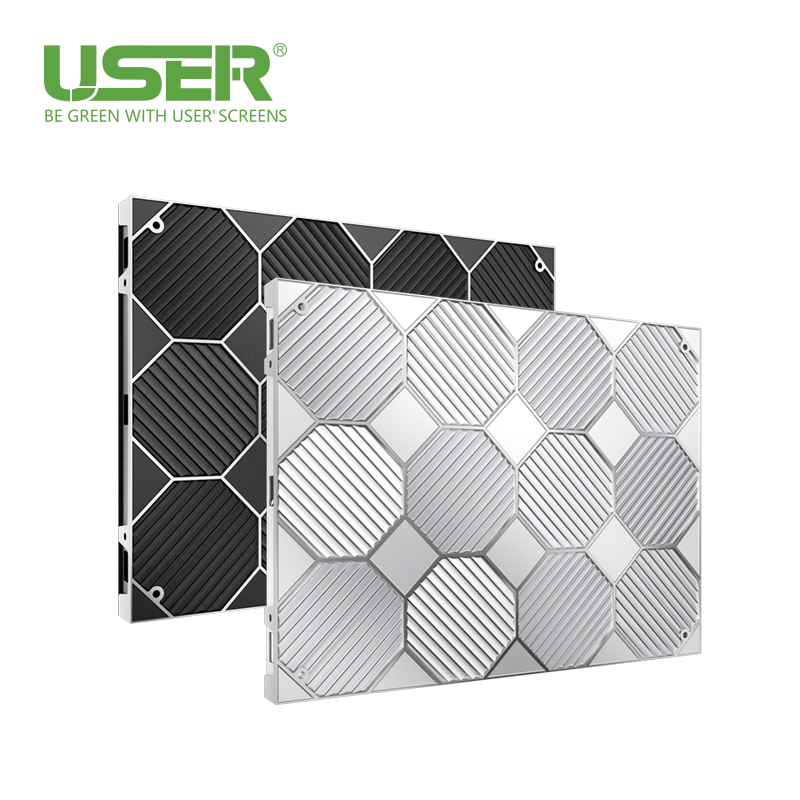
Key Technical Criteria
- Brightness and contrast for bright terminal lighting
- Suitable pixel pitch based on viewing distance and content detail
- High refresh rate and low flicker for cameras and broadcasts
- Redundant power and signal options for critical FIDS walls
- Fire‑safe, certified materials and robust cabinet design
USER LED, for example, offers fine‑pixel‑pitch indoor series and common‑cathode outdoor products designed for high brightness and energy efficiency in demanding environments.
Sample Specification Table for Airport LED Video Walls
The following table illustrates typical parameter ranges you should discuss with any led video wall supplier for airport terminal projects.
| Parameter | Typical Range for Airports | Why It Matters for Airports |
| Brightness (nits) | 800–1,500 (indoor concourse) | Ensures clear visibility under strong ambient lighting |
| Pixel pitch (mm) | P1.25–P2.5 for FIDS and gate areas | Supports sharp text and schedules at short viewing distances |
| Refresh rate (Hz) | ≥ 3,840 | Reduces flicker on cameras and improves perceived smoothness |
| Contrast ratio | 3,000:1 or higher | Enhances readability of text and graphics |
| Power redundancy | Optional dual power supplies on critical walls | Maintains operation if one power path fails |
| Signal redundancy | Dual receiving cards / loop backup | Prevents content loss from single signal failure |
| Cabinet material | Metal cabinet with good heat dissipation | Improves lifespan during 24/7 operation |
| Front or rear service | Front‑service recommended in tight spaces | Minimizes maintenance space requirements behind walls |
| Certifications | CE, RoHS and relevant fire‑safety conformity | Supports airport safety and procurement compliance |
An experienced supplier should be able to map your actual airport layout and propose these specs in a clear engineering proposal rather than generic marketing brochures.
Why 24/7 Reliability and Redundancy Are Non‑Negotiable
Flight information must be available every second. That means your LED video wall cannot be treated like a standard commercial sign.
What to Look For
- Component quality: Branded LED chips, power supplies, and receiving cards rated for 24/7 duty cycles.
- Redundant design: For the main FIDS wall, ask for redundant power and signal options to avoid a black screen due to a single point of failure.
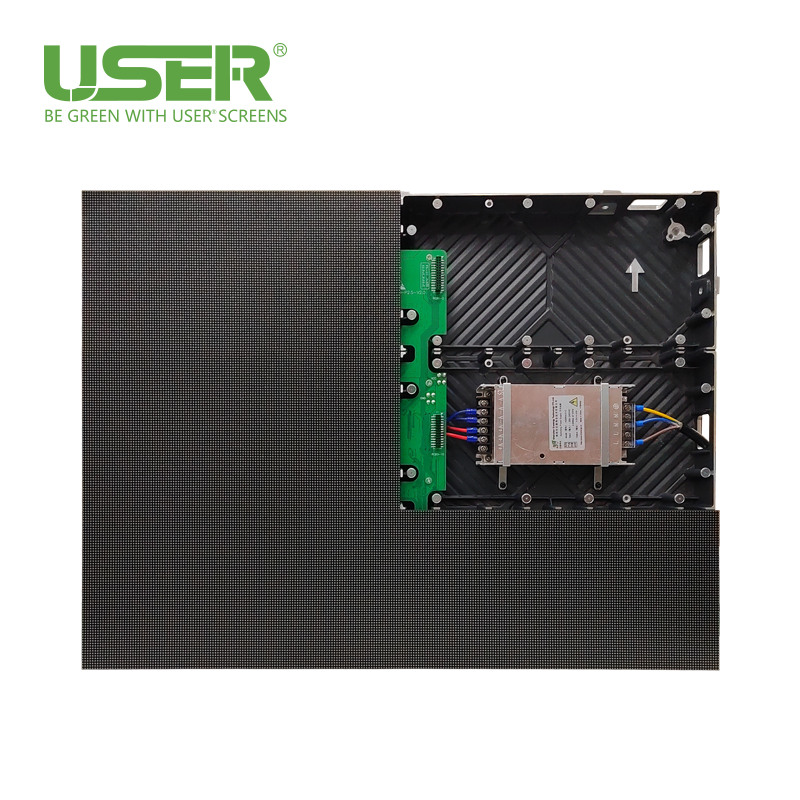
- Thermal management: Good cabinet and module design to avoid overheating and premature LED degradation.
- Proven case studies: Check whether the supplier has long‑running airport or transportation projects with stable performance.
USER LED highlights automated production lines, strict quality control, and long‑term installations across 80+ countries, which is important when comparing long‑term reliability claims.
Evaluating LED Video Wall Suppliers: Key Airport‑Specific Criteria
Choosing an led video wall supplier for airport terminals goes beyond the hardware. You need a long‑term partner who understands aviation operations.
Experience in Transportation and Airports
Suppliers that already serve transportation hubs, command centers, and control rooms are more familiar with:
- 24/7 uptime requirements
- Strict acceptance testing
- Integration with existing IT and broadcast systems
USER LED’s global project portfolio includes indoor and outdoor LED video walls for transportation and commercial spaces, which helps airport teams benchmark performance.
In‑House R&D and Production
A full‑solution manufacturer with in‑house R&D and automated production lines can customize products and control quality better than a pure trader. This supports:
- Custom cabinet sizes for architectural constraints
- Special mounting or curve requirements in terminal halls
- Faster response when spare parts or firmware updates are needed
Engineering Design and Turnkey Services
For airports, engineering capability is often more important than unit price. Evaluate whether the supplier can:
- Conduct on‑site surveys or work from detailed CAD drawings
- Provide complete structural and electrical drawings
- Coordinate with local integrators on mounting, cabling, and commissioning
- Train airport technical staff on operation and maintenance
USER LED positions itself as a “commercial display solution supplier” and provides both products and engineering support, which is critical for complex terminals.
Supplier Comparison Table: What Airports Should Check
Use this framework to compare potential led video wall suppliers side by side.
| Evaluation Dimension | Strong Supplier Characteristics | Red Flag Signs for Airports |
| Airport / transport experience | Has completed airport, metro, or control center projects with references | Only generic retail or rental projects, cannot share references |
| Engineering team | Offers design drawings, simulation, and on‑site supervision | Outsources all design, limited technical support |
| Product portfolio | Fine‑pitch indoor, high‑brightness outdoor, and special‑shape options | Only one or two product lines, limited flexibility |
| Quality control | Automated production, full test process, documented QC | No factory tour or quality documentation available |
| Service and maintenance | Clear SLA, remote support, local partner, spare‑parts strategy | Only basic warranty, unclear response time |
| Financial stability | Long history, stable global customers | Very new brand or inconsistent company background |
When talking to a supplier, ask them to map their strengths against these dimensions and back up claims with documentation, certifications, and real project photos.
After‑Sales Support: Service Level Agreements for Airports
Even the best hardware requires proper maintenance. For airport operations, you should negotiate a service level agreement (SLA) with your LED video wall supplier.
Recommended SLA Components
- Guaranteed response time for critical failures (e.g., within 2–4 hours remotely, 24 hours on‑site via local partner)
- Regular preventive maintenance (cleaning, calibration, health checks)
- Remote monitoring options for temperature, module status, and power supplies
- Clear spare‑parts strategy, including on‑site spares for critical walls
USER LED emphasizes structured support services and provides guidance on protecting LED displays from environmental issues like humidity, which is relevant for terminals in coastal or humid regions.
Budgeting and Total Cost of Ownership
Price per square meter is only one part of the equation. Airports should calculate total cost of ownership (TCO) over 5–10 years.
Factors That Affect TCO
- Energy efficiency (especially for large, always‑on walls)
- Maintenance costs and access complexity
- Uptime impact: the cost of a screen failure during peak operations
- Upgrade path: whether the system can be expanded or partially upgraded later
Common‑cathode outdoor and energy‑optimized indoor products, like those in USER LED’s portfolio, can reduce operating costs while maintaining brightness and reliability.
Why Consider USER LED as Your Airport LED Video Wall Supplier
Shenzhen USER Special Display Technologies positions itself as a professional LED display and LED video wall supplier serving more than 80 countries. For airport projects, this means:
- Full series of indoor and outdoor LED displays, including fine‑pixel‑pitch solutions for information walls and high‑brightness screens for façades and outdoor areas.
- Integrated solution capability: from design consultation and product selection to production and logistics, with support for OEM/ODM if required.
- Proven experience in commercial and transportation environments, with case studies demonstrating long‑term stability and visual performance.
When planning an airport terminal upgrade, you can start by exploring USER LED’s main site sections, such as the LED video wall product pages and company profile, to better understand available series and support models.
Practical Checklist Before Choosing an Airport LED Video Wall Supplier
Use the following checklist in your internal RFP or vendor evaluation process.
- Does the supplier have verifiable airport or transportation projects?
- Can they provide detailed engineering drawings and simulation before production?
- Do they offer redundant power and signal design for critical FIDS walls?
- Are brightness, pixel pitch, and refresh rate aligned with your specific terminal environment?
- Is there a clear SLA with response times and preventive maintenance?
- Can they ensure long‑term spare parts and upgrade support?
By systematically reviewing these questions, airport managers and technical teams can reduce risk and secure long‑term visual performance.
FAQs About Choosing an LED Video Wall Supplier for Airports
What is the most important factor when choosing an airport LED video wall supplier?
For airports, the most important factor is long‑term reliability backed by proven transportation projects and a clear service framework. A supplier must demonstrate stable 24/7 operation, rapid fault response, and strong engineering support, not just attractive pricing.
Which pixel pitch is best for airport departure and arrival boards?
For main departure and arrival boards where passengers view information from several meters away, pixel pitches between P1.25 and P2.5 are commonly recommended. This range offers a good balance between text clarity and cost per square meter in large indoor halls.
Do airports really need redundancy on LED video walls?
Yes. For mission‑critical FIDS and gate displays, redundancy in power and signal can prevent complete blackouts due to a single component failure. This is especially important in international hubs with heavy traffic and complex operations.
How should airports compare quotes from different LED video wall suppliers?
Airports should compare not just price per square meter but also product specifications, redundancy, engineering services, warranty and SLA terms, references, and long‑term support capabilities. A slightly higher initial investment can significantly reduce downtime and maintenance costs over time.
Why consider a manufacturer like USER LED instead of a local reseller?
A global manufacturer with in‑house R&D and production can offer more optimized solutions, better control over quality, and long‑term spare‑parts availability. Combining this with local installation partners often delivers the best mix of technology and on‑site service.