
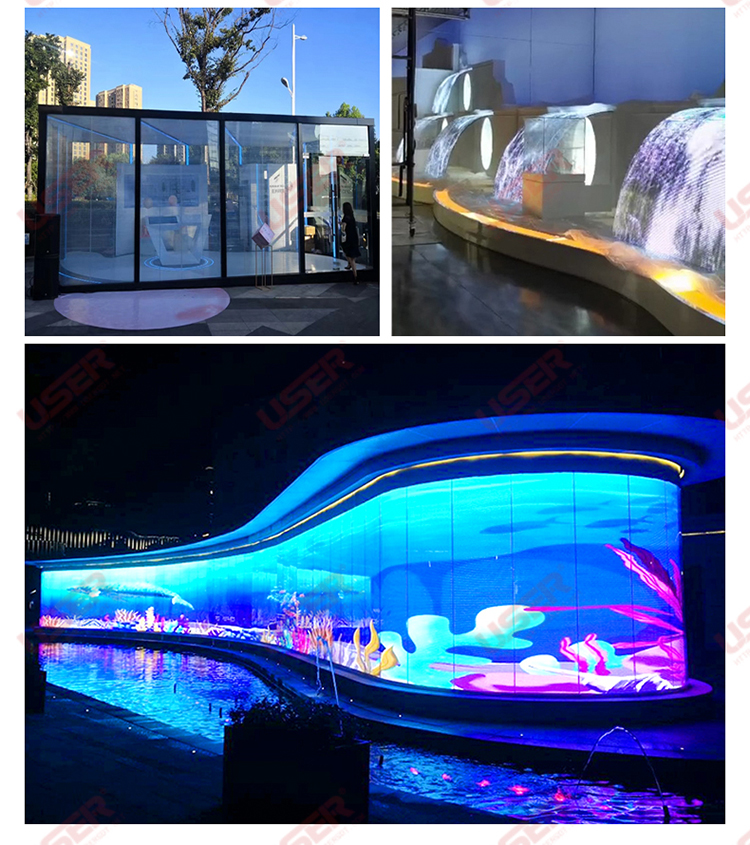
Shopping mall operators face a critical decision when installing crystal film transparent LED screens on glass partitions: choosing the right mounting method directly impacts display performance, structural integrity, and long-term maintenance costs. With modern crystal film technology achieving 85-92% transparency and pixel pitches ranging from P5 to P15.6, understanding the installation approach becomes essential for maximizing both visual impact and architectural harmony.
Understanding Crystal Film Transparent LED Screen Technology
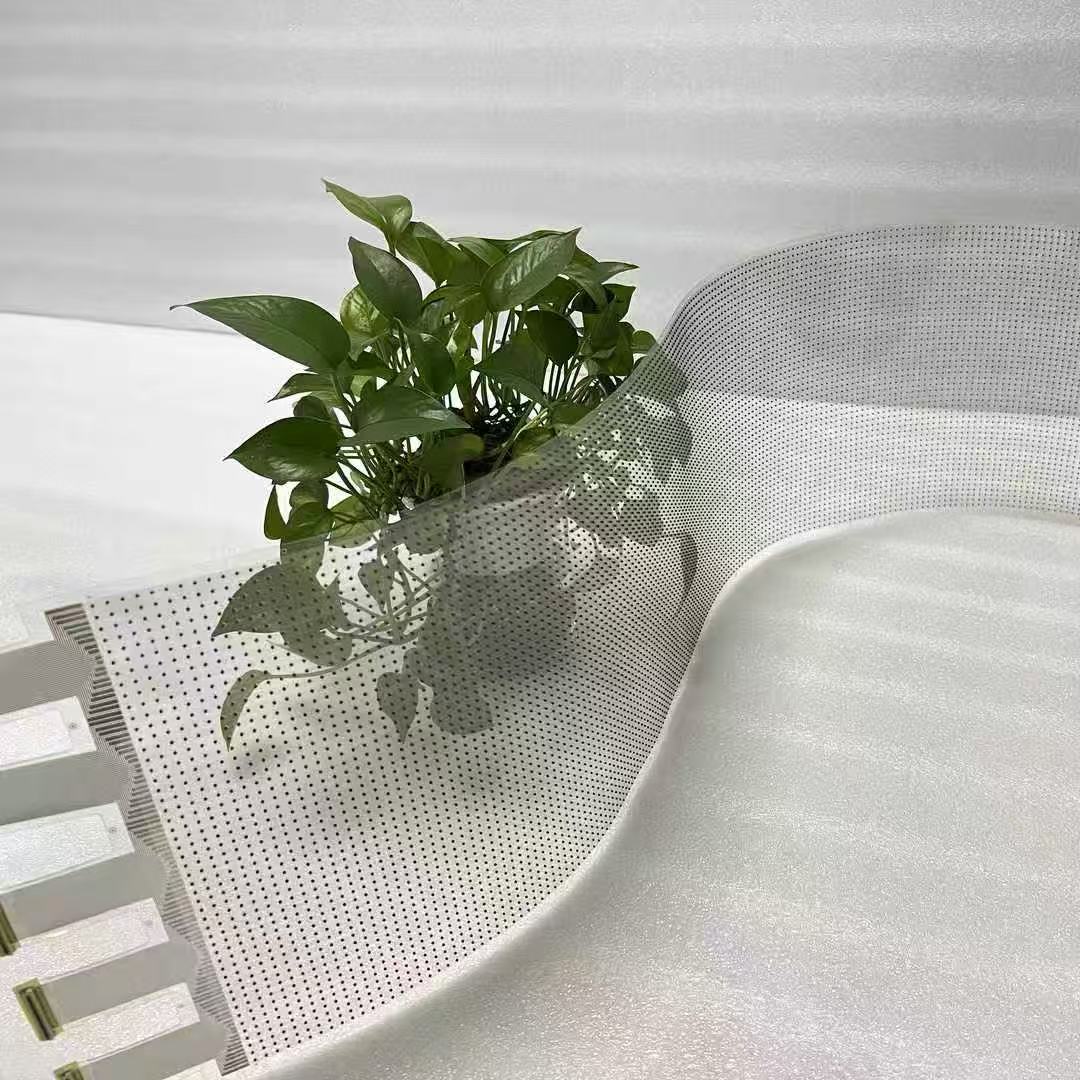
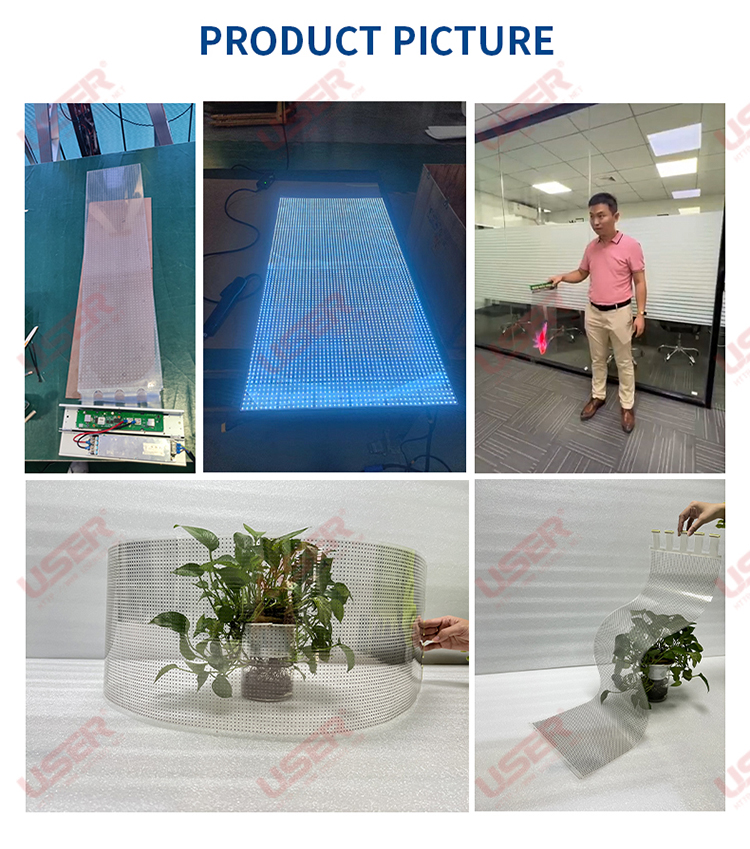
Crystal film transparent LED screens represent an evolution in architectural display technology, utilizing high-temperature-resistant PET film substrates that deliver exceptional transparency while maintaining high-resolution visual output. Unlike traditional cabinet-based transparent displays, crystal film screens offer ultra-thin profiles (typically 3-5mm thickness) and significantly lighter weight—approximately 3.5 kg per square meter compared to 7-15 kg for cabinet systems.
The technology’s core advantage lies in its modular PET film construction. Standard module sizes range from 960×240mm to 1000×400mm, with available pixel pitches of P5, P6.25, P10, and P15.6. Physical pixel densities span from 4,096 dots/m² (P15.6) to 40,000 dots/m² (P5), enabling optimal viewing experiences at distances from 5 to 15 meters—perfect for typical shopping mall environments.
Transparency ratings distinguish crystal film screens from competing technologies. While standard transparent LED cabinets achieve 65-78% transparency, USER’s crystal film solutions reach 85% at P5/P6.25 and up to 92% at P15.6. This superior transparency preserves natural lighting, maintains visual connectivity between mall zones, and complies with building codes requiring minimum daylight transmission through interior glass partitions.
Two Primary Installation Methods for Mall Glass Partitions
Surface-Mounted PET Film Installation
Direct adhesive mounting represents the most streamlined installation approach for crystal film transparent LED screens on mall glass partitions. This method bonds the PET film display directly to the glass surface using specialized optically-clear adhesive compounds designed for high-viscosity, flexible applications.
The installation process begins with thorough glass surface preparation. Mall glass partitions must be cleaned to remove all oil, dust, and contaminants that could compromise adhesive bond strength. Application starts from one edge, with installers gradually smoothing the film onto the glass surface while using squeegees to eliminate air bubbles. The specialized adhesive formulation allows limited repositioning during the first 15-20 minutes, accommodating precise alignment with architectural features.
Surface-mounted installations excel in scenarios where glass partitions remain permanently fixed, viewing occurs from both sides, and minimal structural modification is required. The method delivers seamless visual integration, with the ultra-thin profile (typically 3-5mm total thickness) maintaining the partition’s original aesthetic. However, this approach offers limited future reconfiguration flexibility and requires complete screen replacement if individual modules fail.
Structural Glass Integration with Aluminum Frame Systems
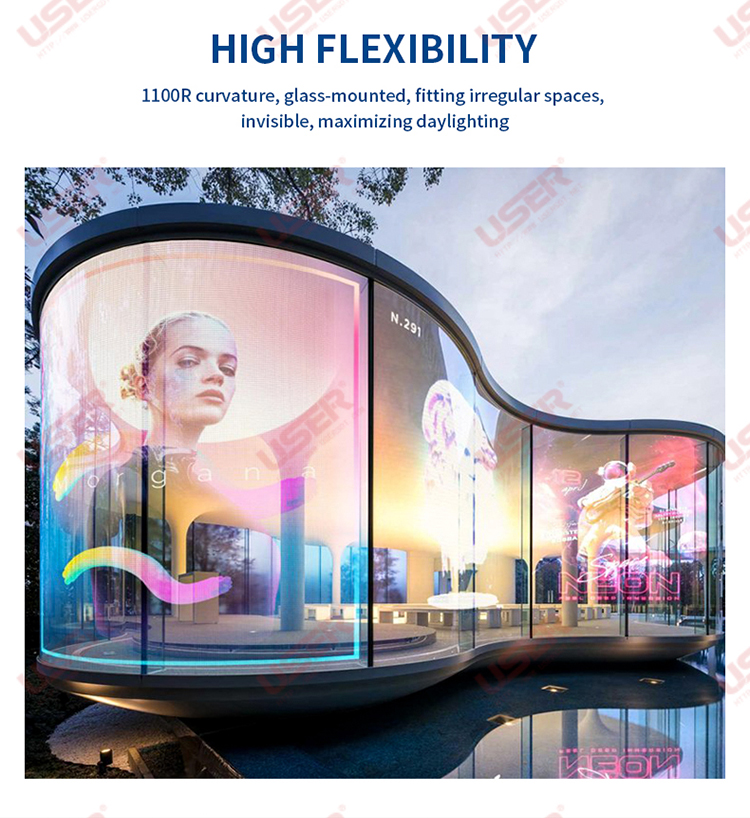
Frame-mounted installation provides enhanced modularity and maintenance accessibility for shopping mall glass partition applications. This method employs custom aluminum alloy or high-strength plastic frames designed to match the screen’s dimensions and the partition’s architectural specifications.
Frame installation begins with precision measurement of glass partition dimensions. Laser levels ensure horizontal and vertical alignment, critical for maintaining visual consistency across multi-panel installations. Aluminum frames typically mount to existing glass framing systems using expansion bolts or specialized brackets that distribute load evenly across the glass edge supports.
Once frames are secured, crystal film modules install within the frame channels using combination mounting methods. Some designs incorporate shallow adhesive bonding for module stability, while others use tension-based clips that allow individual module replacement without dismantling the entire array. Frame depths typically range from 15-25mm, accommodating power distribution systems and control electronics while maintaining acceptable visual profiles.
Frame-mounted systems offer superior advantages for large-scale installations exceeding 10 square meters, where modular assembly reduces installation time and enables phased deployment. The approach also simplifies maintenance—individual modules can be replaced without affecting adjacent panels.
Technical Specifications Comparison: P5 to P15.6 Crystal Film Screens
| Specification | P5 | P6.25 | P10 | P15.6 |
| Pixel Pitch | 5mm | 6.25mm | 10mm | 15.6mm |
| Module Size | 1000×320mm | 1000×250mm | 960×240mm | 1000×250mm |
| Physical Density | 40,000 dots/m² | 25,600 dots/m² | 10,000 dots/m² | 4,096 dots/m² |
| Transparency | 85% | 85% | 90% | 92% |
| Optimal Viewing Distance | 5-10m | 6-12m | 10-20m | 15-30m |
| Brightness | 2,000 cd/m² | 2,000 cd/m² | 2,000 cd/m² | 2,000 cd/m² |
| Power Consumption | 375W/m² | 200-375W/m² | 150-220W/m² | 80W/m² |
| Weight | ~3.5 kg/m² | ~3.5 kg/m² | ~3.2 kg/m² | ~3.0 kg/m² |
Pixel pitch selection for shopping mall glass partitions depends primarily on viewing distance and content strategy. P5 and P6.25 options deliver superior image quality for close-range applications (5-12 meters) such as boutique area partitions or escalator-adjacent installations where shoppers pass within intimate viewing distances. These higher-density configurations support detailed product imagery, fine text rendering, and high-resolution video content.
Conversely, P10 and P15.6 variants optimize cost-efficiency for large-format partitions in atrium spaces, food court dividers, or corridor installations where primary viewing occurs from 10-30 meters. The reduced pixel density decreases both initial investment and operational costs (80W/m² for P15.6 versus 375W/m² for P5), while the enhanced transparency (90-92%) maximizes natural light transmission through expansive glass surfaces.
Critical Installation Planning Factors
Structural Load Assessment
Despite crystal film screens’ lightweight construction (3.0-3.5 kg/m²), comprehensive load analysis remains essential for shopping mall glass partition installations. Standard tempered glass partitions typically support 15-25 kg/m² additional load, providing substantial capacity margin. However, installations must account for dynamic loads from vibration, wind pressure in open atrium designs, and thermal expansion coefficients.
Frame-mounted installations concentrate loads at bracket points, requiring reinforcement verification at glass edge supports. Surface-mounted applications distribute weight more uniformly but may require structural glass upgrades if existing partitions use thinner glass (less than 10mm). Professional structural engineers should evaluate all installations exceeding 5 square meters.
Electrical Infrastructure Integration
Crystal film transparent LED screens require carefully planned power and data distribution systems within mall environments. Average power consumption ranges from 80W/m² (P15.6) to 375W/m² (P5), with actual consumption varying based on content brightness.
For a typical 10m² glass partition installation using P6.25 crystal film screens, total power requirements approximate 2,000-3,750 watts at maximum brightness. Mall electrical infrastructure must accommodate these loads while maintaining proper circuit isolation, ground fault protection, and emergency shutdown integration with building fire safety systems.
Step-by-Step Installation Process
Surface-Mounted Installation Procedure
Step 1 – Glass Preparation: Clean glass surfaces using professional-grade solutions to achieve streak-free transparency. Apply dedicated film application solution to facilitate screen positioning during installation. Verify surface temperature between 15-25°C for optimal adhesive performance.
Step 2 – Module Alignment: Position laser levels to establish reference lines for horizontal and vertical alignment. Remove protective film from first crystal film module and spray with application solution. Attach module along laser reference line, beginning from top edge and progressing downward to minimize trapped air.
Step 3 – Bubble Removal: Using rubber squeegees with 45-degree edge angles, progressively remove application water and trapped air bubbles from center outward. Apply moderate pressure to avoid damaging LED components.
Step 4 – Power System Integration: Allow 12-24 hour adhesive cure time before installing control boxes and power supplies. Connect modules according to electrical diagrams and perform complete system commissioning.
Cost Analysis: Installation Methods Comparison
| Cost Factor | Surface-Mounted | Frame-Mounted |
| Initial Installation Labor | $45-65/m² | $75-95/m² |
| Material Cost | $15-25/m² | $35-55/m² |
| Total Installation Cost | $60-90/m² | $110-150/m² |
| Module Replacement Labor | $80-120/module | $35-50/module |
| Reconfiguration Flexibility | Low | High |
| Expected Service Life | 10-12 years | 12-15 years |
Surface-mounted installations deliver lower upfront costs, ideal for permanent installations with fixed content strategies. Frame-mounted systems justify higher initial investment through superior flexibility, reduced long-term maintenance costs, and enhanced durability in high-traffic mall environments.
Conclusion
Choosing between surface-mounted and frame-mounted installation for crystal film transparent LED screens depends on your specific mall environment and long-term objectives. Surface mounting offers lower initial costs and seamless aesthetics for permanent installations, while frame mounting provides superior flexibility and easier maintenance for dynamic spaces.
Pixel pitch selection should align with viewing distances—P5/P6.25 for close-range applications (5-12m) and P10/P15.6 for larger installations (10-30m). When properly installed, crystal film screens deliver 10-15 years of reliable operation, transforming mall glass partitions into high-transparency digital displays that preserve architectural openness.
Explore USER LED’s transparent display solutions for comprehensive crystal film screen options with full installation support.
Frequently Asked Questions
Q: What is the minimum glass thickness required for crystal film transparent LED screen installation on mall partitions?
A: Standard crystal film screens weighing 3.0-3.5 kg/m² can install on tempered glass partitions of 10mm minimum thickness for surface-mounted applications. Frame-mounted installations may utilize 8mm glass if frames attach to dedicated structural supports rather than the glass itself. Always consult structural engineers for installations exceeding 5m².
Q: How does crystal film screen transparency compare to traditional transparent LED cabinets?
A: Crystal film screens achieve 85-92% transparency depending on pixel pitch (P5: 85%, P15.6: 92%), significantly higher than cabinet-based transparent LED displays (65-78%). This enhanced transparency preserves natural lighting, maintains visual connectivity across mall spaces, and complies with building codes requiring minimum daylight transmission.
Q: What is the optimal pixel pitch for a glass partition viewed from 8-12 meters in a shopping mall corridor?
A: P6.25 represents the optimal balance for 8-12 meter viewing distances, delivering 25,600 dots/m² resolution sufficient for detailed product imagery and text while maintaining 85% transparency. P10 serves as cost-effective alternative for primarily graphic content. Calculate: Optimal pixel pitch (mm) ≈ viewing distance (m) ÷ 1.5.
Q: How long does professional installation take for a 15m² crystal film screen on a mall glass partition?
A: Surface-mounted installations require approximately 12-16 hours (2 installation days) including glass preparation, module installation, bubble removal, curing time, and power system integration. Frame-mounted installations extend to 20-24 hours (3 installation days) accounting for frame assembly and alignment procedures.
Q: Are crystal film transparent LED screens energy-efficient compared to traditional mall signage?
A: Crystal film screens consume 80-375W/m² depending on pixel pitch, significantly lower than backlit lightbox signage (400-600W/m²). P15.6 configurations use just 80W/m², making them highly energy-efficient for large-format mall applications. Actual consumption varies with content brightness—predominantly dark content reduces power usage by 40-60%.
Q: Can crystal film transparent LED screens withstand cleaning chemicals used in mall maintenance?
A: Crystal film screens tolerate mild, alcohol-free cleaning solutions and water-based detergents. Avoid ammonia-based glass cleaners, acetone, or abrasive compounds that may damage the PET film substrate. Use microfiber cloths with gentle pressure to prevent scratching.