
Mini pixel pitch digital signage is redefining expectations for image quality in control rooms, retail, corporate lobbies and high‑end public spaces. As LED pixel pitch drops below 2 mm, LED displays can rival or surpass tiled LCD walls in clarity while maintaining seamless, bezel‑free visuals.
For system integrators, designers and end users, understanding mini pixel pitch technology and its implications is essential to selecting the right solution for each project. This guide covers technical fundamentals, major application scenarios and how manufacturers like USER LED help deliver reliable fine‑pitch installations.
What is mini pixel pitch digital signage?
Mini pixel pitch digital signage generally refers to LED displays with pixel pitch roughly between 0.9 mm and 2.0 mm, using advanced SMD, mini LED or COB packaging technologies. These fine‑pitch LEDs pack more pixels into the same area, enabling HD, 2K or 4K resolutions at closer viewing distances typical of indoor environments.
Compared with traditional larger‑pitch LED (e.g., P3–P6) designed for long‑distance viewing, mini pixel pitch displays support detailed content such as text, UI elements and product close‑ups, making them ideal for digital signage in retail, corporate and mission‑critical settings.
Technology drivers: mini LED, COB and advanced drivers
Several innovations enable mini pixel pitch digital signage:
- Mini LED and SMD packages Smaller LED packages reduce the physical distance between pixels, improving resolution while maintaining high brightness and reliability.
- COB (Chip On Board) COB technology mounts multiple LED chips directly on a single substrate, improving durability, moisture resistance and surface flatness for ultra‑fine pitches.
- High‑performance driver ICs Advanced drivers and scan architectures support higher refresh rates, lower power consumption and better grayscale performance, crucial for professional content.
Market trends for fine pixel pitch LED
Fine pixel pitch LED displays already account for more than half of global LED video display revenues, with strong year‑over‑year growth in the 1.5–1.99 mm category. Adoption is especially strong in Asia, North America and rapidly urbanizing regions, where governments and enterprises are investing in command centers, corporate showrooms and high‑end retail.
Industry analysis suggests that the sweet spot for many digital signage applications will remain around 1.25–1.8 mm over the next few years, balancing resolution, cost and thermal management. At the same time, ultra‑fine pitches below 1.0 mm are emerging for premium control rooms and broadcast environments.
Key advantages over LCD and projection
Mini pixel pitch digital signage offers several advantages compared with tiled LCD video walls and projection systems:
- Seamless, bezel‑free canvas Unlike LCDs, which introduce bezels between panels, mini LED walls provide a continuous image, enhancing immersion and flexibility in content design.
- High brightness and contrast LED displays maintain high brightness and deep black levels in bright environments, making them suitable for sunlit atriums and store windows where projection struggles.
- Flexible size and aspect ratio LED walls can be built to virtually any size and aspect ratio, from small information displays to large feature walls, without being constrained by standard panel sizes.
Main application scenarios for mini pixel pitch signage
Fine‑pitch LED is transforming multiple verticals:
- Control rooms and command centers Utilities, transportation authorities and security operations use mini pixel pitch walls to monitor detailed dashboards, maps and video feeds with clear readability at close distances.
- Corporate lobbies and meeting rooms Enterprises adopt fine‑pitch LED to create impressive lobby feature walls and high‑resolution meeting room displays for presentations and video conferencing.
- High‑end retail and shopping malls Luxury, fashion and automotive brands use mini pixel pitch signage to present cinematic product imagery and interactive campaigns without visible pixelation.
- Broadcast and education Studios and lecture halls use fine‑pitch LED for backgrounds, virtual sets and teaching walls where viewers are close to the screen
Critical specifications to evaluate
When choosing a mini pixel pitch digital signage solution, focus on:
- Pixel pitch and resolution needs Determine required resolution (e.g., Full HD, 4K) at the planned screen size and typical viewing distance, then select pixel pitch accordingly.
- Brightness and viewing conditions For broadcast and control rooms, moderate brightness may suffice, while retail and atrium environments may need higher brightness for impact.
- Refresh rate, grayscale and color High refresh rates (often 3,840 Hz or higher) and deep grayscale improve motion performance and gradient smoothness, especially on camera.
- Reliability and maintenance Consider module design, front access options, redundancy features and vendor support for long‑term operation.
USER LED mini pixel pitch and COB solutions
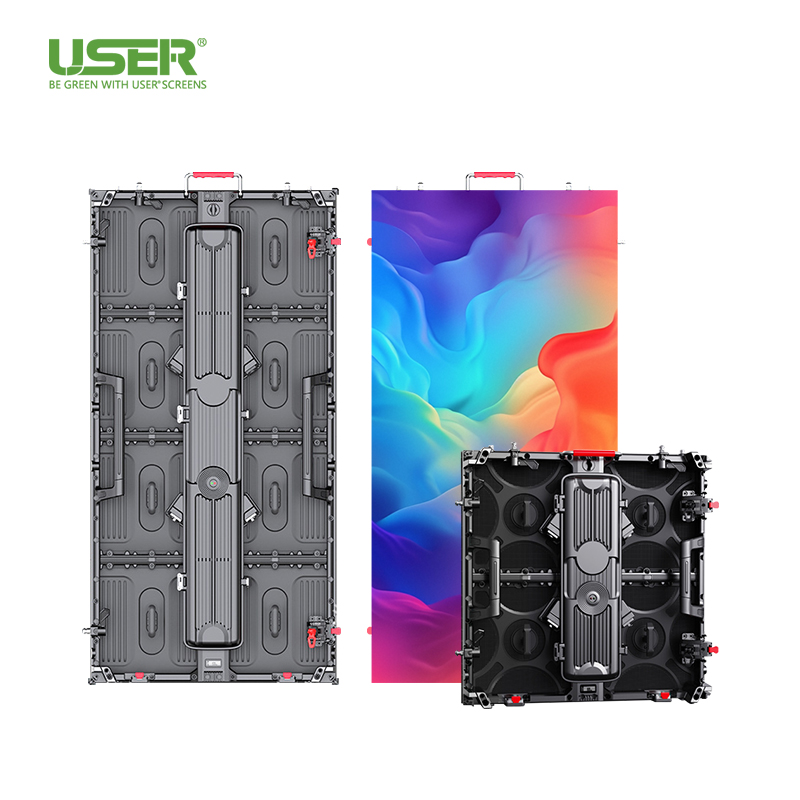
USER LED offers a complete indoor small‑pitch product portfolio, including the K series, T series and COB series with pixel pitches from approximately P0.9 to P2.0 and beyond. These displays support high refresh rates, high contrast and front maintenance, making them suitable for control rooms, conference rooms and premium commercial spaces.
The COB flip‑chip micro‑COB series enhances reliability and surface protection, particularly important for interactive or high‑traffic environments. USER LED has implemented small‑pitch LED projects in studios, conference centers and retail chains across more than 80 countries.
More information on mini pixel pitch and COB displays is available at https://www.userledscreen.com/.
Best practices for mini pixel pitch digital signage projects
Successful fine‑pitch projects typically apply these principles:
- Align specs with real viewing distance Avoid overspecifying pixel pitch that viewers cannot appreciate at typical distances, as it may unnecessarily increase costs.
- Plan for thermal and power management High‑density LEDs generate heat; ensure proper ventilation, power distribution and monitoring for stable performance.
- Coordinate content design early Create content guidelines for resolution, color and motion to ensure campaigns leverage the full capabilities of mini pixel pitch displays.
- Choose experienced manufacturers and integrators Work with vendors that have proven fine‑pitch references, strong quality control and responsive after‑sales service.
By carefully planning specifications, content and vendor selection, organizations can leverage mini pixel pitch digital signage to deliver next‑generation visual experiences that differentiate their spaces and enhance communication.