
What Is a Flexible Curved Transparent LED Display?
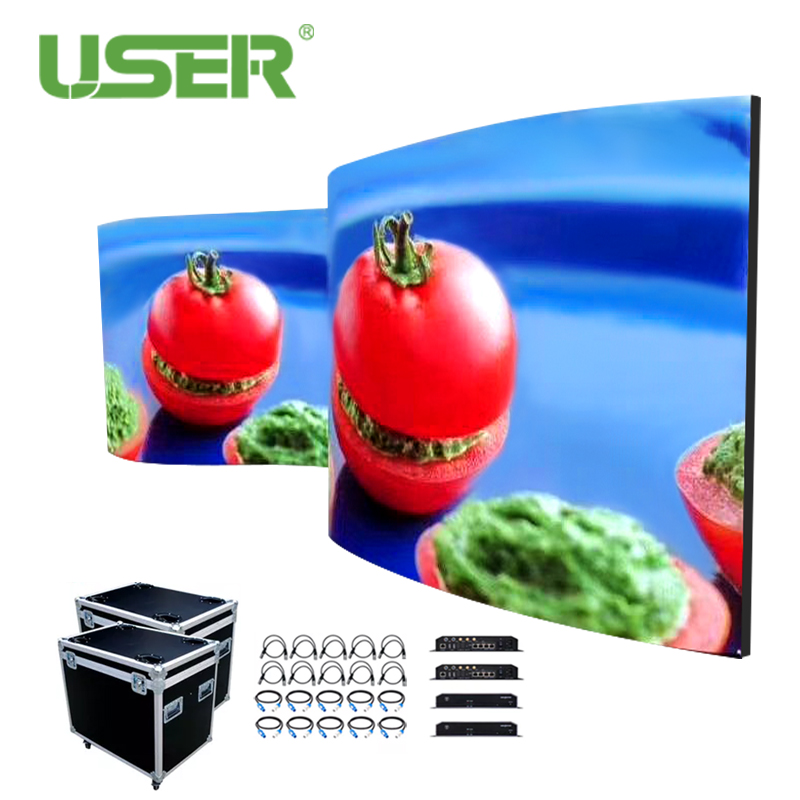
A flexible curved transparent LED display is a bendable, see‑through LED screen designed to follow the shape of curved glass, columns, and irregular architectural surfaces. Its structure is based on soft modules or transparent film technology that can be bent within a safe curvature radius while maintaining stable electrical connections and image quality.
Unlike rigid cabinets that can only form curves through faceting, flexible curved transparent displays achieve smooth arcs and cylindrical shapes. When installed on glass, they provide dynamic content while preserving a high level of transparency, enabling both interior views and daylight penetration.
Core Technologies Behind Flexibility and Transparency
These displays typically rely on one of two core technologies: soft LED modules or transparent LED film.
- Soft LED modules: Built on flexible PCBs and soft substrates, they can be magnetically attached to curved metal structures, enabling 360‑degree cylindrical and wave‑shaped screens.
- Transparent LED film: Uses ultra‑thin PET film with embedded LEDs, providing high transparency and the ability to conform to curved glass surfaces.
USER’s soft module series supports fixed bending up to around 30 degrees per module and has passed over 10,000 bending tests, ensuring long‑term stability for creative shapes. Their transparent LED series offers up to about 78% transparency, while crystal film and holographic invisible screens can reach around 80–85% or more, depending on pixel pitch.
Key Specifications for Curved Transparent Projects
When planning a flexible curved transparent LED project, attention to specification details is essential.
- Pixel pitch: For LED soft modules, options like P1.53, P1.86, P2, and P2.5 are available, suitable for close‑range viewing in indoor spaces. Transparent film often ranges from P5 to P15.6, balancing transparency and visual clarity for larger viewing distances.
- Curvature: Some film solutions support convex and concave curvatures up to about 1100R, allowing gentle curves on façades and columns.
- Transparency: Transparent LED panels can achieve up to around 78% transparency, while crystal film and similar technologies may reach 85–92%.
- Brightness: Indoor curved transparent displays typically operate between about 1000 and 3000 nits, while semi‑outdoor or façade installations may require up to around 5500 nits.
- Protection and lifespan: Properly designed products can reach lifespans approaching 100,000 hours when used within rated temperature and humidity ranges.
These parameters influence content design, viewing comfort, and the overall architectural integration of the display.
Application Scenarios for Flexible Curved Transparent LED Displays
Flexible curved transparent LED displays are ideal when you want to merge digital storytelling with distinctive architecture.
- Cylindrical LED columns: Soft modules or film wrapped around columns in shopping malls, auto showrooms, or corporate lobbies.
- Curved glass façades: Transparent LED film following the arc of a building’s glass façade to create a media surface without heavy steel structures.
- Atrium balustrades: Curved glass railings in malls or airports can display promotional content while maintaining visual openness.
- Retail show windows: Car dealers and flagship stores use curved transparent displays to frame vehicles or mannequins with dynamic light.
- Experience centers and museums: Curved transparent layers can augment physical exhibits with animated information and ambient visuals.
USER’s global case studies include flexible and transparent LED projects in shopping malls, universities, and car retail stores, showcasing the use of creative shapes to enhance brand impact.
Design and Engineering Considerations
Designing a successful flexible curved transparent LED installation requires close coordination between architects, engineers, and LED manufacturers.
- Structural compatibility: Curvature radius must stay within the product’s specifications to avoid stress on LEDs and solder joints.
- Glass thickness and support: For film‑based solutions, the glass itself becomes the primary carrier, so thickness and mounting details must be verified.
- Content planning: Motion graphics should respect the curved geometry to avoid distortion and ensure legibility.
- Maintenance access: Even with glued film, provisions should be made for replacing damaged sections or addressing wiring issues.
- Environmental conditions: Temperature, humidity, and potential exposure to sunlight must match the product’s operating range.
USER’s engineering team can support site surveys, 3D model evaluations, and detailed drawings to ensure mechanical and electrical feasibility. For project support, you can start from the LED display solutions overview and contact USER with your façade or column requirements.
Why USER Is a Strong Partner for Curved Transparent Projects
With full in‑house capability covering soft modules, transparent cabinets, and crystal film screens, USER can deliver end‑to‑end solutions for curved transparent applications. Their flexible module series is specifically optimized for cylindrical and wave‑shaped designs, while transparent film products are targeted at glass‑based installations.
USER has completed dozens of flexible and transparent LED projects worldwide, providing valuable experience in handling complex installation environments. Backed by international certifications and a mature production system, the company offers reliable products, professional pre‑sales consultation, and responsive after‑sales service for long‑life deployments. Visit https://www.userledscreen.com/ to explore solutions and get in touch with their technical team.