A soft connection video LED wall refers to an LED screen system where cabinets or modules are interconnected using flexible cables rather than rigid board‑to‑board connectors. This “soft‑link” approach is widely used in rental and staging markets to improve reliability during frequent assembly, disassembly and transport.
Understanding how soft connections work and when to use them helps integrators choose the most suitable structure for events, touring shows and creative temporary installations. USER LED offers soft‑link rental screens as part of its product portfolio, enabling partners to build robust, easy‑to‑service video walls.
What is a soft connection video LED wall?
In LED screens, “soft connection” usually describes the way signal and sometimes power are transferred between modules and cabinets using flexible flat cables or standard data cables. By contrast, “hard connection” uses rigid board‑to‑board connectors or HUB boards directly soldered to PCBs.
On a soft connection video LED wall:
- Adjacent cabinets are linked by short, flexible signal cables.
- Modules may plug into receiving cards or HUB boards via ribbon cables instead of rigid sockets.
- The system can tolerate slight panel misalignments and physical movement better during assembly.
Soft‑link rental screens from USER LED are designed specifically for event environments where screens are frequently built and dismantled. This configuration reduces the risk of mechanical stress damaging delicate connectors over time.
Advantages of soft connection over hard connection
Soft connection video LED walls offer several practical benefits for rental and touring applications.
- Better resistance to vibration and repeated assembly Flexible cables absorb mechanical stresses when cabinets are handled, transported or slightly misaligned, reducing connector failures.
- Easier replacement and troubleshooting If a cable is damaged, technicians can swap it quickly without soldering, keeping the wall online with minimal downtime.
- Flexible cabinet combinations Soft‑link wiring allows more freedom when combining cabinets in different shapes and sizes, as the signal path can be rearranged using cables rather than fixed boards.
- Lower maintenance risk in rental fleets Hard connection boards can crack or deform when repeatedly plugged and unplugged, while soft connections are more forgiving in daily operations.
For permanent installations where cabinets rarely move, hard connection systems may still be adopted for neatness and slightly lower component count. But for video LED walls that travel from event to event, soft connections are often the better choice.
Typical use cases for soft-link video LED walls
Soft connection video LED walls are particularly popular in:
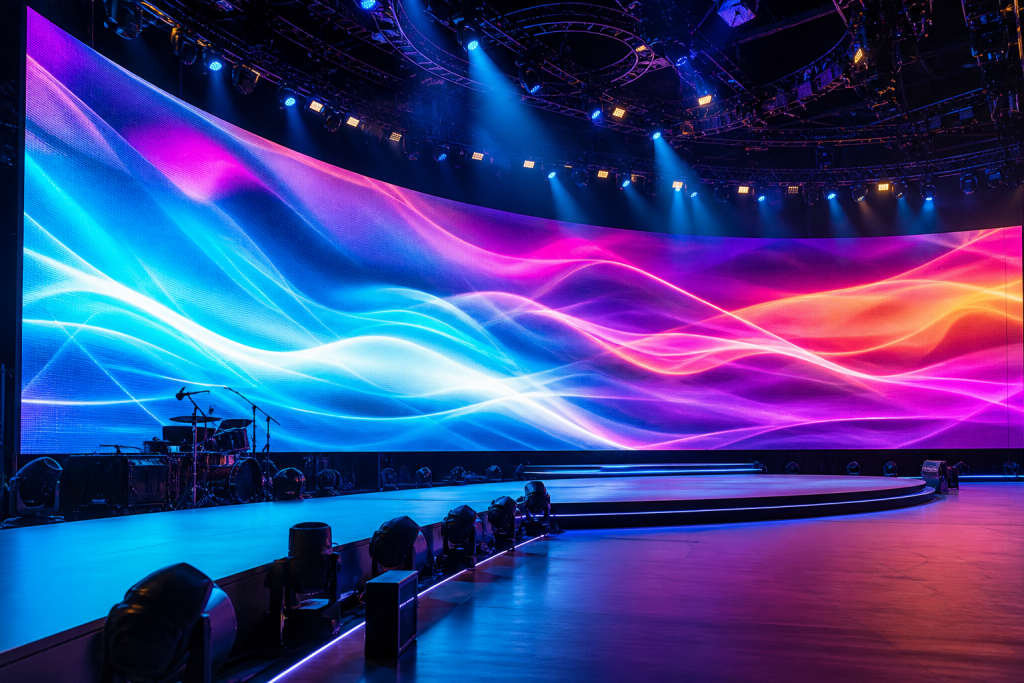
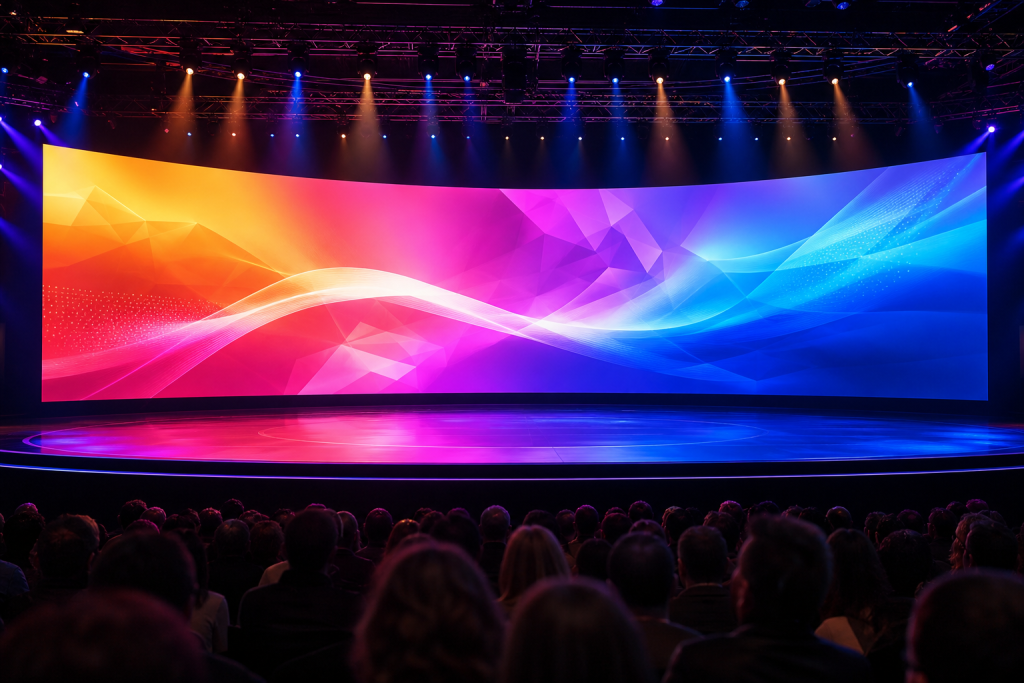
- Live concerts and touring productions
- Exhibitions and trade shows
- Corporate events, conferences and product launches
- Temporary outdoor stages and festivals
USER LED’s soft‑link rental screen products are engineered to deliver high‑definition visuals in these demanding environments, with die‑cast aluminum cabinets, fast locking systems and robust electronics. High refresh rates and brightness options allow their use both indoors and outdoors, depending on the pixel pitch and configuration.
How a soft connection LED wall is wired
From a system perspective, soft connection video LED walls follow the same general principles as other LED systems, but with more flexible inter‑cabinet wiring.
The typical chain is:
- Video source and processor A media server or playback device sends HDMI, DVI or SDI signals into an LED video processor.
- Sending card to data lines The processor or sending card outputs Ethernet‑like data streams to the LED wall, usually via CAT cables or fiber.
- Cabinet‑to‑cabinet connections Inside the wall, flexible data cables link receiving cards in each cabinet, establishing the mapping that defines which part of the video each cabinet displays.
- Module to receiving card connections Modules connect via ribbon or data cables to the receiving card or HUB board in each cabinet.
Soft connection simply means these internal and inter‑cabinet links are handled by flexible cables rather than rigid connectors. It does not change the basic control logic but improves mechanical robustness for mobile use.
Soft connection and creative configurations
Soft‑link architectures pair well with other creative LED technologies such as flexible modules and irregular cabinet sizes.
For example:
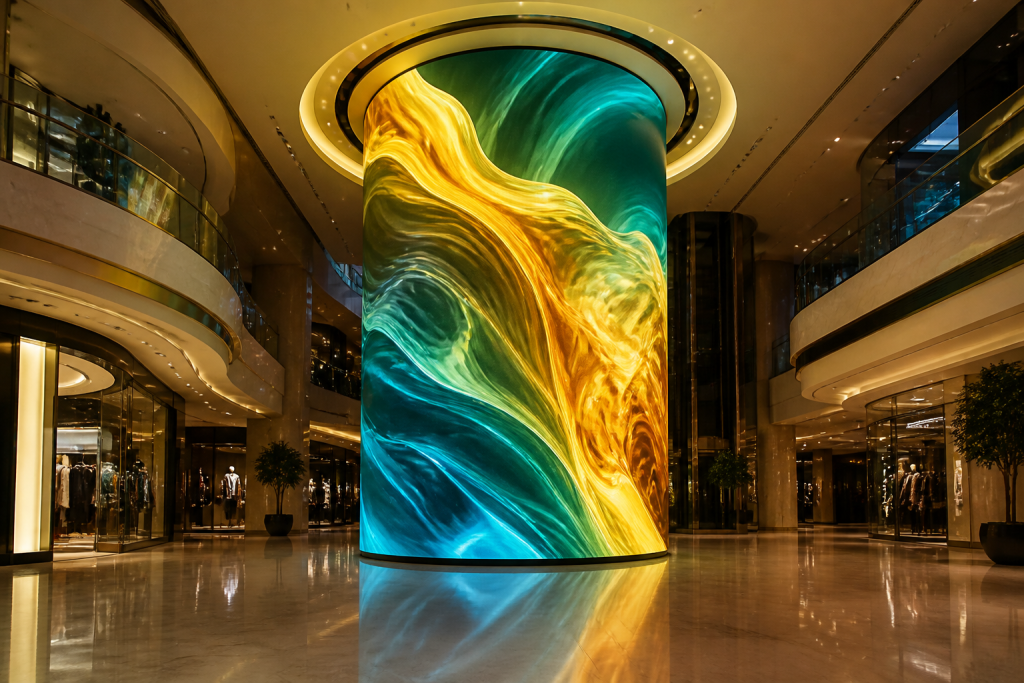
- Curved rental walls that use small, slightly angled cabinets benefit from soft connections to accommodate varying angles between units.
- LED strips, banners or corner screens at exhibitions can be wired flexibly to follow the industrial design of the booth.
- Mixed systems combining fine‑pitch center screens with coarser side banners can still be chained together using signal cables, simplifying set‑up.
USER LED’s LED rental product lines, including indoor and outdoor models, can be combined with soft‑link wiring to support a wide range of stage designs. Integrators can therefore build unique visual experiences without being locked into rigid hardware layouts.
Soft connection vs hard connection: how to choose
Selecting between soft connection and hard connection for a video LED wall depends primarily on usage scenario, service model and cost priorities.
Soft connection best fits:
- Rental companies with frequent set‑ups and tear‑downs
- Touring projects where screens travel internationally
- Environments with vibration or frequent handling
Hard connection may be appropriate for:
- Fixed installations with stable environmental conditions
- Projects where visual seams and cable visibility must be minimized
- Applications where slightly lower cost outweighs flexibility
In practice, many integrators use a mix: soft connections between cabinets and modules for serviceability, combined with neat internal routing and protective covers so the front‑of‑house appearance remains clean.
Partnering with USER LED for soft connection video LED walls
When you plan a soft connection video LED wall, a supplier with deep experience in both rental and fixed LED systems is invaluable.
Shenzhen USER Special Display Technologies provides:
- Soft‑link rental LED screens with high refresh performance, fast assembly and robust mechanical design, suitable for concerts, exhibitions and corporate events.
- A full ecosystem of indoor, outdoor, transparent and flexible LED products, enabling mixed installations within the same visual concept.
- Global project experience, certifications and OEM/ODM support, helping partners customize cabinets, connectors and flight cases for their specific rental fleets.
To explore soft connection video LED wall solutions or request technical data, you can visit https://www.userledscreen.com/ and contact the USER LED team for detailed consultation.