
Flexible transparent LED film screens are transforming how brands use glass surfaces for advertising and architecture, and solutions like USER’s LED high brightness glass adhesive crystal film screen give you one of the most practical, high‑impact options on the market. This in‑depth guide explains what flexible transparent LED film screens are, how they work, where they’re used, and how to choose the right specification for your glass projects.
What Is a Flexible Transparent LED Film Screen?
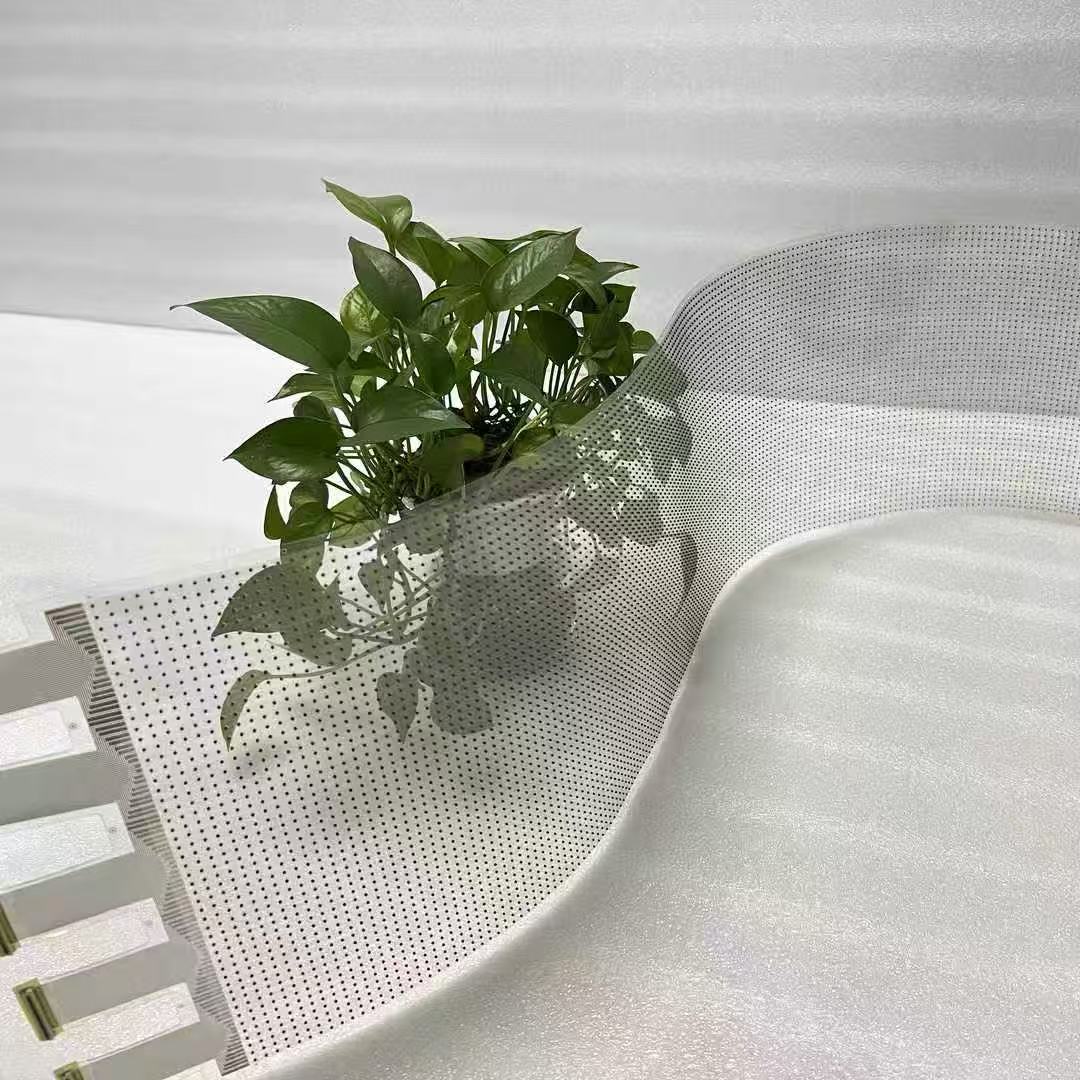
A flexible transparent LED film screen is an ultra‑thin, see‑through LED display built on a clear, flexible substrate such as PET film, designed to be directly adhered to glass surfaces. Instead of using heavy metal cabinets, the LEDs are mounted on transparent, flexible circuits, allowing the film to bend, curve, and follow different glass shapes while maintaining high transparency.
When the screen is on, it delivers bright, dynamic content; when it is off, the film is barely noticeable and the glass still looks and behaves like glass. This combination of digital media capabilities and architectural transparency makes flexible transparent LED film screens ideal for retail windows, building facades, showrooms, and transportation hubs.
How Flexible Transparent LED Film Screens Work
Flexible transparent LED film screens use rows of ultra‑small LEDs arranged in a grid pattern on a clear film. The spaces between the LED strips remain open, allowing natural light to pass through and preserving visibility through the glass.
Data and power are routed through transparent or narrow conductive traces, which are carefully integrated into the film to minimize visual impact. When the control system sends signals to the LEDs, they light up to form images, animations, or text, just like a traditional LED display but with much less visible hardware.
Key Features of USER Flexible Transparent LED Film Screens
USER’s LED high brightness glass adhesive crystal film screen is specifically engineered as a flexible transparent LED film screen for glass windows and facades. It combines high transparency, ultra‑thin construction, and strong visual performance in a modular design suited to both new builds and retrofits.
Core Technical Highlights
| Feature | Typical USER Film Spec | Benefit for Projects |
| Substrate | High‑temperature‑resistant PET film | Stable, durable, and flexible base material |
| Module size | Around 1000 × 240 mm and other modular sizes | Easy to splice into custom glass dimensions |
| Thickness | Approximately 1.8–3 mm | Ultra‑thin, almost invisible on the glass |
| Weight | ≤ 3.5 kg/m² | Very light, ideal for retrofit applications |
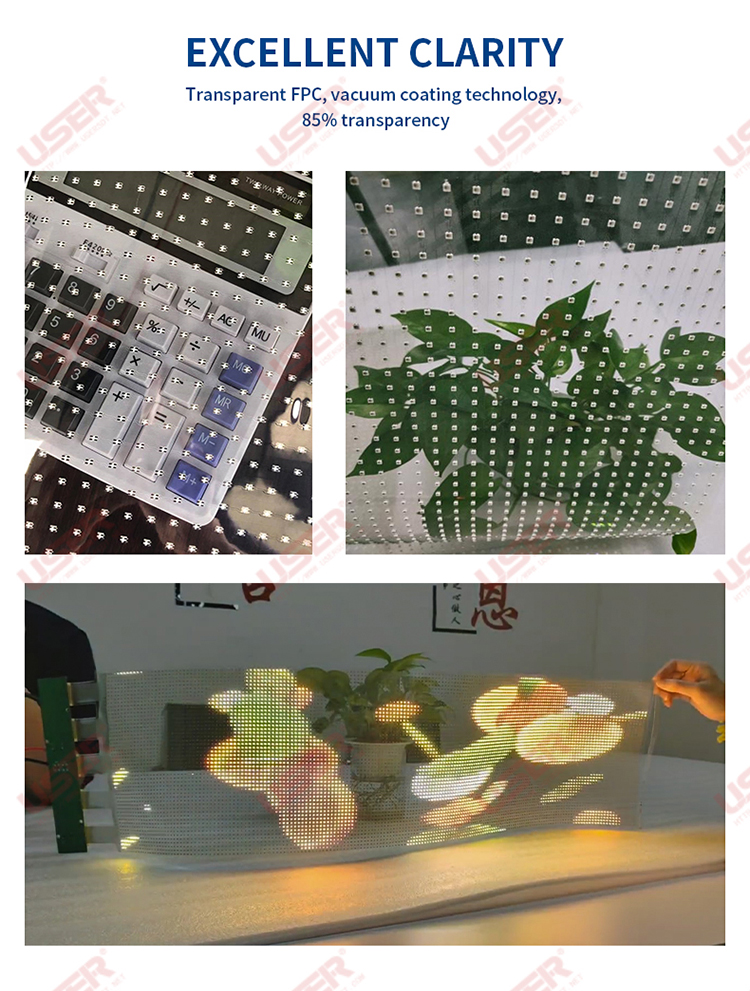
| Transparency | About 80%–92% | Keeps daylight and visibility through glass |
| Gray scale | 16‑bit | Smooth gradients and rich image detail |
| Refresh rate | ≥ 3840 Hz | Flicker‑free, camera‑friendly performance |
| Installation | Adhesive on glass; supports glass‑mounted configurations | Minimal structure, clean architectural look |
These specifications allow the screen to be mounted directly on existing glass while still delivering commercial‑grade brightness and image quality. For many retail and corporate projects, this means the glass can finally become a media surface without sacrificing design aesthetics.
As part of USER’s transparent LED portfolio, this flexible transparent LED film screen is engineered for glass applications where ultra‑thin construction and high transparency are critical, and you can find detailed specifications on the dedicated crystal film screen product page on USER’s official website.
Flexible Transparent LED Film vs. Other Display Technologies
Understanding how flexible transparent LED film compares to other display types will help you choose the right solution for your project.
Comparison Table: Film Screen vs. Transparent Cabinet vs. LCD
| Aspect | Flexible Transparent LED Film Screen | Transparent LED Cabinet Display | LCD Window Display |
| Transparency | Very high (≈80%–92%) | High (≈60%–78%) | Low (panel blocks most of the glass) |
| Thickness | Ultra‑thin (≈1.8–3 mm) | Several cm (cabinet + frame) | Thick integrated box |
| Weight | Very light (≤3.5 kg/m²) | 7–15 kg/m² or more | Heavy, requires strong mounting |
| Installation | Adhered directly to glass, minimal framework | Requires frames or steel structures | Typically floor‑standing or wall‑fix |
| View through glass | Almost unchanged | Slightly reduced | Strongly reduced |
| Shape flexibility | Can follow gentle curves and irregular glass | Mostly flat, limited curvature | Flat only |
| Typical use cases | Windows, facades, atriums, creative media | Large media facades, building wraps | Simple storefront and indoor signage |
Where architecture and visibility matter—such as high‑end retail or modern corporate lobbies—the flexible film solution is often the only display type that meets both design and media requirements at the same time.
Main Applications of Flexible Transparent LED Film Screens
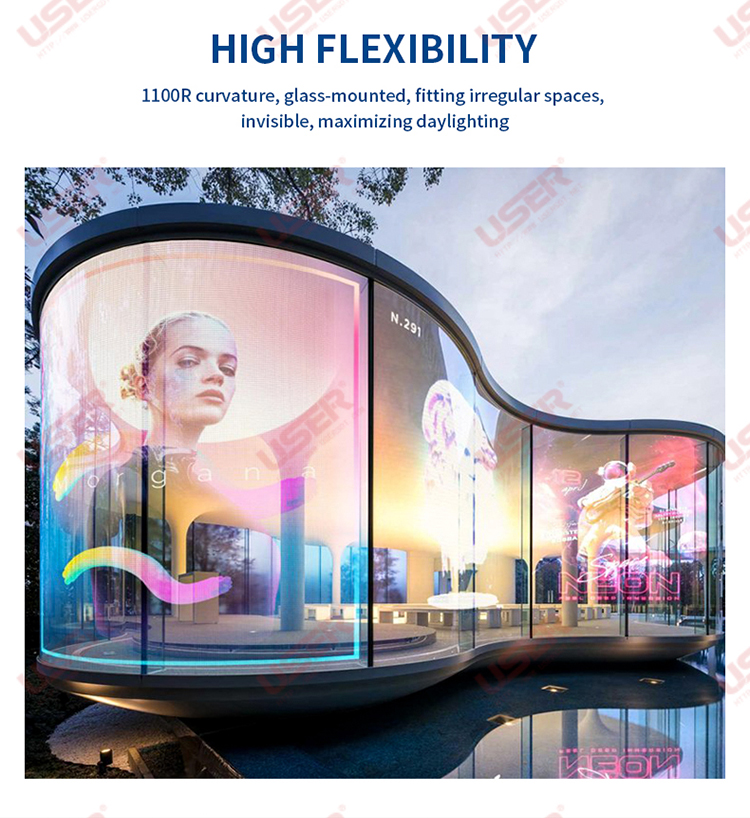
Because they are thin, light, and highly transparent, flexible LED film screens are suitable for a wide range of glass‑based applications.
Retail Shop Windows and Showcases
Retail brands use flexible transparent LED film screens to turn shop windows into dynamic storytelling platforms without blocking product displays. Fashion, cosmetics, and electronics retailers can display campaigns, promotions, and product videos directly on the glass while shoppers still see mannequins and merchandise behind the content.
This creates a layered visual experience: digital content attracts attention from the street, and the physical products behind the glass close the loop by reinforcing the message.
Shopping Mall Facades and Atriums
Large malls typically have multi‑story glass facades, atrium skylights, and glass railings that can all become digital media surfaces with flexible LED film. Instead of building heavy steel structures for traditional LED cabinets, you adhere the film directly to existing glass.
The result is a seamless digital facade that maintains natural light and openness while showing mall branding, tenant advertising, event announcements, and seasonal content.
Automotive 4S Stores and Showrooms
Automotive showrooms rely heavily on floor‑to‑ceiling glass to showcase vehicles from outside, which makes solid LED or LCD screens a poor fit. Flexible transparent LED film screens let dealers run launch videos, specs, and promotional messaging directly on the showroom glass while keeping cars visible.
Because the film is ultra‑thin and light, it does not create a “wall” between the interior and the street, preserving the open, premium feel that automotive brands need.
Corporate Lobbies and Glass Railings
Corporate headquarters and business centers often feature tall glass lobbies, multi‑level atriums, and glass balustrades. Installing heavy LED cabinets here can be technically complex or impossible due to load limits.
Flexible transparent LED film screens are adhered to the interior of glass walls or railings to create welcome walls, brand timelines, real‑time dashboards, or ambient media art. The building keeps its original transparent architecture, but gains a powerful digital communication layer.
Transportation Hubs: Airports and Metro Stations
Airports, train stations, and metro systems have extensive glass surfaces along corridors, concourses, and platforms. Film‑type transparent LED can be applied to these surfaces for advertising, passenger information, and wayfinding.
Because transparency is maintained, staff and passengers still benefit from natural daylight and visual contact with the outdoor environment, which is critical for comfort and safety.
Understanding Specifications: How to Choose the Right Film Screen
To get the best performance and cost balance, you need to match the technical specifications of the flexible transparent LED film screen with your project’s requirements.
Key Parameters to Consider
| Parameter | What It Means | How to Decide |
| Pixel pitch | Distance between LEDs (e.g., P5, P6.25, P10) | Smaller pitch = higher resolution at close range |
| Transparency | % of light passing through the screen | Higher for facades and show windows |
| Brightness | Luminance in cd/m² (nits) | Higher for bright or sunlit environments |
| Thickness & weight | Film thickness and kg per m² | Crucial for retrofits and glass load calculations |
| Refresh rate | Frequency of image refresh (e.g., ≥3840 Hz) | Higher for smooth motion and filming |
| Gray scale | Number of levels per color channel (e.g., 16‑bit) | Higher for better color depth and gradients |
| Installation mode | Glass adhesive, suspension, free‑standing, etc. | Must match site conditions and installation method |
For close‑view applications like retail windows and indoor atriums, tighter pixel pitches such as P5 or P6.25 deliver sharper images. For larger facades where viewers stand further away, coarser pitches like P10 or P15.6 may be more cost‑effective while still looking crisp from normal viewing distances.
Installation Overview: How Flexible Transparent LED Film Is Mounted

One of the major strengths of flexible transparent LED film is its simple integration with existing glass.
Typical Installation Workflow
- Glass preparation The glass surface is thoroughly cleaned to remove dust, grease, and residues so the film adheres properly.
- Layout and positioning Installers measure and mark positions for each film module according to the design drawings.
- Film adhesion The protective backing is removed and the LED film is applied to the glass, with careful pressure to eliminate air bubbles and maintain alignment.
- Power and data routing Cables are routed along window frames, mullions, or ceiling voids to the controllers and power supplies, keeping hardware visually discreet.
- Configuration and testing The LED control system is configured, content is loaded, and brightness and color settings are adjusted for the ambient environment.
Because the film is thin and lightweight, you generally do not need additional steel structures, which reduces installation complexity, time, and cost compared with traditional LED cabinets.
Cost and ROI Considerations
Budgeting for a flexible transparent LED film screen involves more than just square‑meter price: you must factor in glass conditions, installation, control systems, and content. However, the return can be significant in high‑traffic locations where glass is the main architectural feature.
In retail, brands often see higher foot traffic and engagement when switching from static posters to dynamic film‑type LED content on their windows. In commercial real estate and transportation hubs, monetizing glass surfaces with media content can open new revenue streams from advertisers while enhancing the overall look of the space.
How USER Supports Flexible Transparent LED Film Projects
USER provides a complete portfolio of LED display solutions, from indoor and outdoor LED video walls to flexible and transparent displays, enabling end‑to‑end support for commercial projects worldwide. USER’s flexible transparent LED film screens are part of its transparent LED display family, which also includes cabinet‑type solutions for building facades and glass walls.
USER provides complete LED display solutions, from indoor and outdoor video walls to flexible transparent LED film screens, and you can explore the full range of products and services on the USER LED official website.
By combining high‑transparency PET film, ≥3840 Hz refresh rate, 16‑bit gray scale, and modular engineering, USER’s flexible transparent LED film solutions are optimized for demanding applications that require both strong visual impact and architectural integration. For any project involving glass windows or building facades, combining flexible transparent LED film screens with USER’s engineering support helps you turn existing glass into a high‑value media platform, and you can start by reviewing the latest models in the transparent LED display section.
FAQs About Flexible Transparent LED Film Screens
What is the main difference between a flexible transparent LED film screen and a standard flexible LED display?
A flexible transparent LED film screen is designed primarily for glass applications, built on a clear, ultra‑thin substrate with high transparency. A standard flexible LED display usually uses soft modules mounted on backing materials and is optimized for curved walls, cylinders, or creative shapes rather than for glass adhesion and transparency.
Can flexible transparent LED film screens be used in outdoor environments?
Many flexible film solutions can be integrated into semi‑outdoor or fully outdoor projects as part of glass facades, provided you select models with suitable brightness and protection levels. It is important to consider sun exposure, heat, and moisture when planning outdoor or semi‑outdoor installations.
Do these screens damage the existing glass?
When installed correctly on appropriate glass surfaces, the film is designed to adhere securely without damaging the glass beneath. Removal or replacement must be performed by trained technicians to avoid scratches or stress on the glass structure.
How transparent is the glass when the screen is off?
Depending on the model and configuration, transparency typically ranges from about 80% to 92%, so the glass remains highly see‑through and the film structure is barely visible. This preserves the architectural design, daylighting, and views from inside and outside the building.
What pixel pitch is recommended for shop windows?
For shop windows and indoor glass where viewers are close to the display, tighter pixel pitches like P5 or P6.25 generally provide better image clarity and readability for text and product visuals. Larger pitches can still work for very large windows viewed from farther away, but may show pixel structure at close distances.
How is maintenance handled if an area of the film fails?
Maintenance typically involves servicing or replacing specific film segments or LED strips rather than the entire glass. Because the system is modular, technicians can focus on the affected area, minimizing downtime and disruption to the site.
What kinds of content can be displayed?
Flexible transparent LED film screens support video, images, animations, and real‑time data using standard LED control systems. For best results, content with strong contrast, clear typography, and darker backgrounds often looks more vivid on transparent media.
How long do flexible transparent LED film screens last?
With quality components, proper installation, and suitable operating conditions, film‑type transparent LED solutions offer service lifespans comparable to other professional LED displays. Actual life expectancy will depend on usage hours, brightness level, thermal conditions, and maintenance practices.
If you share the typical size and environment of your glass project, I can suggest a more precise pixel pitch and configuration for your flexible transparent LED film screen.