
Integrating transparent LED screens with glass facades lets architects and commercial property owners turn building envelopes into dynamic media while preserving natural light and openness. When you do it correctly, the facade becomes both a design statement and a high‑impact communication platform for branding, information and advertising.
For many developers, the main concern is how to add digital layers without damaging the curtain wall or breaking local safety rules. This guide walks through the full process: from pre‑design evaluation and product selection to installation, control systems and long‑term operation with minimal risk.
Understand transparent LED for facades
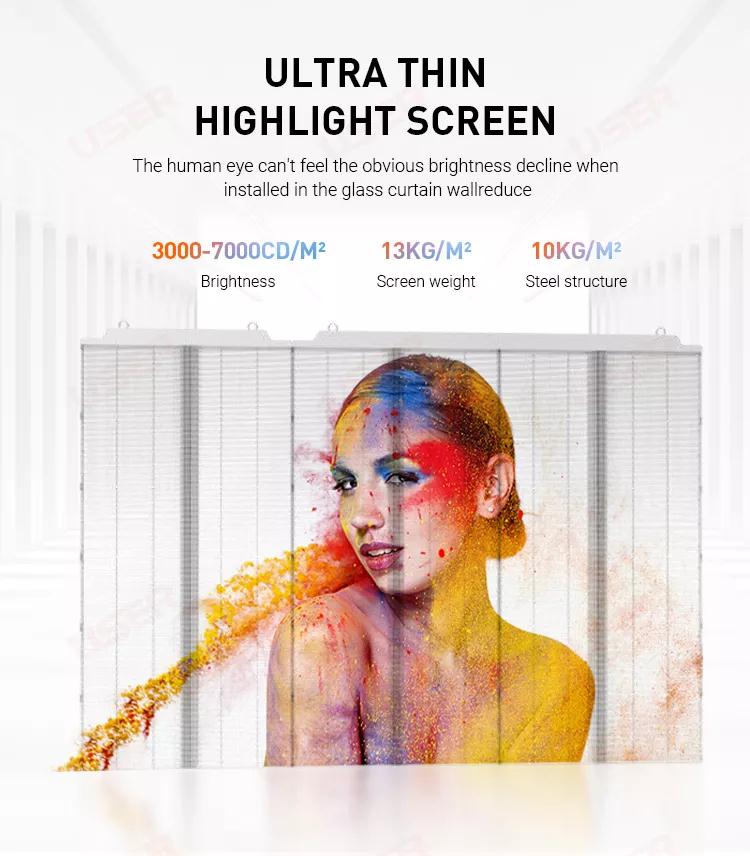
Transparent LED displays use strip or mesh‑type LED modules with high light transmission, often 60–80% or higher, so daylight and views can pass through the glass. USER LED’s standard transparent series, for example, reaches up to around 78% transparency in typical facade pixel pitches. Modules are ultra‑thin and lightweight, with aluminum profile cabinets that reduce structural load on existing glass systems.
Unlike traditional solid LED billboards, transparent screens are specifically engineered to work with curtain walls, glass partitions and large windows. They typically mount to existing mullions or auxiliary frames behind the glass, instead of replacing glazing. This approach keeps the building envelope intact while adding a controllable visual layer in front of it.
Step 1: Evaluate your glass facade
Before choosing any product, evaluate the current facade so the LED system can be integrated safely and cleanly.
Key points to assess:
- Glass type and thickness Tempered, laminated, or insulated glass units have different load‑bearing and drilling limitations, so you must confirm what is installed and obtain the original facade drawings when possible.
- Curtain wall system and mullion layout Identify vertical mullions, horizontal transoms and available anchoring points for aluminum profiles or brackets. USER LED transparent cabinets are designed with modular 1000 × 500 mm sizes, which splice efficiently to common curtain wall grids.
- Structural load capacity Transparent LED cabinets often weigh far less than traditional billboards, but you still need to check the allowable additional load on each anchoring point. Lightweight screens reduce steel structure requirements and make integration much easier in retrofit projects.
- Maintenance access Plan where technicians will stand or hang to service the LED units, power supplies and receiving cards. USER LED transparent screens support rear maintenance for easier access from inside the building.
This initial audit informs your choice of pixel pitch, transparency level, mounting method and cable routing, and it should be done jointly by the building engineer, facade contractor and LED supplier.
Step 2: Choose the right transparent LED specification
Pixel pitch and transparency are the two core parameters for glass facade applications.
- Pixel pitch and viewing distance For city streets and plazas, pitches like 3.9–7.8 mm or 7.8–7.8 mm give a balanced effect between resolution and cost, providing clear visuals at tens of meters away. Closer viewing distances or premium brand façades may justify finer vertical pitches like 2.6–5.2 mm.
- Transparency ratio Higher transparency (around 70–78%) is preferable when daylight and indoor views matter more than ultra‑high resolution. If your content is mostly text, logos or simple animations, you can preserve more transparency without sacrificing legibility.
- Brightness Outdoor facade projects require high brightness so content remains visible under direct sunlight. USER LED transparent series typically offers 1,000–5,500 nits depending on the model, more than enough for glass curtain wall installations.
- Cabinet structure and IP rating Aluminum profile cabinets with IP40 or above protection are widely used behind glass, where the glass itself shields the screen from direct rain. For exposed facade sections or canopy‑type installations, higher protection and sealing are recommended.
When you consult with a professional supplier such as USER LED at www.userledscreen.com, they can simulate viewing distances, choose an optimal pixel pitch and calculate how many cabinets are needed per facade zone.
Step 3: Plan structural integration and mounting
Successful integration with glass facades depends on using compatible mounting methods that do not compromise the curtain wall system.
Common approaches include:
- Mullion‑mounted brackets Slim brackets are fixed onto vertical mullions, then aluminum cabinets are hung or bolted to the brackets. This avoids drilling through glass and simplifies load sharing through the existing structure.
- Auxiliary steel frames In some projects, a lightweight steel grid is built a short distance behind the glass, providing a dedicated support for the transparent modules. This is common in large‑area media facades and ensures uniform alignment across multiple floors.
- Suspended installations For atrium glass walls, transparent screens may be suspended from the top beam and stabilized at the bottom. This method reduces point loads on glass but must be certified by a structural engineer.
Regardless of the strategy, prioritize:
- No direct drilling or heavy fixings into glass panels
- Load paths traced back to columns, beams or main mullions
- Sufficient space for module removal, wiring and ventilation behind the screens
USER LED’s engineering team often supports partners with mechanical drawings, load data and installation training to ensure the mounting solution meets both safety and aesthetic requirements.
Step 4: Electrical and control system design
Behind every facade LED project is a robust electrical and control system design.
Key dimensions to consider:
- Power distribution Calculate power density per square meter and design branch circuits accordingly. USER LED transparent screens typically feature energy‑efficient driving, reducing average power consumption while maintaining high brightness.
- Signal routing Data cables connect from sending controllers or video processors to receivers in each cabinet. For very tall facades, it is common to divide the screen into vertical zones, each with its own signal chain and backup paths.
- Control room placement Control equipment can be installed in a nearby low‑voltage or IT room, connected to the facade through structured cabling. From here, operators manage playlists, brightness and schedules.
- Remote monitoring For commercial buildings, remote monitoring allows integrators and building managers to check status, diagnose failures and manage content without going on site. Professional suppliers like USER LED can interface their displays with standard LED control systems for centralized management.
When you work with a full‑range specialist such as Shenzhen USER Special Display Technologies, you benefit from experience across indoor, outdoor and transparent LED products, which simplifies integration with existing AV infrastructure.
Step 5: Content strategy for glass media facades
A transparent facade is not just hardware; its impact depends heavily on content strategy.
For mixed‑use buildings and corporate headquarters:
- Respect transparency Use darker backgrounds and negative space so interior spaces remain visible, especially at night. Logo animations, text overlays and subtle gradients work very well on transparent screens.
- Avoid visual overload Large glass surfaces can be overwhelming if filled with flashing full‑screen content. Use slower transitions and lower motion density to keep the building elegant and comfortable for occupants.
- Match brightness to environment Use timed brightness schedules and sensors so the screen is bright in daylight but dim in the evening to avoid glare for tenants and neighbors.
- Align with brand and tenant mix In retail and automotive projects, integrate seasonal campaigns, product launches and interactive cues that draw attention without blocking merchandise behind the glass.
USER LED supports OEM/ODM projects in over 80 countries, providing not only hardware but also engineering guidance to help partners build sustainable, brand‑safe media facades.
Step 6: Operation, safety and maintenance
After commissioning, transparent facade screens must operate safely for years with minimal disruption.
Best practices include:
- Scheduled inspections Regularly check structural fixings, cables and modules, particularly after extreme weather. Transparent LED cabinets are light, but wind load on the glass facade can still affect brackets and frames.
- Front or rear maintenance access USER LED transparent modules are designed for quick removal and replacement, minimizing downtime in commercial buildings. In many curtain wall installations, access from the interior side of the glass is sufficient.
- Compliance with local regulations Confirm that content brightness, frequency and type comply with city rules for outdoor displays and building signage. Choose a partner familiar with international standards like CE, FCC and related certifications.
By partnering with an integrated commercial display solutions provider like USER LED and planning each step carefully, you can transform your glass facade into a digital asset that supports both architectural design and business goals. To discuss a specific project, you can contact USER LED viahttps://www.userledscreen.com/.