
 Outdoor LED screens have become a core tool for brands that want to stand out in busy streets, shopping malls, and city centers. When you choose the wrong solution, your ads may look dim in daylight, your messages become hard to read, and your budget is wasted; with the right screen, you can run 24/7 eye‑catching campaigns that stay bright in direct sunlight and work reliably for many years.
This guide walks you through how to pick the right led screen for advertising outdoor, focusing on real commercial scenarios such as shopping mall façades, roadside billboards, and building‑mounted displays.
Understand your outdoor advertising scenario
Why scenario matters
The first step is not the specification sheet; it is the real‑world scenario where your screen will work. A led screen for advertising outdoor on a mall façade faces very different viewing distances and lighting conditions compared with a highway billboard or a small canopy screen above a store entrance.
Typical scenarios and distances
For shopping mall façades, viewers usually see the content from around 20 to 60 meters, often while walking or in slow‑moving traffic. In these cases, a medium pixel pitch such as P4 or P5 often balances clarity and cost well, and the typical screen size ranges from about 10 to 50 square meters depending on façade area.
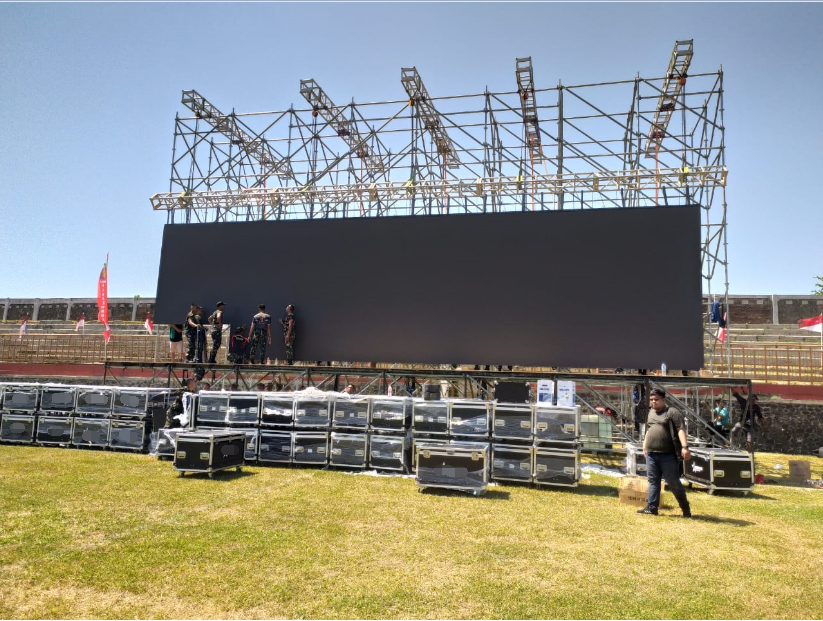
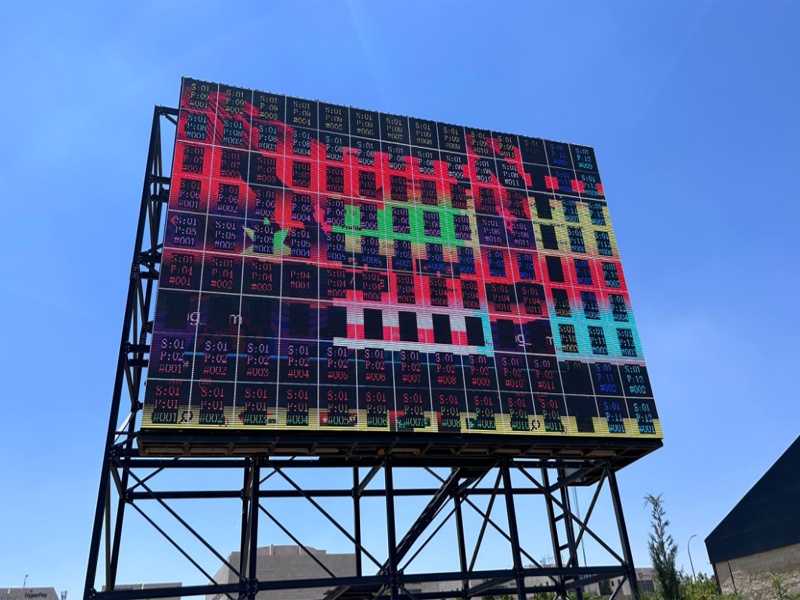
Roadside billboards and highway structures, on the other hand, are viewed mainly from cars at 60 to 200 meters, so they usually use P6 to P10 pixel pitch and larger sizes from about 30 up to even 200 square meters for maximum impact. City‑center building walls sit somewhere in between: people see them from 40 to 120 meters, and P4 to P8 often makes sense depending on how premium the project is.smartbuy.
Smaller installations such as screens above retail store entrances or in narrow streets usually have closer viewing distances in the 5 to 20 meter range, where P3 or P4 delivers crisp text and product details without forcing you into ultra‑fine indoor‑class pitches. Public squares and transport hubs blend pedestrian traffic and passing vehicles, so a versatile P4 to P8 range is often used, with screen sizes from 10 to 60 square meters depending on available space and budget.
Matching scenarios with USER products
For fixed outdoor advertising projects, USER’s dedicated outdoor LED display series cover these scenarios with different pixel pitches, cabinet types, and installation methods, so you can match the product to your actual site rather than forcing a one‑size‑fits‑all approach.
Choose the right pixel pitch
What pixel pitch means
Pixel pitch, expressed as P3, P4, P6 and so on, is the distance in millimeters between two neighboring pixels, and it directly affects both clarity and cost. A common rule of thumb in the outdoor LED industry is that comfortable viewing distance in meters roughly corresponds to pixel pitch in millimeters: screens meant to be viewed from 30 meters might use about P3 or P4, while screens meant for 80 meters can use P6 successfully.
Balancing clarity and budget
In practice, you can think of smaller pixel pitches as “high definition but higher cost”. A P2.5 or P3 led screen for advertising outdoor looks very sharp at close range and works well for small plazas or near eye‑level installations, but it significantly increases the number of LEDs per square meter.
For most mall façades and city center billboards, P4 to P5 is a strong middle ground: text is readable, images are clear, and investment remains reasonable. For large highway billboards and rooftop screens that people only see from far away, P6, P8, and even P10 can be more sensible choices because audiences would not perceive the additional detail from a finer pitch, yet your cost per square meter would rise noticeably.smartbuy.
Pixel pitch options from USER
USER’s outdoor fixed series, which includes pitches such as P4, P5, P6, P6.67, P8, and P10, are designed exactly for these kinds of outdoor advertising projects and allow you to align resolution with real viewing conditions and budget. Combined with USER’s experience in indoor, rental, and special‑shape LED screens, this helps you keep one technical partner for multiple project types.
Brightness, contrast, and daylight visibility
Requirements
Brightness is the second major factor after pixel pitch when you select a led screen for advertising outdoor. Outdoor screens must compete with strong ambient light and sometimes direct sunlight, especially in open plazas or on glass façades that reflect light.
For general outdoor advertising, most professional recommendations start from about 5,000 nits as a minimum to keep content readable throughout the day. When the screen faces south or stands in open sunlight for long periods, brightness in the 6,000 to 8,000 nit range provides a more secure margin, ensuring that colors remain vivid even at midday. In very bright tropical or desert environments, some projects go beyond 8,000 nits but always pair this with intelligent dimming so that the screen automatically reduces brightness at night.+4
Why contrast and angle matter
Brightness alone does not define visual quality. High contrast makes black areas look deep and colored areas look rich instead of washed‑out, which improves perceived sharpness without necessarily increasing pixel pitch. Good outdoor LED screens also keep wide viewing angles, so pedestrians approaching from the side and drivers viewing from different lanes can all see the content clearly.
Automatic brightness control, typically using a light sensor, is critical as well: it avoids glare and saves electricity by dimming the screen on cloudy days or at night. This is particularly important when your led screen for advertising outdoor is close to residential buildings or at busy intersections.
USER brightness performance
USER’s outdoor LED displays are designed for high‑brightness, high‑refresh applications, and typical configurations reach between about 5,000 and 7,500 nits depending on the exact model, which is suitable for most commercial advertising scenarios. These solutions integrate well into USER’s broader LED portfolio presented on the USER LED Screen homepage, making it easier for integrators and brand owners to build complete digital ecosystems.
Weather protection and durability
IP rating for outdoor screens
Because a led screen for advertising outdoor must work in sun, wind, rain, and dust, its weather protection design is just as important as its image performance. Here the IP rating is your primary reference. An IP65 front protection level is widely regarded as a baseline for serious outdoor advertising screens, meaning the modules are dust‑tight and can withstand jets of water without damage. Rear protection can be slightly lower, often in the IP54 to IP65 range, depending on cabinet design and whether the back of the screen is directly exposed to weather.
Materials and environment
Beyond IP ratings, cabinet materials, sealing methods, and surface treatments all influence long‑term reliability. In coastal or very humid areas, anti‑corrosion measures and high‑quality coatings for steel structures and cabinets are essential to prevent rust and extend the life of the installation.
Large outdoor LED screens also need to be engineered for wind loads and structural safety; a reliable manufacturer will provide cabinet dimensions, weights, mounting information, and basic suggestions that your local structural engineer can use to design safe brackets and steel frames.
USER outdoor protection
USER’s outdoor fixed solutions usually provide IP65–IP66 front protection and employ sealed module designs to cope with long‑term outdoor exposure, offering more stable performance over years of continuous advertising use. This fits with USER’s positioning as an integrated commercial display solution provider with strict quality management systems such as ISO9001, ISO14001, and ISO45001.
Energy consumption and total cost of ownership
Why energy efficiency matters
Outdoor advertising screens usually run many hours per day, often from early morning until late at night, so power consumption becomes a major part of your total cost of ownership. Many buyers focus heavily on the initial price per square meter, but an energy‑hungry system can cost much more over five to ten years than a slightly more expensive but efficient system.
Energy‑saving designs from USER
USER’s common‑cathode FC and FX outdoor series are designed as energy‑saving options that reduce power usage at the LED and power‑supply level while still providing high brightness. By driving each color channel with optimized voltage and reducing unnecessary heat, these designs lower energy loss, keep cabinets cooler, and can help extend the lifespan of components. For projects like shopping mall façades and city‑center advertising networks, this kind of design can significantly reduce monthly electricity bills when multiple large screens are in operation.
Questions to ask suppliers
When comparing offers from different manufacturers, you should ask for average and maximum power consumption figures per square meter, and also confirm whether automatic brightness control is included by default. Real case data from similar installations, for example mall façades or highway billboards of similar size and pitch, give you a more realistic picture of how much the screen will cost to run each month instead of just one‑time purchase cost.
Practical configuration examples
Mall façade advertising screen
To make the decision more concrete, it is helpful to look at example configurations for typical projects. For a shopping mall façade in a city center, where viewers stand or drive at approximately 30 to 80 meters, a P4 or P5 led screen for advertising outdoor often works very well.
The screen might be 20 to 60 square meters in area, bright enough at around 6,000 to 7,000 nits, and protected at IP65 on the front. In this type of project, an energy‑saving outdoor fixed series from USER allows the operator to display dynamic promotional content all day while controlling electricity costs.
Roadside or highway billboard
For a roadside or highway billboard, the situation is different. Viewers mainly see the screen from vehicles at 80 to 200 meters, and content tends to be simple: large fonts, logos, and big product visuals.smartbuy.
Here, pixel pitches such as P6, P6.67, P8, or even P10 are commonly used. Screen sizes are often larger, ranging from 30 square meters up to 200 square meters for high‑impact structures. Brightness remains in the 6,000 to 8,000 nit range, and IP65 front protection is still required because these structures are fully exposed.
In such cases, going for an ultra‑fine pixel pitch would not add visible benefit for drivers but would sharply increase investment, so a carefully chosen medium pitch gives a better return.
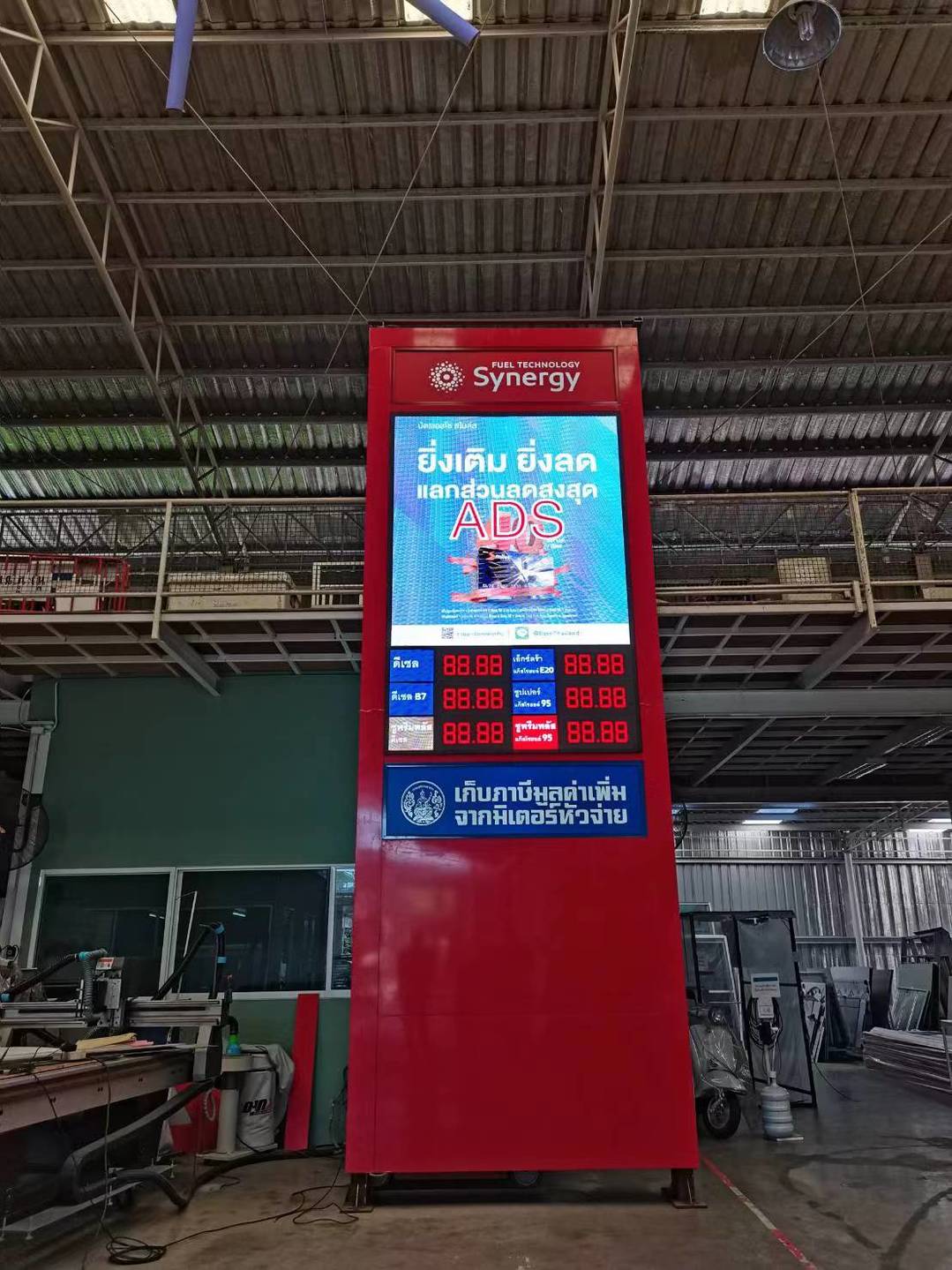
Control system, content management, and maintenance
Content control and monitoring
A led screen for advertising outdoor is ultimately a communication tool; without a robust control system and clear maintenance plan, even the best hardware will not deliver value. Modern outdoor LED displays are typically controlled through a networked system. Operators can upload playlists, schedule different content for different times of day, and manage several screens in multiple locations from a central computer.ledful+1
In more advanced setups, remote monitoring allows you to check status information such as temperature, brightness level, and error messages, which makes it easier to detect faults before they affect campaigns. USER combines these technical capabilities with its full product catalog, giving system integrators a single source for both hardware and control solutions as seen on the USER LED Screen homepage.
Maintenance and service design
Maintenance considerations are equally important. Depending on how much space you have behind the screen, you may choose front maintenance, rear maintenance, or a combination of both. Front‑service designs are very useful when the screen is installed directly on a building wall with no access from behind; modules and major components can be removed from the front side, which simplifies both installation and later service.
Regular cleaning of the surface, especially in dusty or marine environments, helps preserve brightness and color quality, while keeping spare modules and power supplies on hand reduces downtime. USER’s solutions are supported by 4S‑style service and project‑based guidance that includes installation, operation training, and after‑sales support across many countries.
Cost factors when budgeting an outdoor LED advertising project
Main cost drivers
Even though each project is unique, understanding the main cost factors will help you read quotations more intelligently. Pixel pitch has a direct impact: moving from P8 to P4 roughly quadruples the number of pixels per square meter, which significantly increases material and manufacturing cost. Screen area is another obvious multiplier; doubling the area roughly doubles not only display hardware cost but also steel structure, control, and installation expenses.
System design and installation complexity
Brightness, energy‑saving technology, and control system architecture also contribute. High‑brightness, high‑efficiency LEDs and power systems may cost slightly more upfront but usually cut long‑term energy bills. A more advanced control system with redundancy and monitoring functions will raise the budget, yet it improves reliability, especially in critical advertising locations where downtime is unacceptable.
Installation complexity matters too: a simple wall‑mounted screen on an existing concrete wall is very different from a tall freestanding structure that requires a deep foundation and wind‑load calculations. Because of these variables, serious manufacturers usually ask for site photos or drawings, approximate size, viewing distance, and basic climate information before giving a tailored proposal.
Through the outdoor LED display product category, you can quickly match your basic requirements with USER’s main outdoor models and then request a project‑specific quotation for your led screen for advertising outdoor.
Key FAQs about outdoor LED advertising screen
What is the best pixel pitch for a led screen for advertising outdoor?
There is no universal “best” pixel pitch; the optimal choice depends on how far your audience is and how large the screen is. For mall façades and city‑center building walls, P4 to P6 often balances detail and cost well, whereas roadside and highway billboards commonly adopt P6 to P10 because viewers see them mainly from medium to long distance.
How bright should my outdoor LED advertising screen be?
Most outdoor advertising projects require at least 5,000 nits of brightness, and 6,000 to 8,000 nits is preferred for direct sunlight or south‑facing screens. An automatic brightness sensor is very helpful for reducing brightness at night, lowering power consumption, and avoiding glare for nearby residents or drivers.
What IP rating do I need for outdoor LED advertising?
For most serious outdoor advertising applications, IP65 front protection is recommended to keep dust and rain from damaging the modules. In coastal or very humid climates, higher attention to cabinet design and anti‑corrosion treatment is required, and rear protection may also need to be stronger to handle wind‑driven rain and salt.
How long can an outdoor LED advertising screen last?
With quality components and correct installation, outdoor LED displays typically offer a rated LED life in the 50,000 to 100,000 hour range, which translates into many years of operation when used and maintained properly. Actual lifetime depends on factors such as running brightness, daily operating hours, ambient temperature, and how regularly the screen is serviced.