
What Is a Die-Casting Aluminum Cabinet Poster LED Display?
Core structure and working principle
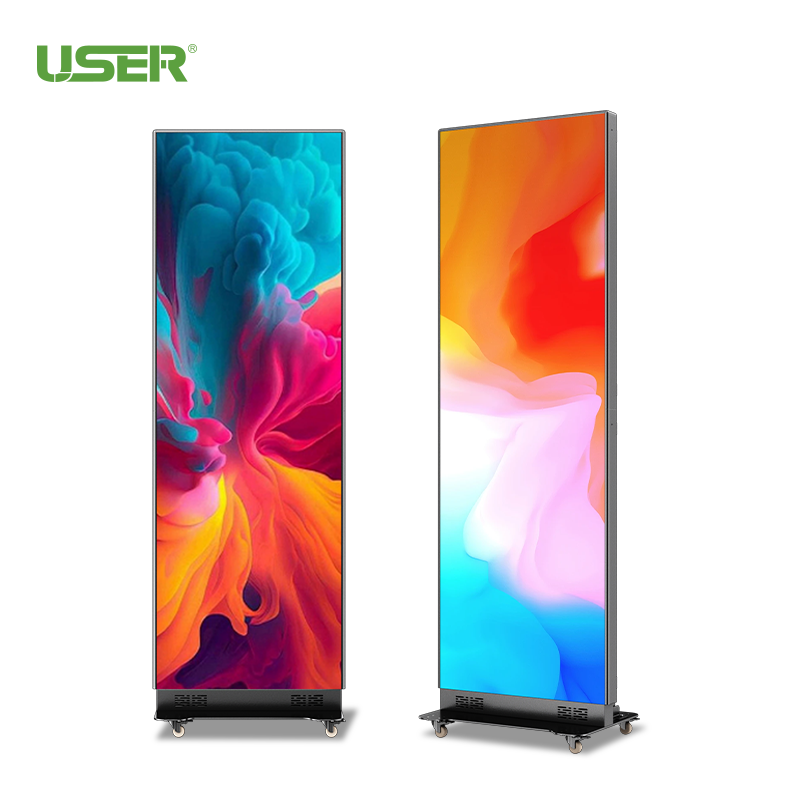
A die-casting aluminum cabinet poster LED display is a vertical, all-in-one digital signage solution that shows videos, images, and animations on a slim LED cabinet made from precision die-cast aluminum. Compared with traditional lightboxes or LCD posters, it offers higher brightness, better contrast, and flexible content scheduling for modern commercial advertising and information display.
The system integrates LED modules, receiving cards, power supplies, and control electronics into a single cabinet that can be floor-standing, wall-mounted, or hung. Content is usually updated via Wi-Fi, Ethernet, USB, or cloud platforms, allowing frequent campaign changes without replacing printed materials.
In die-casting, molten aluminum is injected into a mold under high pressure, forming a rigid cabinet with tight dimensional tolerances. This gives the cabinet low weight, high rigidity, and repeatable size, which are important for flatness and seam quality when multiple units are tiled together.
Die-casting aluminum vs iron and standard aluminum cabinets
Iron sheet cabinets are heavier and more prone to corrosion, increasing transportation and mounting costs and reducing long-term appearance in humid environments. Standard assembled aluminum cabinets are lighter but may not reach the same precision or integration level as die-cast designs.
Die-casting aluminum cabinets integrate handles, alignment points, and mounting features directly into the frame, improving installation speed and cabinet alignment. For high-end retail, corporate, and rental projects, this balance of low weight, precision, and finish makes die-casting aluminum a professional cabinet choice.
Key Features and Advantages of Die-Casting Aluminum Cabinets
Lightweight, slim design
Die-casting aluminum cabinet poster LED displays are lightweight and slim, which simplifies handling and installation. A typical die-cast rental cabinet of 500 × 500 mm can weigh around 7–8 kg, significantly less than many iron sheet versions. This helps reduce logistics costs, ease the load on structures, and speed up deployment for both fixed and rental projects.
The slim profile also suits narrow corridors, storefront windows, and modern interiors where bulky housings would be intrusive. In premium retail spaces, a thin and refined cabinet helps the display blend with the store design instead of looking industrial.
High precision and seamless splicing
Die-casting technology supports tight dimensional tolerance, often around ±0.1 mm, across large production runs. This precision ensures that cabinet edges align accurately, reducing visible gaps and maintaining a flat surface when multiple cabinets are combined into a wall.
Seamless splicing is vital for continuous content such as panoramas, brand films, and full-height posters. Poor alignment causes visible lines and uneven reflections, which reduce the perceived quality of the screen. With die-casting cabinets, integrators can consistently deliver clean, uniform visuals that meet the expectations of brand owners and corporate clients.
Better heat dissipation and long-term stability
Aluminum conducts heat efficiently, so die-casting aluminum cabinets act as large heat sinks for LEDs, power supplies, and driver ICs. Good thermal performance keeps working temperatures stable, which supports consistent brightness and color over long hours of operation.
Improved heat dissipation reduces component stress, extending service life and lowering the frequency of failures and repairs. This is critical for 24/7 applications in airports, transport hubs, and corporate lobbies, and also reduces unexpected downtime at rental events.
Front and rear maintenance options
Many die-casting aluminum cabinet designs support front or front/rear maintenance, allowing technicians to remove modules and access electronics from the screen side. This is especially useful when posters are installed against walls, glass, or in tight niches.
Quick-release module structures and modular power/control boxes further shorten repair time and lower maintenance complexity. For integrators, retailers, and rental companies, these service-friendly features help keep displays running and protect the investment.
Core Specifications You Should Compare Before Buying
Pixel pitch and resolution
Pixel pitch describes the distance between LED pixels. Smaller pitches provide higher resolution for close viewing but cost more per square meter. Typical poster and rental pitches include P2.5, P2.604, P2.976, P3.91, and P4.81.
For viewing distances of about 2–3 meters, P2.5 or finer delivers sharp text and detailed product images, suitable for boutiques and corporate lobbies. For 4–8 meters, P3.91 or P4.81 can still look clear and is common in rental and large retail spaces.
Brightness, refresh rate, and grayscale
Indoor posters often work well at 800–1500 nits, while window-facing or semi-outdoor displays may require 2000–4500 nits to remain visible in strong ambient light. Higher brightness should be paired with dimming control to avoid glare and discomfort in darker conditions.
Refresh rates of 1920–3840 Hz reduce visible flicker, which matters for camera recording and premium visual experiences. Grayscale levels of 14–16 bit support smooth gradients and rich colors, which are important for brand visuals and high-end advertising content.
Cabinet size, thickness, and weight
Common die-casting aluminum cabinet sizes include 500 × 500 mm and 500 × 1000 mm, while some poster designs integrate a full-height chassis with an attached base. A slim, lightweight cabinet is easier to move and mount and fits more locations, from windows to columns to tight store layouts.
Consistent cabinet dimensions and moderate weight help ensure structural stability and neat alignment in multi-unit installations. For rental users, standard sizes and low weight also improve packing efficiency and reduce labor requirements.
IP rating, certifications, and reliability
IP40 is common for indoor cabinets, while IP65 or IP66 front protection is needed for outdoor exposure or harsh environments. For entrances, semi-outdoor arcades, and stations, a higher IP level can extend service life.
Certifications such as CE, FCC, and RoHS demonstrate compliance with safety, EMC, and environmental standards. USER LED also operates under ISO9001, ISO14001, and ISO45001, which is important for international B2B projects and tender requirements.
Typical Applications of Die-Casting Aluminum Cabinet Poster LED Displays
Retail stores, shopping malls, and brand chains
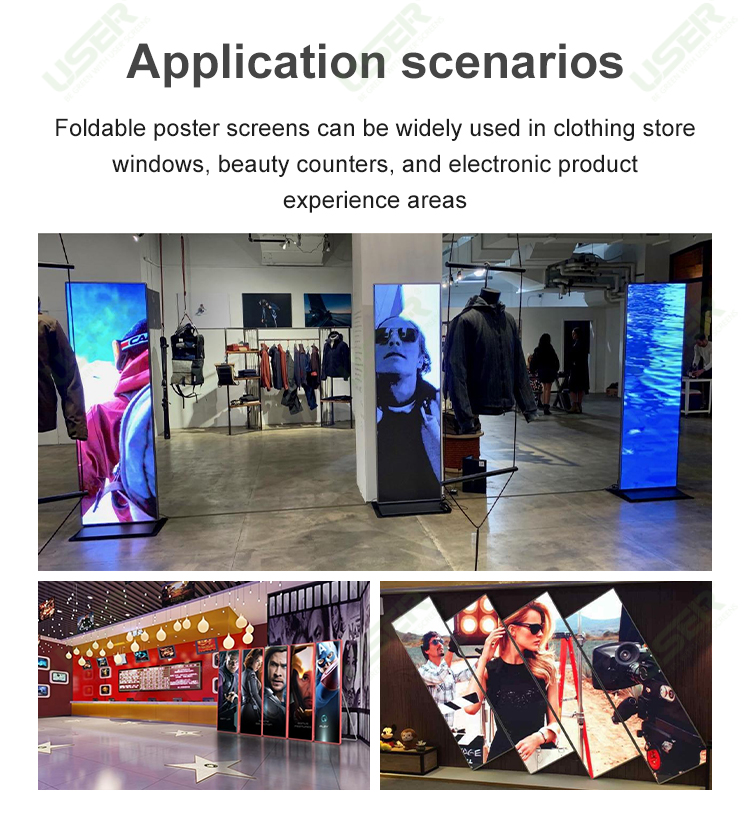
In retail, die-casting aluminum cabinet poster LED displays act as digital signage for promotions, new product launches, and brand storytelling. They are commonly placed at entrances, windows, and key decision points inside the store. Dynamic content replaces static posters and can be updated instantly for campaigns and seasonal events.
The slim cabinet and high brightness help the screen stand out in bright mall environments and integrate with upscale interiors. For chain stores, centralized control allows consistent content and branding across multiple locations.
Exhibitions, events, and rental companies
Events and exhibitions require displays that are portable, quick to assemble, and robust. Lightweight die-casting aluminum poster cabinets with fast-lock systems are ideal for this use. Rental companies can build freestanding towers, backdrops, or multi-screen creative shapes using the same modules.
Repeated assembly and transport do not easily damage die-cast cabinets or compromise flatness, which helps rental providers maintain visual quality and reduce service incidents.
Hotels, airports, and transportation hubs
Hotels, airports, and transit hubs use poster LED displays for wayfinding, check-in information, and promotions. These locations need long-hours operation and stable performance from the cabinets.
Die-casting aluminum cabinet posters provide robust structure and good thermal behavior, supporting 24/7 operation with clear visuals. Centralized content management ensures that schedules, route changes, and marketing messages stay up to date.
Where LED posters outperform LCD and traditional lightboxes
LED posters offer higher brightness and seamless scalability compared with LCD screens, which often have bezels and lower maximum brightness. Unlike traditional lightboxes, which can only display static printed images, LED posters allow dynamic playlists and instant content changes. For many businesses, this flexibility and impact deliver better long-term value than repeating print campaigns.
How to Choose the Right Die-Casting Aluminum Cabinet Poster LED Display
Match installation environment and viewing distance
Start by clarifying whether your poster will be used indoors, in a window, or in a semi-outdoor area. Indoor use can prioritize fine pixel pitch and color quality, while window or semi-outdoor use demands higher brightness and better protection.
Then match pixel pitch to typical viewing distance. Around 2–3 meters calls for P2.5 or finer, while 4–8 meters can accept P3.91 or P4.81 with a lower cost per square meter. Selecting pitch based on distance ensures clear visuals without overpaying for unnecessary resolution.
Balance pixel pitch, screen size, and content type
If your content includes fine text, detailed product shots, or technical data, choose smaller pitches and sufficient screen size so details stay legible. For bold branding and simple messages, a slightly larger pitch can still look strong from normal viewing distances.
Screen size should suit the architecture: large enough to be noticed but not overwhelming in small spaces. Simple mockups of distances and viewing angles can help you validate size and layout before ordering.
Check cabinet design details for fast and safe setup
Examine cabinet ergonomics: handles, quick locks, and stand design all impact setup time and safety. A stable base and robust interlocking system reduce the risk of accidents and improve efficiency for both fixed and rental use.
Internal cable routing should be neat and accessible, with protected connectors and minimal exposed wiring. This improves reliability, safety, and overall appearance in public-facing environments.
Evaluate control system and content management features
Modern poster LED displays often support Wi-Fi, Ethernet, USB, and sometimes mobile app control, making content updates straightforward for non-technical users. For chains and corporate networks, centralized cloud platforms allow remote management of multiple screens, saving time and ensuring consistency.
Check compatibility with mainstream LED control systems and confirm support for the content formats you plan to use, such as full videos, split screens, and scheduled playlists. Advanced monitoring and diagnostics functions are a plus for critical installations.
Total Cost of Ownership and ROI Considerations
Upfront hardware and installation costs
Initial costs include cabinets, control hardware, mounting or stands, and installation. Die-casting aluminum cabinets may cost more than iron sheet structurally, but they offer weight savings, higher precision, and better durability, which often justify the difference in professional projects.
When estimating budget, consider not only screen cost but also structure, transport, and content creation, which significantly influence total investment.
Operating costs, maintenance, and lifetime savings
Operating costs are shaped by power consumption, maintenance needs, and downtime. LED posters generally deliver high brightness with competitive power efficiency compared to backlit static solutions. Better heat dissipation in die-casting aluminum cabinets helps extend component life and reduce repair frequency over the years.
For installations that run many hours daily, small improvements in efficiency and stability can accumulate into notable savings and less disruption.
ROI advantages for rental and chain-store deployments
Rental companies benefit from lighter cabinets that reduce freight and labor and from quick-lock structures that cut setup and teardown time. Reliable, precise cabinets reduce the risk of onsite issues and help maintain a strong reputation.
For chain stores and corporate networks, LED posters reduce print logistics, enable targeted campaigns, and maintain consistent branding across locations, improving long-term ROI compared to static posters and lightboxes.
Why Choose USER LED for Die-Casting Aluminum Cabinet Poster LED Display
Proven manufacturing strength and certifications
USER LED (Shenzhen USER Special Display Technologies Co., Ltd.) is a high-tech enterprise founded in 2008 that focuses on integrated LED display solutions, including indoor and outdoor screens, rental displays, and poster LED products. The company runs a 10,000 m² factory in Shenzhen with automated SMT, assembly, cabinet fabrication, and aging lines and operates under ISO9001, ISO14001, and ISO45001, with many CE, FCC, ROHS, and CCC-certified products.
Poster and rental products optimized for die-casting cabinets
In the poster and rental segment, USER LED provides high-refresh solutions up to 3840 Hz, hub-board hard connection designs, and die-casting aluminum cabinets with front or front/rear maintenance for fast installation and service. Supported pixel pitches such as P2.604, P2.976, P3.91, and P4.81 give customers flexibility to match image quality and budget to each project.
Global project experience and professional support
USER LED has delivered LED displays to more than 80 countries, with projects in malls, retail chains, airports, conference rooms, and outdoor advertising. This experience supports solid pre-sales consulting, engineering guidance, and after-sales service for B2B clients considering die-casting aluminum cabinet poster LED displays.
Technical Specification Summary Table
| Parameter | Typical Range / Example Value |
| Pixel Pitch | P2.5, P2.604, P2.976, P3.91, P4.81 |
| Cabinet Size | 500 × 500 mm, 500 × 1000 mm, custom poster size |
| Cabinet Material | Die-casting aluminum |
| Brightness | 800–1500 nits (indoor), 2000–4500+ nits (semi-outdoor) |
| Refresh Rate | 1920–3840 Hz |
| Grayscale | 14–16 bit |
| IP Rating | IP40 (indoor), IP65–IP66 (outdoor front) |
| Maintenance | Front or front/rear maintenance |
| Control Options | Wi-Fi, Ethernet, USB, HDMI, cloud control |
| Certifications | CE, FCC, ROHS, CCC |
Frequently Asked Questions (FAQ)
Q1: What is the main advantage of a die-casting aluminum cabinet for poster LED displays?
A die-casting aluminum cabinet combines low weight, high structural strength, and precise dimensions, improving installation efficiency, seam quality, and long-term reliability compared with iron or basic aluminum cabinets.
Q2: How do I choose the right pixel pitch for my poster LED project?
Base your decision on viewing distance and content detail: around 2–3 meters suits P2.5 or finer, while longer distances can use P3.91 or P4.81 without noticeable quality loss.
Q3: Can I use a die-casting aluminum cabinet poster LED display outdoors?
Some models work in semi-outdoor or outdoor conditions if they offer sufficient brightness and the right IP rating, so you should always check the product’s protection level and environment specifications.
Q4: How difficult is it to install and operate a poster LED display?
Most poster LED displays are designed for fast setup with integrated stands or brackets and support simple content updates via Wi-Fi, USB, or cloud platforms, so both integrators and end users can operate them with minimal training.
Q5: Why should I consider USER LED as my supplier?
USER LED offers certified manufacturing, strong R&D, and global project experience, with die-casting aluminum cabinet poster LED solutions that provide high refresh rates, flexible maintenance, and multiple pixel pitch options for B2B applications.