
Shopping malls worldwide face a common architectural challenge: how to transform structural columns into profitable advertising spaces without compromising aesthetics. Flexible LED display screen have emerged as the optimal solution for cylindrical pillar installations, combining advanced curvature capabilities with high-resolution visual performance that traditional flat displays cannot match.

Understanding Flexible LED Technology for Curved Surfaces
FPC Technology and Bending Capabilities
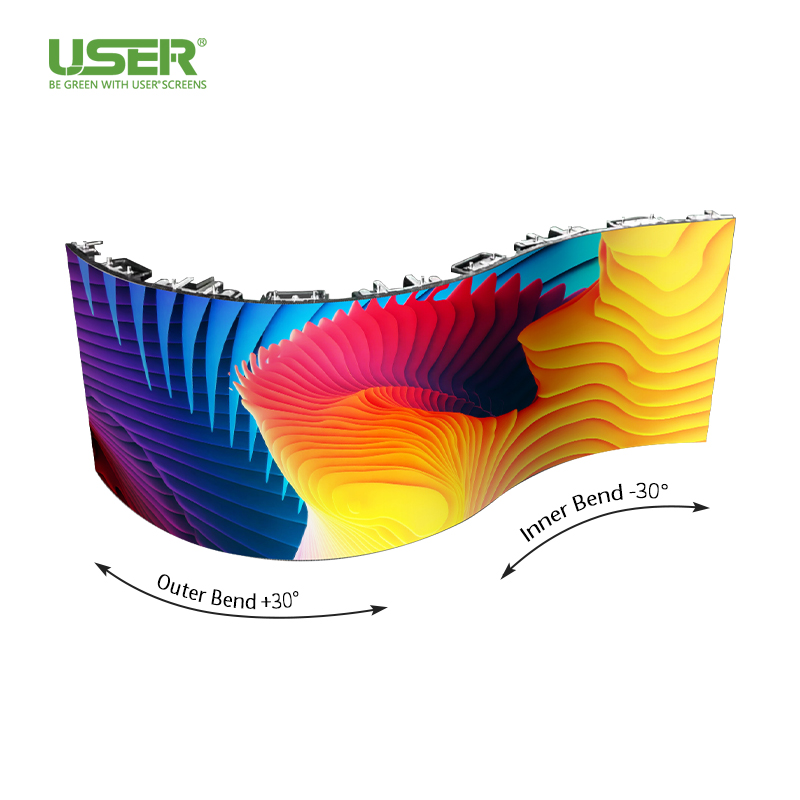
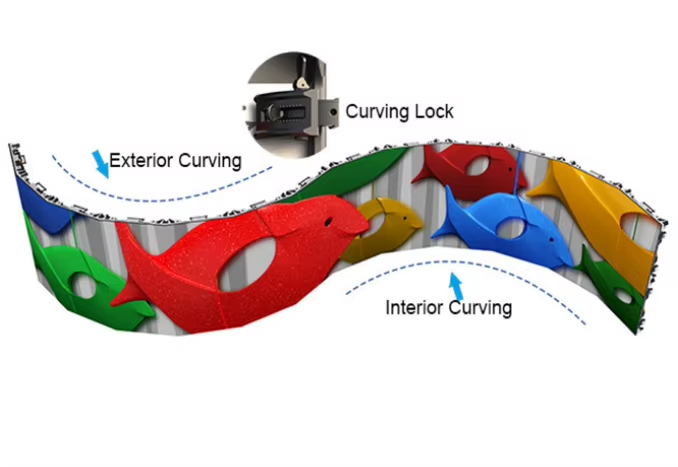
Flexible LED display screen utilize specialized FPC (Flexible Printed Circuit) technology that allows individual modules to bend seamlessly around curved structures. Unlike conventional rigid LED panels, these displays can achieve curvature up to 30 degrees per module while maintaining structural integrity through over 10,000 fixed bending cycles. The technology relies on SMD (Surface-Mount Device) LED chips mounted on flexible substrates, creating displays that conform to column diameters ranging from 500mm to 3000mm without visible seams or image distortion.
Module Construction and Weight Specifications
The module construction features a 320×160mm standard size with pixel pitch options from P1.53 to P2.5, delivering physical densities between 160,000 to 422,752 dots per square meter. Each module weighs approximately 3-8kg, significantly lighter than traditional cabinets, reducing structural load requirements on existing pillars. The flexible circuit board design enables both convex and concave installations, accommodating irregular architectural features common in modern shopping centers. For comprehensive specifications, explore our flexible LED display solutions designed specifically for curved applications.

Pixel Pitch Selection for Optimal Viewing Distance
Understanding Viewing Zones in Shopping Malls
Selecting the appropriate pixel pitch for cylindrical LED installations requires careful consideration of viewing distance and content type. Shopping mall environments typically feature three distinct viewing zones: close-range (2-4 meters), medium-range (5-8 meters), and long-range (10+ meters). The pixel pitch directly impacts image clarity, installation cost, and structural feasibility.
Pixel Pitch Recommendations by Application
For premium retail environments where customers pass within 2-4 meters, P1.53 to P1.86 configurations deliver exceptional detail suitable for high-resolution product imagery and branding content. These ultra-fine pitches achieve 422,752 and 289,050 dots/m² respectively, enabling 4K content display on curved surfaces. Mid-range applications benefit from P2.0 configurations offering 250,000 dots/m², balancing visual quality with budget considerations. Wide viewing corridors exceeding 8 meters can utilize P2.5 screens (160,000 dots/m²) while maintaining acceptable image integrity.
| Pixel Pitch | Physical Density | Optimal Viewing Distance | Typical Application | Brightness |
| P1.53 | 422,752 dots/m² | 2-4 meters | Luxury brand zones | 700 nits |
| P1.86 | 289,050 dots/m² | 3-5 meters | Fashion retail areas | 700 nits |
| P2.0 | 250,000 dots/m² | 4-6 meters | General retail corridors | 800 nits |
| P2.5 | 160,000 dots/m² | 6-10 meters | Food courts, atriums | 800 nits |
Structural Design Considerations for Column Wrapping
Engineering Parameters for Cylindrical Installation
The structural integration of flexible LED displays onto cylindrical pillars involves three critical engineering parameters: column diameter, curvature radius, and load-bearing capacity. Columns with diameters below 600mm require careful module arrangement to prevent excessive stress on flexible circuits, while larger diameters above 1200mm may necessitate segmented designs to maintain optimal viewing geometry.
Curvature Calculations and Module Configuration
Curvature calculations follow the formula: Module Arc Length = (Column Diameter × π) / Number of Modules. For a 800mm diameter column using 320mm modules, approximately 8 modules create a complete 360-degree wrap with minimal gap variance. The mounting structure typically adds 20-35mm to the original column diameter, requiring clearance verification against traffic flow requirements and fire safety regulations.
Load-Bearing and Mounting Systems
Structural load considerations include both static weight (display modules, mounting frames) and dynamic forces (wind load for atrium installations, vibration from escalators). A standard P1.86 cylindrical installation measuring 3 meters in height with 800mm diameter totals approximately 65-85kg, distributing roughly 22-28kg per meter of column height. Professional mounting systems utilize adjustable aluminum profiles with anti-slip gaskets to prevent rotation and ensure long-term stability.
Installation Methodology and Maintenance Access
Four-Phase Installation Process
Professional installation of cylindrical flexible LED displays follows a systematic four-phase approach designed to minimize mall disruption and ensure precise alignment. The preparation phase involves column surface treatment, mounting rail installation, and power infrastructure integration, typically completed during off-peak hours over 2-3 nights for a standard 3-meter pillar.
Module Assembly and Cable Management
Module assembly begins from a designated starting point (usually aligned with the least visible column face), progressing circumferentially while maintaining consistent tension across flexible circuits. Each module connects via magnetic or quick-lock mechanisms, allowing front-access maintenance without structural disassembly. Cable management systems route power and data connections through the mounting frame’s internal channels, maintaining clean aesthetics while ensuring serviceability.
Front-Maintenance Design Benefits
The modular design enables front-maintenance access, critical for shopping mall environments where rear access is physically impossible. Technicians can remove and replace individual modules within 5-10 minutes using magnetic service tools, minimizing advertising downtime. The system supports hot-swapping capabilities, allowing module replacement without powering down the entire display—essential for 24/7 retail operations.
Technical Performance Specifications
Display Performance Metrics
Modern flexible LED display screen for cylindrical applications deliver professional-grade performance metrics that rival traditional flat installations. Refresh rates ranging from 1920Hz to 3840Hz eliminate visible flicker even under smartphone camera recording, crucial for social media-driven retail marketing. The 160-degree horizontal and vertical viewing angles ensure consistent image quality from any approach direction around the column.
Brightness and Color Processing
Brightness levels of 700-800 nits accommodate standard indoor shopping mall ambient lighting (500-800 lux), while the 4000:1 to 5000:1 contrast ratio maintains image depth and color saturation. The 14-16 bit grayscale processing delivers smooth color transitions essential for premium brand content. Power consumption averages 180-260W per square meter at typical operational brightness, translating to approximately 540-780W for a standard 3-meter cylindrical installation.
Environmental Resilience and Certifications
Environmental resilience includes IP40 ingress protection suitable for climate-controlled shopping environments, operating temperature range of -20°C to 60°C, and EMC compliance meeting CE, FCC, and RoHS standards. The flexible FPC construction withstands thermal expansion and contraction cycles without delamination, backed by manufacturers offering 50,000+ hour LED lifespan ratings under normal operating conditions. USER LED Display provides comprehensive certification documentation including ISO 9001:2015 quality management and technical support for all installations.
Cost Analysis and ROI Calculation
Investment Breakdown and Hardware Costs
The total investment for a cylindrical flexible LED display installation encompasses hardware, installation labor, content management systems, and ongoing operational expenses. A typical 3-meter tall column with 800mm diameter requires approximately 7.5 square meters of display area, with per-square-meter costs ranging from $1,200 (P2.5) to $2,800 (P1.53) depending on pixel pitch selection.
Complete Installation Budget Example
Installation labor adds 15-25% to hardware costs, varying by location accessibility and structural complexity. A complete turnkey installation budget example: P1.86 system on 800mm × 3000mm column = 7.5m² × $2,200/m² (hardware) + $3,500 (installation) + $1,200 (control system) = approximately $20,200 total investment.
Revenue Generation and Payback Period
Revenue generation potential depends on mall traffic patterns and advertising rate structures. High-traffic shopping centers command $800-$2,500 per column per month for premium brand advertising slots. Assuming conservative $1,200 monthly revenue with 75% occupancy rate, annual gross income reaches $10,800. Factoring operational costs (electricity $45/month, maintenance $100/month), net annual return approximates $9,060, yielding a 2.2-year payback period. Premium locations with luxury brand tenants can achieve sub-18-month ROI through higher rate commands and 90%+ occupancy.
Real-World Implementation Case Studies
Bosnia and Herzegovina: Premium Retail Installation
Global shopping mall operators have successfully deployed cylindrical flexible LED displays across diverse retail environments, demonstrating proven technical and commercial viability. A P1.86 cylindrical screen installation at a shopping mall in Bosnia and Herzegovina features multiple structural columns wrapped with flexible displays, delivering dynamic branding content for international fashion retailers with 24/7 operational reliability since 2024.
Singapore: Multi-Language Wayfinding Integration
Singapore shopping centers have adopted P3.0 flexible displays for atrium columns, integrating wayfinding information with commercial advertising in multi-language formats. These installations leverage 3840Hz refresh rates to eliminate screen tearing during high-motion content, critical for sporting goods and automotive brand campaigns. The front-maintenance design enables module servicing during mall operating hours without customer disruption, achieving 99.5%+ uptime metrics.
China: Scalable Multi-Column Deployments
Chinese retail developments utilize P2.0 flexible LED columns in shopping mall food court and entertainment zones, where wider viewing distances permit cost-optimized pixel configurations. These installations demonstrate the technology’s scalability, with some properties featuring 12+ cylindrical displays managed through centralized content distribution systems. The successful integration has led to second-phase expansions, adding curved displays to escalator panels and curved architectural features throughout the properties. For versatile shopping mall applications, our indoor LED screen solutions offer comprehensive configurations from P0.9 to P5 pixel pitches.
Frequently Asked Questions
What is the minimum column diameter for flexible LED display installation?
The minimum recommended column diameter for flexible LED display installation is 500mm, though specialized configurations can accommodate columns as small as 400mm. Smaller diameters require custom module curvature calculations to prevent excessive stress on flexible circuits. Columns below 600mm diameter may experience higher per-square-meter costs due to increased engineering requirements and potential need for smaller custom modules rather than standard 320×160mm units.
How does pixel pitch affect viewing quality on curved surfaces?
Pixel pitch determines the minimum comfortable viewing distance following the general formula: optimal distance (meters) = pixel pitch (mm) × 1.5-2.0. For cylindrical installations, P1.86 displays maintain clarity from 3 meters, while P2.5 requires 4-5 meters for optimal perception. Curved surfaces actually enhance viewing consistency compared to flat displays because the arc geometry maintains more uniform viewer distance across the display width, reducing the edge distortion common in flat installations viewed at oblique angles.
Can flexible LED displays withstand constant bending and structural movement?
Professional-grade flexible LED modules undergo rigorous bend-cycle testing exceeding 10,000 repetitions before deployment. The FPC substrate construction distributes mechanical stress across the entire circuit rather than concentrating at solder points, preventing premature failure. Shopping mall column installations experience minimal movement after initial installation, far below the stress levels encountered in temporary rental applications. Manufacturers typically warranty flexible displays for 3-5 years covering both electronics and mechanical integrity when properly installed on stable structures.
What maintenance schedule is required for cylindrical LED installations?
Standard maintenance protocols recommend quarterly visual inspections, semi-annual cleaning with approved solutions, and annual comprehensive diagnostics including pixel mapping and color calibration. The front-access design enables cleaning and module inspection without specialized equipment or display shutdown. Most installations operate 3-5 years before requiring module replacement due to LED degradation, with strategic replacement of high-use sections rather than complete system overhaul. Preventive maintenance contracts typically cost $1,200-$2,400 annually depending on installation size and access complexity.
Conclusion: Strategic Advantages of Flexible LED Column Displays
Flexible LED display screen represent the convergence of architectural innovation and commercial advertising technology, transforming underutilized structural columns into high-value digital assets. The combination of curvature flexibility, front-maintenance accessibility, and professional-grade performance specifications addresses the unique challenges of shopping mall environments where space optimization and aesthetic integration are paramount.
Shopping center operators considering cylindrical LED installations should prioritize pixel pitch selection based on actual viewing distance analysis, structural engineering validation of column load capacity, and lifecycle cost modeling including energy consumption and maintenance requirements. The proven ROI performance in high-traffic retail environments, combined with declining hardware costs and advancing display technologies, positions flexible LED column displays as strategic infrastructure investments rather than experimental installations.