Perimeter LED screens around a stadium can turn every match into a high‑value advertising showpiece, but only if you choose the right outdoor rental LED screen. Many buyers struggle with cabinet weight, installation methods, and durability under frequent disassembly and transport.
This guide explains the key technical and practical criteria for choosing a reliable outdoor rental LED screen for stadium advertising, with real specification examples from USER’s outdoor rental series (P2.604, P2.976, P3.91, P4.81).
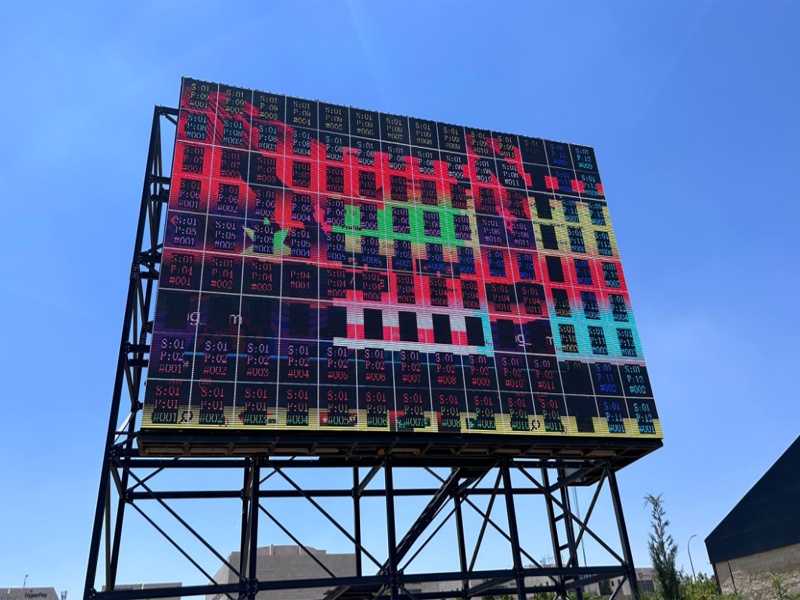
Why Stadium Perimeter Advertising Needs Outdoor Rental LED Screen
Stadium perimeter LEDs are different from fixed billboards. They must combine high visual performance with fast, repeated installation.
Main characteristics stadium owners and integrators need:
- High brightness (around 4,500–5,000 nits) so ads stay clear under strong stadium lighting or daylight.
- High refresh rate (up to 3,840 Hz) to avoid flicker on TV broadcast cameras and create smooth motion.
- Robust protection such as IP65 for cabinets facing outdoor rain and dust.
- Lightweight, die‑cast aluminum cabinets that crews can move quickly during event setup and teardown.
USER’s outdoor rental LED series is designed specifically for this type of application: it uses die‑cast aluminum, high brightness SMD LED lamps, and supports front and rear maintenance for flexible servicing.
Key Selection Criteria for Stadium Outdoor Rental LED Screen
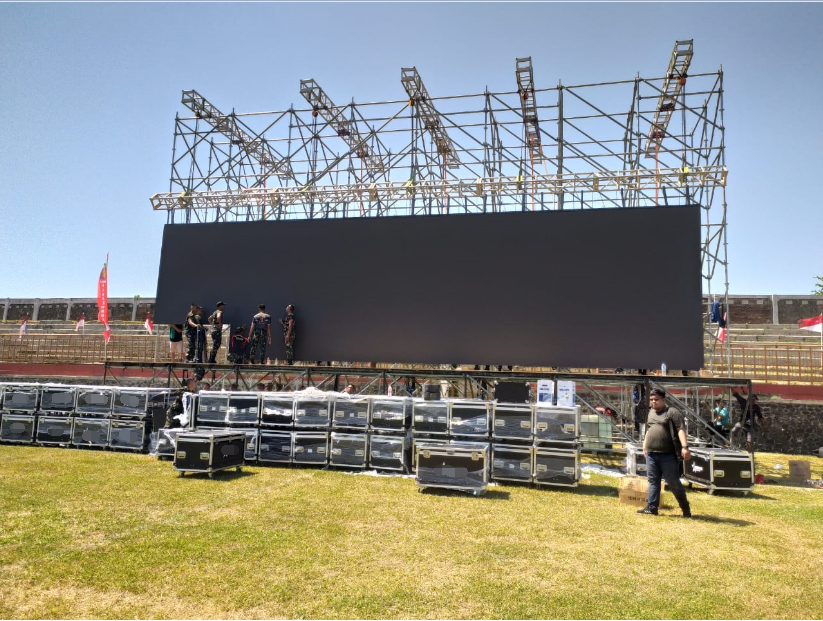
Pixel Pitch and Viewing Distance
Pixel pitch determines how close viewers can stand while still seeing a sharp image.
In USER’s outdoor rental series, typical pitches are: P2.604, P2.976, P3.91, P4.81.
A simple rule of thumb:
- P2.604 / P2.976: good for closer audiences, VIP seats near the perimeter, or compact stadiums.
- P3.91: common choice balancing cost and clarity for medium‑size arenas.
- P4.81: economical option for larger venues where most viewers are farther away.
Example Table: Recommended Pixel Pitch vs Viewing Distance
| Stadium Type | Typical Viewing Distance | Recommended Pixel Pitch | Notes |
| Small indoor arena | 5–20 m | P2.604 / P2.976 | Better detail for close fans |
| Medium football stadium | 15–40 m | P3.91 | Good balance of cost and clarity |
| Large outdoor stadium | 25–60 m | P3.91 / P4.81 | Larger pitch acceptable |
Cabinet Design, Weight and Size
For rental stadium applications, cabinet design directly affects labor, logistics, and setup time.
USER’s outdoor rental cabinets typically come in 500 × 500 mm and 500 × 1,000 mm sizes, with each cabinet weighing around 7.8 kg including modules, which is very light for outdoor products.
Key cabinet features to look for:
- Ultra light weight: reduces manpower requirements and speeds up installation. USER’s die‑cast aluminum cabinets are optimized for low weight.
- Quick lock systems: allow tool‑less or minimal‑tool assembly between cabinets.
- High‑precision die‑casting: ensures seamless connections, so perimeter ads look continuous without visible lines.
- Anti‑collision design: perimeter cabinets often include soft masks or protective structures to prevent injury when players collide with the screen (this can be customized with professional suppliers).
Protection Level and Durability (IP Rating)
Perimeter screens face rain, dust, and occasional water jets during cleaning.
For stadium applications, look for:
- Front and rear IP65 or higher for outdoor rental cabinets. USER outdoor products typically support IP65 for rental screens.
- Robust aluminum structure and sealed modules with outdoor potting, which prevent moisture ingress.
- Operating temperature range that suits your climate, especially for very hot or cold regions. USER’s outdoor series is designed for wide environmental conditions.
Brightness, Refresh Rate and Image Quality
Stadium LED screens must perform well both for fans in the stands and for television cameras.
Technical parameters to prioritize:
- Brightness: 4,500–5,000 nits for standard outdoor rental screens ensures clear visibility in sunlight and under strong stadium lighting. USER outdoor rental series offers this range depending on pixel pitch.
- Refresh rate: at least 1,920 Hz, with 3,840 Hz recommended for professional sports broadcasting. USER outdoor rental screens support up to 3,840 Hz refresh rate.
- Gray scale: 12–16 bit for smooth gradients and brand colors. USER’s rental series supports 12–16 bit gray scale.
- Contrast ratio: higher contrast improves visibility of text and logos against dark backgrounds. USER outdoor products reach contrast ratios up to 5,000:1 or more.
Installation and Maintenance Flexibility
Stadium use is a classic rental scenario: screens are moved in and out, reconfigured, and serviced frequently.
Look for these installation and maintenance characteristics:
- Front and rear maintenance: USER’s outdoor rental screens support both, making it easy to access modules and power boxes even when the back is blocked.
- Multiple installation methods: ground stacking, bracket mounting, and temporary truss systems are commonly used in stadiums. USER rental products are designed to support flexible mounting.
- Fast heat dissipation: ensures stable performance during long matches and events. USER’s die‑cast cabinets are designed with efficient heat management.
Comparing Outdoor Rental, FC and FX Series for Stadium Use
In addition to dedicated rental cabinets, USER also offers FC and FX common‑cathode energy‑saving outdoor series, which can be used for more permanent stadium perimeter installations.
Table: Outdoor Rental vs FC vs FX for Stadium Perimeter
| Feature | Outdoor Rental Series | FC Series (Common Cathode) | FX Series (Common Cathode) |
| Typical Pixel Pitches | P2.604, P2.976, P3.91, P4.81 | 4.4 mm, 5.7 mm, 6.67 mm, 8 mm | 2.5 mm, 3.076 mm, 4 mm, 5 mm |
| Cabinet Material | Die‑cast aluminum (lightweight) | Aluminum profile | Iron / die‑cast aluminum options |
| IP Rating | IP65 (front) | IP66 | IP65 |
| Brightness Range | 4,500–5,000 nits | 5,000–7,500 cd/m² | 5,000–6,500 cd/m² |
| Energy Saving | Standard | Common‑cathode energy‑saving | Common‑cathode energy‑saving |
| Best Use Case | Short‑term, frequent rental | Long‑term, fixed perimeter | Fixed screens needing finer pitch |
A practical approach is: use outdoor rental cabinets where maximum flexibility and fast deployment are required, and consider FC/FX for semi‑permanent or long‑term stadium perimeter projects where energy consumption is a major concern.
Why Choose USER as Your Stadium LED Screen Partner
USER (Shenzhen USER Special Display Technologies Co., Ltd.) is a high‑tech enterprise founded in 2008 with over 10,000 m² of factory area and advanced SMT, automated production, and aging lines. The company is certified under ISO9001, ISO14001, and ISO45001, and its LED displays carry CCC, CE, FCC, UL, and ROHS certifications.
The company has supplied LED display solutions to more than 80 countries and cooperated with global brands such as CHANEL, HUAWEI, CHEVROLET, 7‑Eleven, and the University of Hong Kong, among many others. This experience in demanding environments translates directly into stable, high‑quality products for stadium applications.
For more information on outdoor rental LED screens and stadium solutions, you can explore the official website at https://www.userledscreen.com.
Example Specification Table: USER Outdoor Rental LED Screen
Below is a simplified version of the technical specifications for USER’s outdoor rental series suitable for stadium perimeter advertising.
| Model | Pixel Pitch | Cabinet Size (mm) | Brightness (nits) | Refresh Rate (Hz) | IP Rating | Avg. Power (W/m²) | Weight (kg/cabinet) |
| P2.604 | 2.604 mm | 500 × 500 / 500 × 1,000 | 4,500 nits | 1,920–3,840 | IP65 | ≈240 | ≈7.8 |
| P2.976 | 2.976 mm | 500 × 500 / 500 × 1,000 | 4,500–5,000 nits | 1,920–3,840 | IP65 | ≈240 | ≈7.8 |
| P3.91 | 3.91 mm | 500 × 500 / 500 × 1,000 | 4,500–5,000 nits | 1,920–3,840 | IP65 | ≈240 | ≈7.8 |
| P4.81 | 4.81 mm | 500 × 500 / 500 × 1,000 | 5,000 nits | 1,920–3,840 | IP65 | ≈240 | ≈7.8 |
(Exact values can vary slightly by configuration; use them as a reference during project planning.)
FAQs about Outdoor Rental LED Screen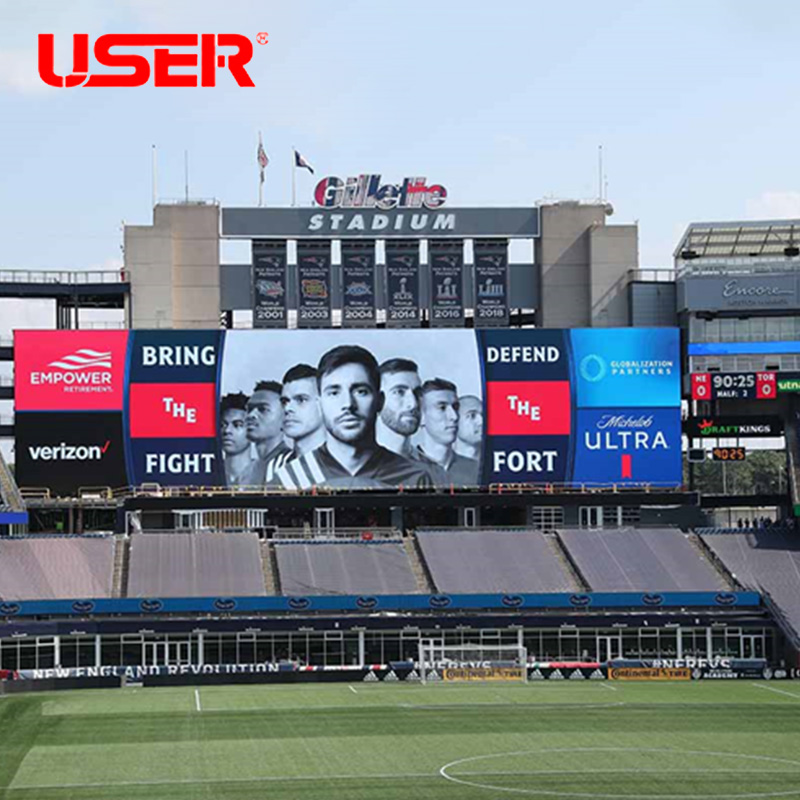 for Stadiums
What pixel pitch is best for stadium perimeter LED screens?
For most outdoor football or rugby stadiums, pixel pitches between P3.91 and P4.81 provide a good balance between cost and image clarity, as most viewers sit more than 20 meters away from the perimeter. Smaller pitches like P2.604 or P2.976 are ideal for smaller arenas or VIP areas closer to the screen.
How bright should a stadium rental LED screen be?
A brightness of 4,500–5,000 nits is generally recommended for outdoor stadium perimeter screens to stay visible under daylight and strong floodlights. USER’s outdoor rental series falls within this range depending on the specific model.
Why does cabinet weight matter for rental LED screens?
Lightweight cabinets reduce setup time, lower labor costs, and improve safety when crews assemble and disassemble screens frequently. USER’s die‑cast aluminum rental cabinets are about 7.8 kg per cabinet, which is very manageable for event teams.
What is the difference between rental and fixed outdoor LED screens?
Rental LED screens emphasize light weight, fast locking systems, and flexible installation to support frequent transport and reconfiguration. Fixed outdoor screens, such as USER’s FC and FX common‑cathode energy‑saving series, focus more on long‑term durability and power savings for permanent installations.
Is front maintenance necessary for stadium projects?
Front maintenance is extremely useful when the back of the screen is difficult or unsafe to access, such as when the screen is mounted against a wall or close to seating. USER’s outdoor rental screens support front and rear maintenance, giving you flexibility during design and servicing.
How do I start a project with USER for my stadium?
You can start by defining your basic requirements (stadium type, size, viewing distance, budget, and whether the screen will be rental or fixed). Then contact USER through the official website at https://www.userledscreen.com/ to receive technical advice, drawings, and a tailored quotation.