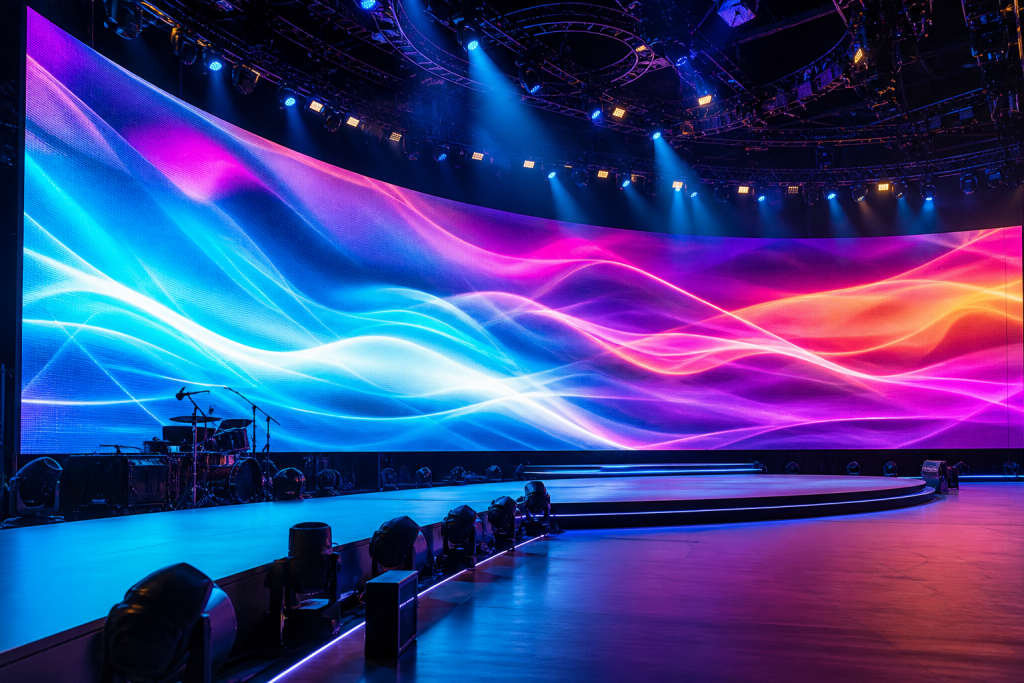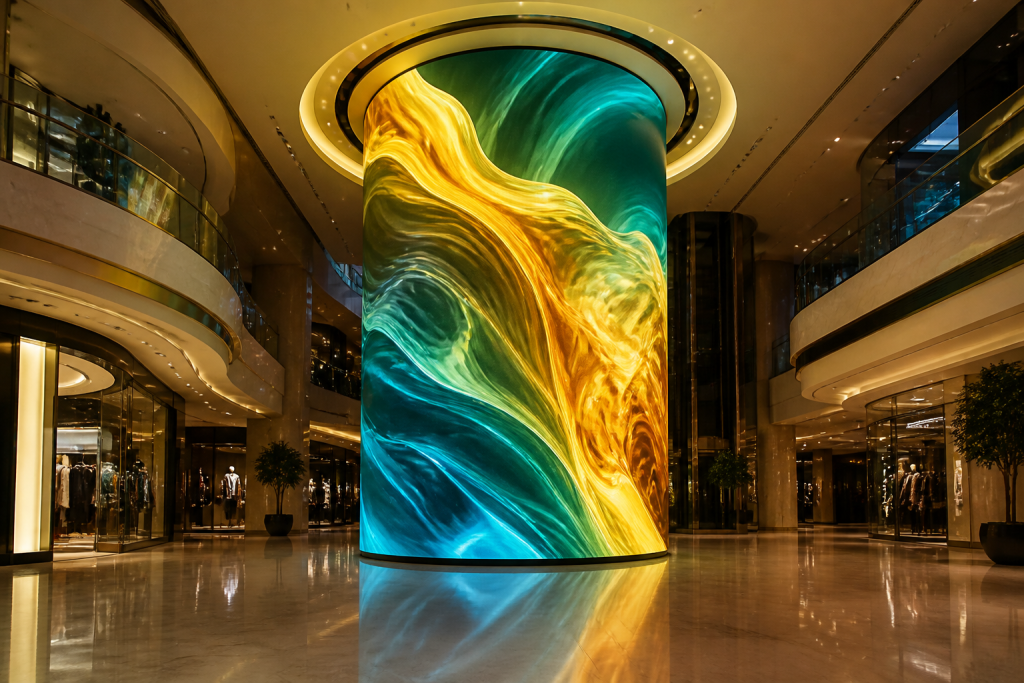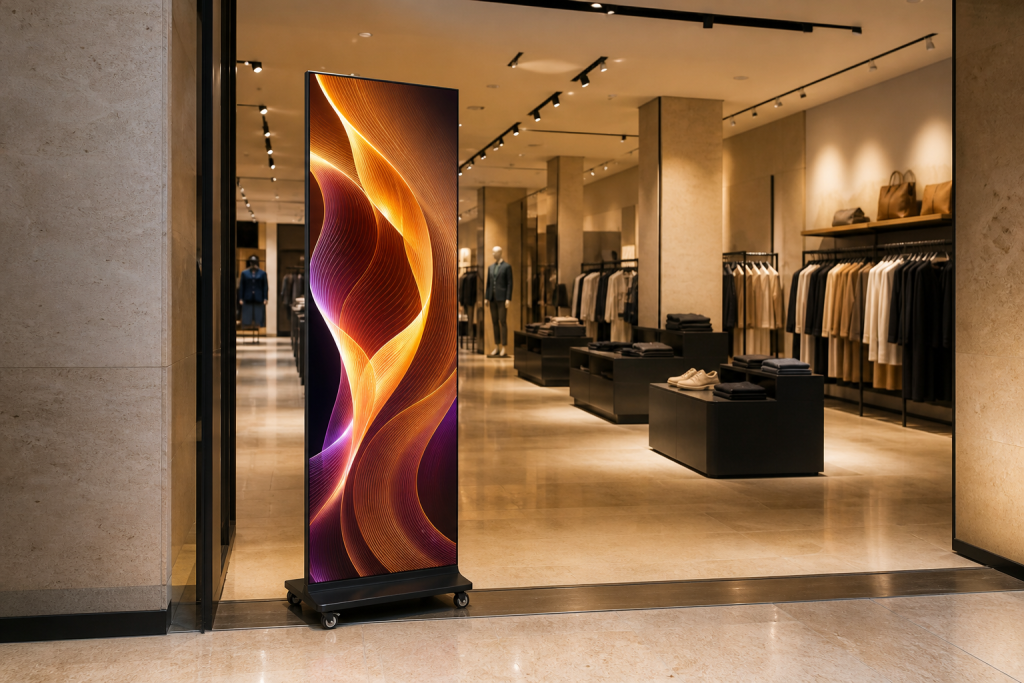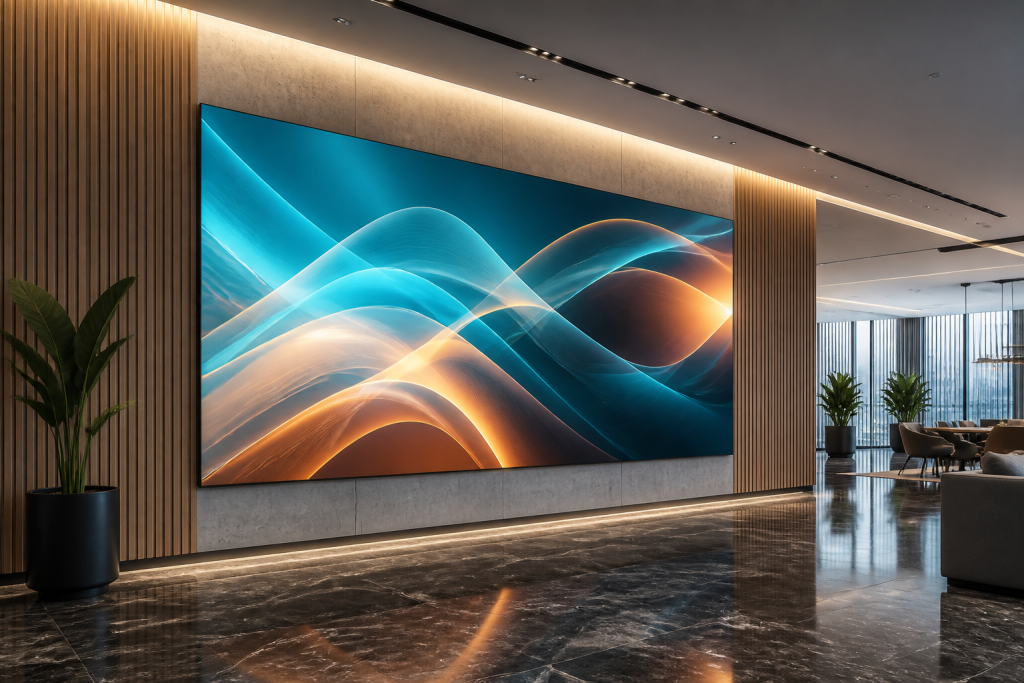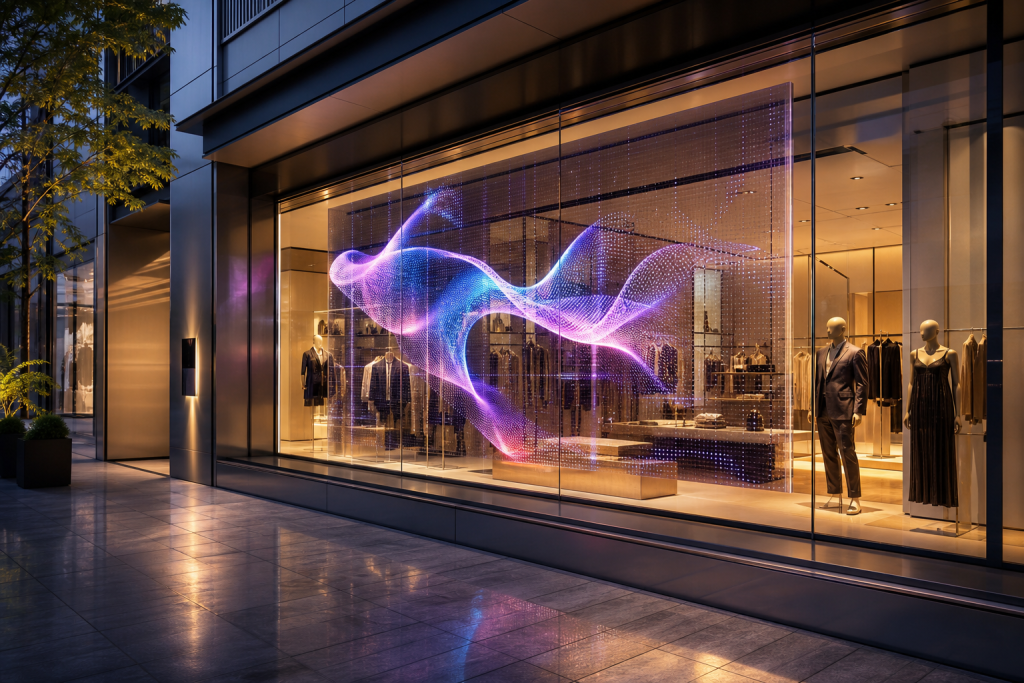
A flexible LED display is a soft, bendable LED screen that uses specially designed PCB and materials so the modules can curve, wrap around columns, or form creative shapes while still delivering high brightness and high refresh images. It is widely used in shopping malls, retail stores, exhibitions, stages, airports, hotels, corporate lobbies, and art installations where a standard flat LED cabinet cannot achieve the desired shape.
Compared with traditional rigid LED screens, flexible LED displays are easier to use for 360° columns, wave walls, arcs, and other creative applications, allowing designers and integrators to fully leverage architecture and brand identity. At the same time, they must balance design freedom with budget, which is why understanding flexible led display price by pitch, size, and structure is critical for any buyer.
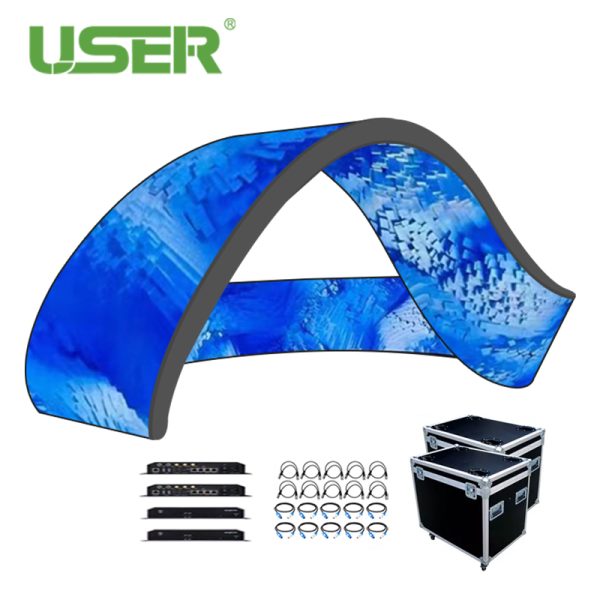
Key Factors That Influence Flexible LED Display Price
Several core variables determine the total cost of a flexible LED display project. Understanding them will help you read quotations correctly and optimize your budget.

Pixel Pitch (Resolution Level)
Pixel pitch (P1.86, P2.0, P2.5, P3, P4, etc.) is the center-to-center distance between LEDs in millimeters. The smaller the pixel pitch, the higher the pixel density per square meter and the higher the price.
From USER’s flexible series product data:
| Model | Pixel Pitch | Pixel Density (dots/m²) | Typical Application Distance |
| P1.86 | 1.86 mm | 288,906 | Close-up, high-end indoor walls |
| P2.0 | 2.0 mm | 250,000 | Indoor brand spaces, museums |
| P2.5 | 2.5 mm | 160,000 | Shopping malls, retail, corporate |
| P3.0 | 3.0 mm | 90,000 | Larger indoor spaces, stage |
| P4.0 | 4.0 mm | 62,500 | Medium–long viewing distance |
Smaller pitch panels (like P1.86 and P2.0) require more LEDs and more complex driver ICs per m², so their cost per m² is higher than P3 or P4 flexible screens.
Screen Size and Total Area (m²)
Flexible LED display price is usually calculated per square meter, then multiplied by the total display area, plus structure, control system, and services. For example, a 3 m × 2 m curved wall (6 m²) with P2.5 modules will cost significantly less than a 10 m × 3 m wave screen (30 m²) of the same pitch simply because of the area difference.
As the area increases, the unit price per m² may decrease slightly due to scale, but the total budget still increases because you are buying more modules, cabinets, and power supplies.
Indoor vs Outdoor Protection
Many flexible LED projects are indoor (shopping mall atriums, art galleries, exhibitions), but some require outdoor-level protection with higher IP grade, brightness, and anti-UV capacity. Outdoor-ready flexible solutions usually need:
- Higher brightness (up to 5,500 cd/m² or more)
- Higher IP rating (e.g., IP65 for cabinets, IP40–65 for modules depending on design)
- Better thermal management and sealing
These features increase BOM cost, so outdoor flexible LED displays typically cost more per m² than indoor ones of the same pixel pitch.
Curved Degree and Structural Complexity
The more complex the shape (tight radius columns, S-shaped curves, 360° cylinders), the more design work, structural components, and fine-tuning are required.
- Simple single-radius arc wall
- S-shaped wave curve
- Column wrap (partial or full 360°)
- Irregular polygons and custom shapes
Tighter bending radius demands high-quality flexible PCB, FPC cables, and soft modules with proven bending test performance (such as over 10,000 bending tests), which are more expensive than standard flat cabinets.
Control System, Calibration, and Content Needs
Price is also influenced by:
- Controller brand and redundancy (single vs backup controller)
- Need for 3D/interactive content, multi-screen synchronization
- Color calibration level and HDR capability
High-end controllers and advanced color calibration increase upfront costs but significantly improve image uniformity and long-term value, especially for premium retail or corporate projects.
Installation Method and Maintenance Access
Flexible LED displays can be installed with front or back access and mounted to different structures. Some typical options include:
- Front-mounted structure on walls or columns
- Embedded in decorative structures
- Hanging or ceiling installations
Front maintenance modules and cabinets (where all maintenance is done from the front) can cost a bit more, but they save a lot in structure and space, especially in tight indoor environments.
Typical Flexible LED Display Price Ranges (By Pitch and Use Case)

Exact prices will vary by market, time, and configuration, but you can use the following conceptual ranges and ratios to understand how flexible led display price changes with specification.
Relative Price by Pixel Pitch (Same Series)
Assume indoor flexible modules from the same series and vendor:
| Pixel Pitch | Relative Cost per m² (Conceptual) | Best For |
| P1.86 | 100% (highest in series) | Luxury retail, museums, command centers |
| P2.0 | ~90–95% of P1.86 | Premium indoor branding, corporate lobbies |
| P2.5 | ~75–80% of P1.86 | Malls, standard corporate walls |
| P3.0 | ~60–65% of P1.86 | Stages, large lobbies, exhibitions |
| P4.0 | ~45–50% of P1.86 | Large, long-distance viewing areas |
This means if a P1.86 flexible LED wall costs X per m², a P2.5 flexible LED wall from the same series might be around 0.75–0.8X per m², while P4 may be about half.
Example Project Cost Concept (Indoor Column Wrap)
Imagine you need a flexible LED column wrap in a shopping mall, using USER’s flexible LED modules (320 × 160 mm) with P2.5 pixel pitch.
- Column circumference: 4 m
- Height: 3 m
- Total area: 12 m²
Conceptually:
| Item | Description |
| Pixel pitch | P2.5 flexible soft modules |
| Area | 12 m² |
| Structure | Column wrap, front maintenance |
| Extra | Calibration, controller, basic frame |
If you compare this with a flat P2.5 LED wall of the same area, the flexible project will cost more due to the soft modules, curved structural design, and more detailed installation work. However, its visual impact and ability to attract attention in the mall can deliver a stronger return on investment.
Flexible LED Display Specifications: Reference from USER
Based on USER’s product information, here is a technical snapshot of flexible LED screens you might consider for your project.

USER Flexible LED Display Parameters (Excerpt)
| Model | Pixel Pitch | Module Size (W×H) | Cabinet Size (W×H) | Brightness Range | Refresh Rate | IP Grade | Maintenance |
| P1.86 | 1.86 mm | 320 × 160 mm | 640 × 480 mm | 500–1500 cd/m² | 3840 Hz | IP40 | Front |
| P2.0 | 2.0 mm | 320 × 160 mm | 640 × 480 mm | 500–1500 cd/m² | 3840 Hz | IP40 | Front |
| P2.5 | 2.5 mm | 320 × 160 mm | 640 × 480 mm | 500–1500 cd/m² | 1920–3840 Hz | IP40/65 | Front |
| P3.0 | 3.0 mm | 320 × 160 mm | 640 × 480 mm | 1500–5500 cd/m² | 1920 Hz | IP40/65 | Front |
| P4.0 | 4.0 mm | 320 × 160 mm | 960 × 960 mm | 1500–5500 cd/m² | 1920 Hz | IP40/65 | Front |
These parameters show how one series can cover both indoor and some higher-brightness scenarios, making it easier to optimize cost-performance for different environments.
For more detailed specs and options, you can view USER’s flexible LED display product pages, such as:
- P1.875 / P2.5 / P4 Flexible LED Display (product overview and parameters)
How to Estimate Your Flexible LED Display Budget Step by Step
Here is a simple, practical way any buyer (end user, integrator, or distributor) can estimate budget before requesting a formal quotation.
- Define your application and viewing distance
- Retail window, mall atrium, stage, corporate lobby, airport, etc.
- Short distance (1–3 m): choose P1.86–P2.5.
- Medium distance (3–6 m): choose P2.5–P3.
- Long distance (>6 m): choose P3–P4.
- Measure the available installation area
- Width × height for flat or curved surfaces.
- For columns, calculate circumference × height to get area in m².
- Confirm indoor vs outdoor and brightness needs
- Indoor commercial: usually 500–1500 cd/m² is enough.
- Areas with strong ambient light or semi-outdoor: consider higher brightness models.
- Decide the shape complexity
- Simple arc, S-shape, or full 360° column.
- Higher complexity may require more engineering and installation budget.
- Prepare a rough budget range
- Use relative pitch-based price ratios and total area to estimate.
- Remember to add allowance for control system, structure, and shipping.
- Request a tailored quotation
- Share drawings, photos, or basic dimensions with the supplier.
- Ask for options: for example, “quote P2.5 and P3 for comparison” to see how pixel pitch affects the total price and performance.
Why Choose USER for Flexible LED Display Projects
USER (USER Special Display Technologies) is a professional LED display supplier focusing on commercial display solutions, including flexible modules, transparent LED, rental screens, and more.
Key advantages for flexible LED display buyers:
- Complete series of flexible LED pixel pitches (from around P1.53–P4) to match both close and long-distance viewing.
- Proven soft module technology, with high refresh rates up to 3840 Hz and stable performance under repeated bending.
- Global project experience in malls, exhibitions, retail chains, and creative curved installations, backed by case studies.
- Professional customization service for special shapes, column wraps, and integration with aluminum profile structures or iron cabinets.
If you need a customized quotation or technical guidance, you can explore more solutions and products directly on USER’s official website: https://www.userledscreen.com/
FAQs About Flexible LED Display Price
How much does a flexible LED display cost per square meter?
Flexible LED display price per m² depends mainly on pixel pitch, configuration, and whether it is indoor or outdoor. Smaller pitches (P1.86–P2.5) are more expensive per m² than P3–P4, and outdoor/high-brightness configurations add cost due to higher-spec LEDs, power, and protection.
Is a flexible LED display more expensive than a traditional flat LED screen?
Yes, in most cases flexible LED screens cost more per m² than standard flat LED cabinets using rigid PCBs, because they require specialized flexible PCBs, materials, and more complex mechanical design. However, the difference in visual impact and design flexibility can offer a higher return on investment, especially in premium retail and architectural applications.
Does screen size affect the unit price?
Screen size mainly affects total cost, but can also slightly influence the unit price per m². Larger projects sometimes get better unit pricing due to economies of scale, but installation and structure may become more complex and add cost on the service side.
Which pixel pitch gives the best price–performance ratio?
For many indoor commercial projects (malls, showrooms, standard lobby walls), P2.5 and P3 are often considered the best balance between price and visual clarity. If your audience stands very close (1–3 m), P2.0 or P1.86 may be necessary, while for large spaces with viewing distances over 5–6 m, P3 or P4 can significantly reduce budget while maintaining acceptable visual performance.
How can I reduce the budget without losing too much visual quality?
You can:
- Slightly increase pixel pitch (for example, from P2.0 to P2.5 or P3) while keeping brightness and refresh rate high.
- Optimize the size and shape, focusing the highest-resolution areas where viewers stand closest.
- Use indoor configurations where possible instead of outdoor-grade protections if the environment allows.
What information do I need to provide to get an accurate quotation?
To receive an accurate flexible led display price quotation, prepare:
- Application scenario (mall, stage, retail, airport, corporate, etc.)
- Installation environment (indoor/semi-outdoor/outdoor) and photo or drawing
- Desired screen size (width × height) or column diameter × height
- Approximate viewing distance and expected brightness
- Content type (video, text, 3D, interactive)
With these details, the technical and sales team can quickly recommend the right pixel pitch, structure, and calculate a precise price.