
Introduction: The Hidden DNA of Your Display
When businesses search for a poster LED display oem partner, the focus often narrows to price, lead time, and basic specifications. However, this transactional view overlooks the fundamental truth: your OEM partner is not just a factory assembling components; they are the embedded technical DNA of your final product. Their unseen engineering decisions, from the microscopic selection of a single diode to the macroscopic design of a thermal management system, directly dictate the visual performance, long-term reliability, and total cost of ownership of the LED display that bears your brand.
Choosing a partner with superficial technical capabilities can result in displays with inconsistent colors, premature brightness degradation, hidden failure points, and a compromised viewer experience. Conversely, a partnership rooted in deep engineering expertise yields a product that delivers sustained brilliance, operational resilience, and a superior return on investment. This article provides a technical deep dive, moving beyond datasheet parameters to explain how a true poster LED display oem partner influences the core pillars of product performance, ensuring you select a co-engineer, not just a contractor.
Beyond Assembly: The OEM as Your Co-Engineer
From Commodity Supplier to Performance Architect
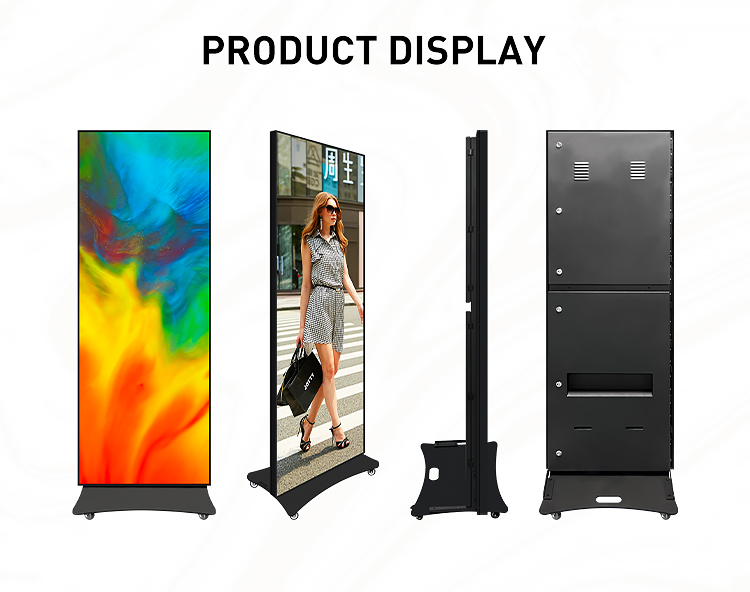
The role of a modern OEM has evolved. While contract manufacturing focuses on assembly to a given blueprint, a true poster LED display OEM partner engages as a performance architect. This involves collaborative input during the design phase, advising on how material choices, circuit layouts, and manufacturing processes will impact the final outcome. They translate performance requirements—be it seamless visuals for a luxury retail backdrop or ultra-high brightness for a sun-drenched outdoor installation—into tangible engineering solutions.
The Ripple Effect of Technical Decisions
Every technical decision made by your OEM partner creates a ripple effect. The choice of a specific LED chip bin affects not only initial brightness but also color consistency across the entire screen and the rate at which that brightness declines over years of operation. The design of the driver circuitry influences not just refresh rate, but also power efficiency, heat generation, and how the screen appears on camera. Understanding this causal chain is key to evaluating a partner’s true capability.
The Core Technical Pillars Dictated by Your OEM Partner
The final quality of a poster LED display rests on four interconnected technical pillars, each almost entirely controlled by the OEM’s expertise and processes.
LED Chip & Module Foundation: The Source of Light and Consistency
At the heart of every display are the LED chips. An OEM’s approach here is the first determinant of performance.
- Chip Sourcing and Binning: Reputable partners use chips from established suppliers and implement strict “binning” processes. Binning groups LEDs by precise luminous intensity and wavelength (color), ensuring that every single diode on a module, and every module across a large screen, behaves identically. Skipping or using lax binning standards leads to visible color patches and brightness mismatches, ruining image uniformity. A partner’s commitment to this foundational step, like the stringent control from materials to finished products mentioned in the USER profile, is non-negotiable for high-end results.
- Module Manufacturing Precision: The process of mounting thousands of these chips onto a module (the building block of the screen) requires high-precision Surface-Mount Technology (SMT) equipment. Automated, calibrated SMT lines, as operated by established manufacturers, ensure perfect alignment and soldering. This precision directly enables the ultra-fine pixel pitches (like P1.25mm or P1.53mm) needed for close-viewing poster displays and is critical for achieving the advertised 178-degree super-wide viewing angle by maintaining optimal LED positioning.
Drive IC & Circuit Design: The Brain Behind the Brilliance
The driver integrated circuits (ICs) are the nervous system of the display. Their quality and the surrounding circuit design govern critical performance aspects.
- Determining Visual Fluency: The drive IC scheme sets the refresh rate and grayscale processing capability. A high refresh rate (3840Hz or above, as noted in some USER specifications) eliminates flicker and image blur, especially for fast-motion content, and is essential for clean camera capture under any shutter speed. High grayscale processing (such as 16-bit) enables smoother color transitions and superior performance in displaying dark scenes, preventing color banding and preserving detail.
- Power Efficiency and Stability: Advanced driver designs, such as Common Cathode configurations, can significantly reduce overall power consumption and heat generation. The circuit board layout itself must be engineered for stable signal transmission across the entire module, preventing ghosting or interference, especially in high-resolution, fine-pitch displays.
Thermal Management & Structural Design: The Guardian of Longevity
Heat is the primary enemy of electronic components. An OEM’s approach to thermal management is a direct predictor of the display’s lifespan and long-term brightness stability.
- Material Science in Practice: The use of an all-aluminum cabinet and module structure, as highlighted in the provided materials, is a key technical choice. Aluminum offers an excellent balance of strength, light weight, and, most importantly, high thermal conductivity. It acts as a massive heat sink, passively drawing heat away from the LEDs and driver ICs, slowing down the natural process of luminous decay (brightness loss over time).
- Design for Reliability: Effective thermal design prevents the accelerated aging of components. A display that runs cooler will maintain its specified brightness (e.g., 3000-7000 nits for outdoor use) for a much longer period and will experience far lower rates of component failure. This engineering foresight directly translates to the promised durability and the “stable” performance that earns customer trust.
Calibration & Quality Control: From Module to Seamless Canvas
Even with perfect components, individual modules will have minor variations. The OEM’s post-production processes are what unify them into a single, flawless canvas.
- The Magic of Point-by-Point Correction: This is where technical prowess becomes visible art. Advanced OEMs perform brightness and colorimetric (chromaticity) calibration on every single LED or on a per-module basis. Using specialized cameras and software, they measure and adjust each pixel to a uniform standard. This process is what eliminates the “checkerboard” effect and ensures the screen is a seamless, consistent visual field, whether it’s 5 or 500 square meters.
- Aging Tests as the Final Proof: Rigorous quality control culminates in prolonged aging tests. Running displays at full power for extended periods (e.g., 72 hours) in controlled environments stresses the components and reveals early-life failures before the product ships. Partners with dedicated aging labs, like USER, weed out infant mortality failures, ensuring the reliability you receive is field-proven from day one.
Translating Technical Capabilities into Tangible User Benefits
These technical pillars are not academic; they manifest as direct benefits for the end-user and your brand.
- Superior Visual Experience: The result of expert chip binning, drive IC tuning, and meticulous calibration is a display with exceptional color uniformity, high dynamic range, and buttery-smooth motion. It creates the “wow” factor that captures attention and communicates premium quality.
- Enhanced Reliability and Lower Total Cost of Ownership (TCO): Robust thermal design and exhaustive aging testing minimize unscheduled downtime and repair costs. A display that operates reliably for tens of thousands of hours reduces maintenance expenses, protects your operational schedule, and delivers a significantly lower TCO than a cheaper, less-engineered alternative.
- Flexibility for Customized Applications: Deep technical expertise enables true customization. Whether it’s engineering a soft-link rental screen with a 0-20° convex/concave arc adjustment for creative stages, or developing an ultra-thin, high-transparency (85%+ permeability) display for architectural integration, these are not just assembly jobs. They require a partner with the R&D depth to solve novel engineering challenges in structural integrity, signal routing, and optical design.
Evaluating the Technical Depth of a Potential OEM Partner: Key Questions to Ask
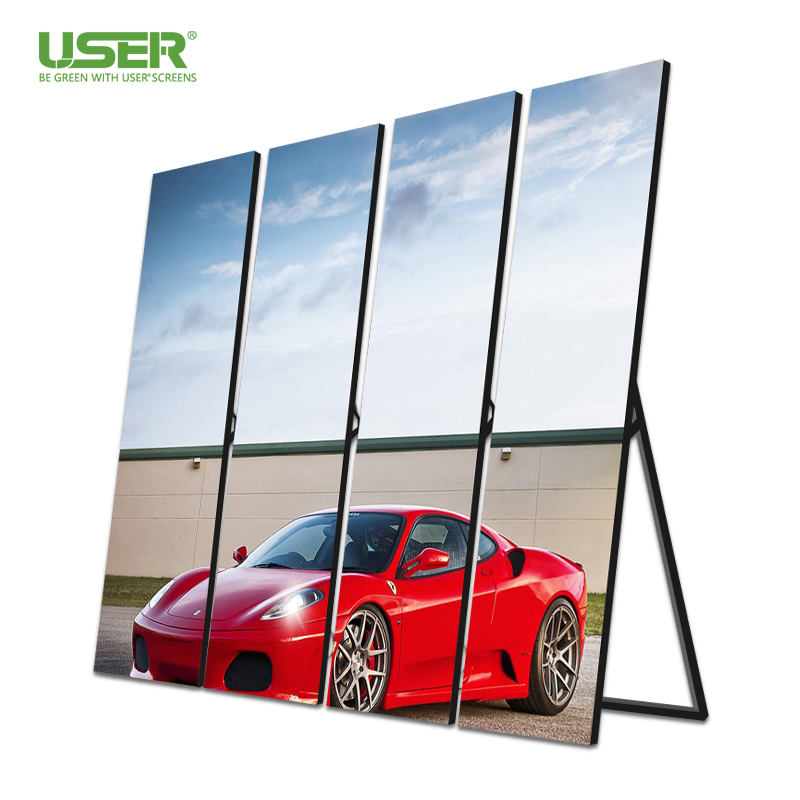
Move beyond generic questions. Use this technical checklist to probe the genuine expertise of a potential poster led display oem partner.
Table: Technical Due Diligence Questionnaire for OEM Partners
| Technical Pillar | Key Questions to Ask |
| LED Chip & Module | “Which LED chip brands do you use for different product tiers? What is your binning tolerance for wavelength and brightness to ensure module-to-module consistency?” |
| Drive IC & Circuitry | “What drive IC solutions do you use for your fine-pitch displays (P1.2-P2.5)? What refresh rate and grayscale depth can you guarantee? Do you offer energy-saving Common Cathode designs?” |
| Thermal & Structural Design | “For a 5000+ nit outdoor cabinet, what is your specific thermal management strategy? Can you provide thermal imaging or simulation data? Why did you choose your cabinet material (e.g., aluminum alloy)?” |
| Calibration & QC | “Describe your post-production calibration process. Do you perform point-by-point correction? What is your factory uniformity standard (e.g., brightness deviation < ±2.5%, color deviation < 0.003 Cx,Cy)?” |
| R&D & Support | “Do you have an in-house R&D team for custom projects? Can you provide schematic-level support for system integration challenges?” |
USER: Where Technical Expertise Meets Manufacturing Excellence
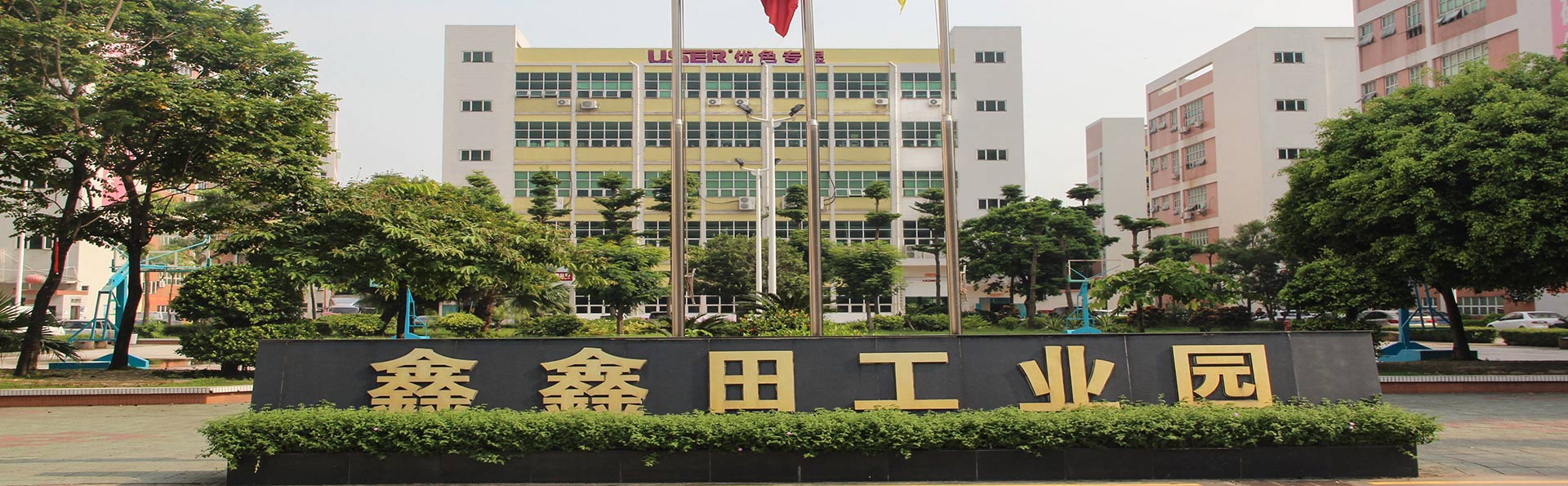
At USER, the principles outlined above are not just theory; they are the foundation of a 15-year practice in LED display manufacturing. Our role as a poster LED display oem partner is built on engineering integrity.
- Full In-House Control Over the Critical Path: Our integrated manufacturing process—covering product design, SMT, module assembly, sheet metal processing, and aging testing—is our core advantage. This vertical integration allows us to enforce stringent standards at every stage, ensuring that the performance engineered into the design is faithfully executed in production. There are no black boxes or quality compromises at subcontractors.
- Engineering for Specific Outcomes: Our product specifications are a reflection of applied technical decisions. The high refresh rate (≥3840Hz) and 16-bit grayscale in our displays are achieved through carefully selected drive IC architectures. The 178° super-wide viewing angle is made possible by precise chip placement and optical design. The light weight (≤3.5kg/m² for some series) and strength of our all-aluminum cabinets are the result of deliberate material science and structural engineering aimed at durability and ease of installation.
- A Partnership for Performance: We understand that your display is a reflection of your brand. Our goal is to translate your vision into a product that performs flawlessly, fostering the “high reputation among customers for its energy-saving, environmentally friendly, flexible, stable, time-saving, and labor-saving products” that we have built our name upon.
Conclusion: Your Partner is Your Product’s Performance
Selecting a poster LED display oem partner is ultimately a decision about the inherent performance and longevity of your product. By looking beyond surface-level quotes and evaluating the deep technical capabilities in LED sourcing, drive design, thermal engineering, and calibration processes, you choose a partner who co-authors your success.
The right partner ensures that every technical decision adds up to a display that excels visually, endures physically, and validates your investment for years to come. If your priority is a display defined by its underlying engineering quality, partnering with a technically-versed OEM like USER is the most critical first step.