
Introduction
Building flexible LED display systems has become a defining trend in modern commercial visual design. As architecture evolves toward curved, immersive, and unconventional structures, traditional flat LED panels can no longer meet creative demands. Flexible LED displays provide the adaptability required to wrap around columns, bend along wave-shaped walls, and integrate seamlessly into dynamic commercial spaces.
However, building a flexible LED display is a sophisticated engineering process. It requires careful planning, structural calculations, power configuration, signal optimization, and calibration. A poorly designed system may result in uneven surfaces, signal instability, or long-term reliability issues.
For commercial buyers, retail brands, architects, and system integrators, understanding the full construction process is essential. USER, a professional commercial LED display solution provider, offers advanced flexible LED modules and custom engineering support to help businesses implement stable, high-performance curved LED projects.
This comprehensive guide explains how to build a flexible LED display step by step, covering technical principles, engineering considerations, and practical installation strategies.
Core Structure and Working Principle
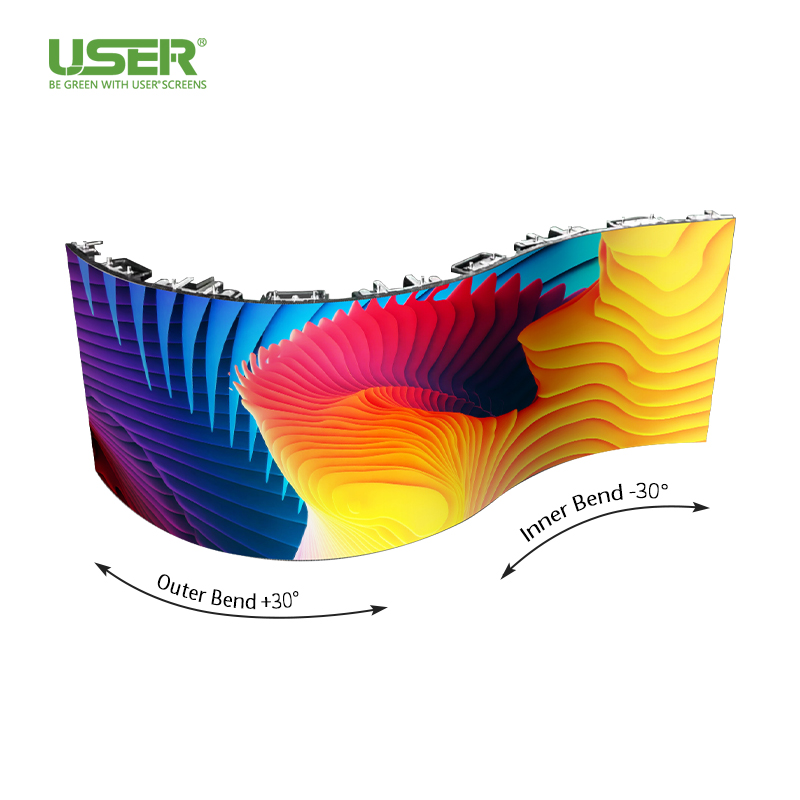
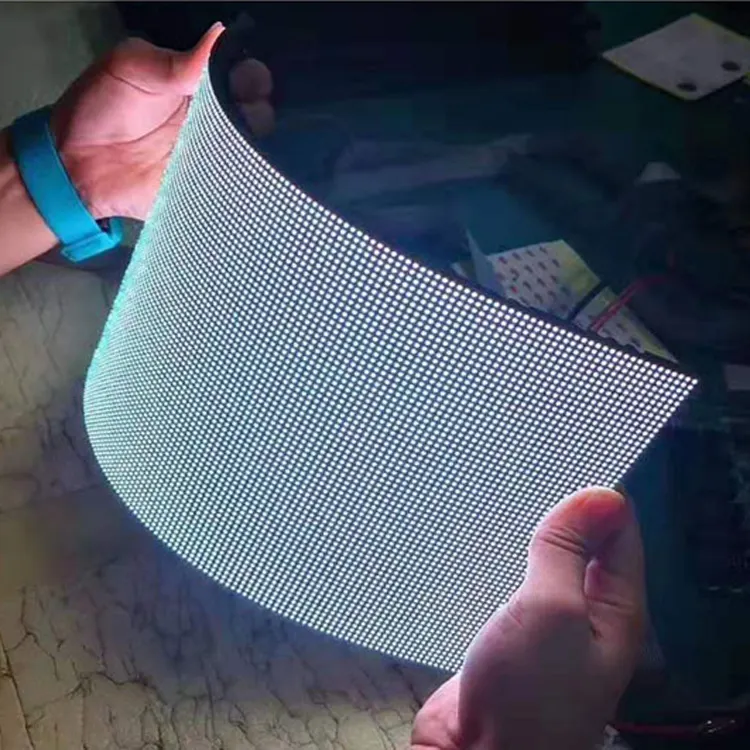
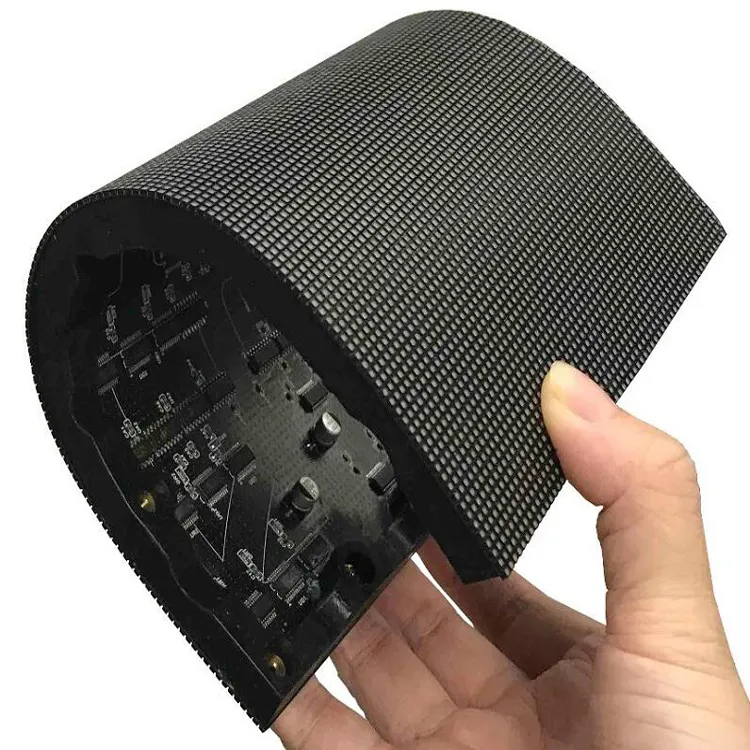
A flexible LED display is constructed using soft PCB (printed circuit board) materials that allow bending without damaging internal circuits. Unlike rigid cabinet LED panels, flexible modules can conform to curved and irregular surfaces while maintaining pixel alignment and signal integrity.
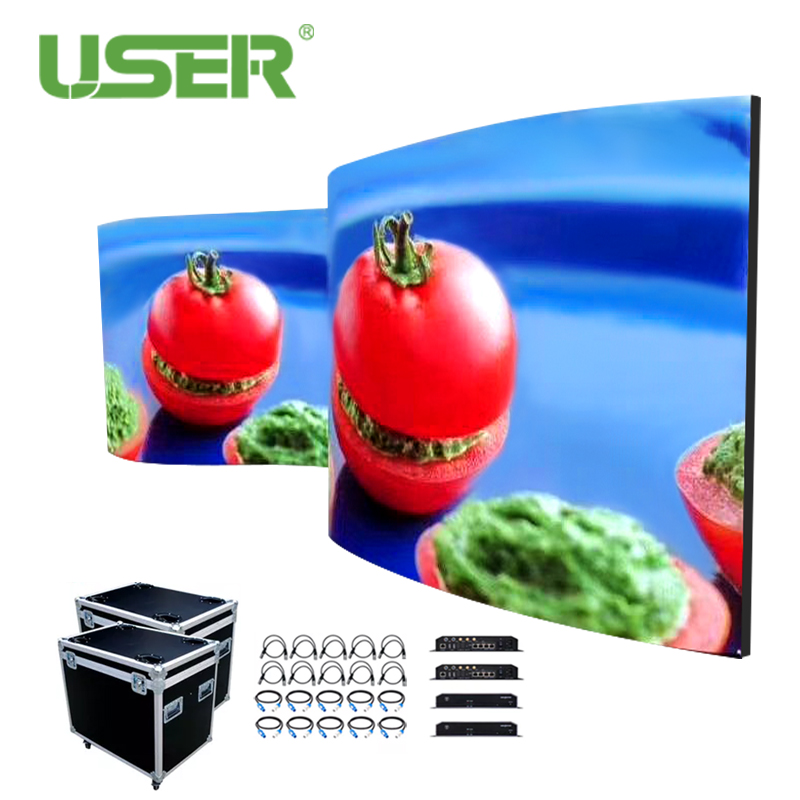
The system consists of:
- Flexible LED modules with SMD LEDs
- Receiving cards for signal decoding
- Sending card and control processor
- Stable power supply units
- Mounting structure and connection cables
Each module connects seamlessly to adjacent modules, forming a continuous visual surface. High-quality driver ICs regulate brightness and grayscale performance, ensuring smooth video playback and color consistency across curved surfaces.
USER flexible LED modules are engineered with stable circuit layouts and reinforced PCB designs to maintain durability even under repeated curvature stress.
Differences Between Flexible and Traditional LED Displays
Flexible LED displays differ significantly from standard rigid LED panels in structure, application, and installation flexibility.
Because flexible displays eliminate cabinet constraints, they allow creative architectural integration while maintaining high brightness and seamless visual performance.
Key Technical Characteristics
When building a flexible LED display, the following technical specifications must be carefully evaluated:
- Bend radius: Determines maximum curvature tolerance
- Pixel pitch: Influences resolution and viewing distance
- Refresh rate: Affects motion smoothness and camera compatibility
- Viewing angle: Ensures visibility from multiple directions
- Protection rating: Required for indoor or outdoor use
Selecting appropriate specifications ensures the display aligns with commercial objectives and audience expectations.
Why Businesses Are Building Flexible LED Displays
Architectural Curved Installations
Modern architecture increasingly incorporates cylindrical pillars, curved walls, and flowing surfaces. Flexible LED technology transforms these structures into digital canvases without altering their geometry.
Applications include:
- Cylindrical column wraps
- Wave-shaped feature walls
- Curved building façades
- Dome interior installations
Building a flexible LED display allows designers to preserve architectural integrity while adding dynamic digital content.
Retail and Commercial Interiors
Retail environments demand immersive storytelling. Flexible LED displays enable brands to create seamless curved screens that guide customer attention and enhance engagement.
They are commonly installed in:
- Store entrances
- Product display zones
- Curved LED ceilings
- Interactive brand walls
The adaptability of flexible modules allows precise alignment with interior design concepts, creating visually impactful environments that strengthen brand identity.
Event and Exhibition Applications
Trade shows and exhibitions require eye-catching visual elements. Flexible LED displays support circular stages, curved exhibition booths, and immersive presentation spaces.
Their lightweight structure simplifies temporary installation while maintaining professional visual performance. Businesses benefit from enhanced visibility and visitor interaction.
Corporate and Public Spaces
In corporate lobbies, museums, airports, and conference centers, flexible LED displays provide modern visual communication solutions. Curved LED installations deliver a premium aesthetic while presenting real-time information, promotional content, or artistic visuals.
Building a flexible LED display in public environments requires both structural safety and long-term operational stability, making professional engineering essential.
Step-by-Step Process of Building a Flexible LED Display
Step 1 – Define Application Requirements
Every successful project begins with clear planning. Define:
- Indoor or outdoor installation
- Viewing distance
- Content type
- Brightness level
- Available installation space
Accurate requirement analysis ensures optimal pixel pitch selection and structural design.
Step 2 – Select the Right Flexible LED Module
Pixel pitch determines image clarity.
| Pixel Pitch | Viewing Distance | Typical Application |
| P1.5–P2 | Close viewing | Retail & exhibitions |
| P2.5–P3 | Medium | Corporate lobbies |
| P4+ | Long distance | Large commercial halls |
Flexible modules often feature magnetic front-service designs for easier maintenance. USER provides high-precision flexible LED modules engineered for stable signal transmission and seamless curvature.
Step 3 – Design the Supporting Structure
Although modules are bendable, the supporting framework must provide structural stability. Proper structural design prevents deformation and ensures surface uniformity.
Key considerations include:
- Total system weight calculation
- Anchor point positioning
- Curvature accuracy
- Load-bearing distribution
Custom aluminum or steel structures are often designed to match architectural curvature. USER offers tailored structural solutions that balance flexibility and rigidity for long-term stability.
Step 4 – Configure Power and Control Systems
Reliable power and signal systems are essential when building a flexible LED display. Components include:
- Sending card
- Receiving card
- LED controller
- Certified power supplies
- Backup power systems if required
Stable signal routing prevents flickering and ensures consistent brightness across curved surfaces.
Step 5 – Installation and Calibration
Installation requires precise alignment to avoid surface gaps. The process includes:
- Mounting structural framework
- Attaching flexible modules
- Connecting signal and power cables
- Performing signal testing
Color calibration and brightness adjustment follow installation to achieve uniform display performance.
Step 6 – Content Integration and Final Testing
Once hardware installation is complete, system configuration begins. This includes screen mapping, brightness optimization, and long-duration testing to verify stable operation.
Comprehensive testing ensures reliable performance in commercial environments.
Engineering Considerations When Building Flexible LED Displays
Heat Dissipation and Ventilation
Heat management significantly impacts longevity. Flexible modules are compact, which can restrict airflow if not properly designed.
Effective strategies include:
- Rear ventilation spacing
- High-efficiency driver IC selection
- Controlled brightness settings
- Avoiding sealed surface mounting
Proper thermal planning prevents overheating and color degradation, ensuring long-term reliability.
Structural Safety and Load Bearing
Curved installations require precise load calculations. While individual modules are lightweight, the combined system weight can be substantial.
Structural analysis must account for:
- Module weight
- Power supplies
- Cable routing
- Maintenance access
Professional engineering ensures stable and secure installations.
Waterproof and Dustproof Protection
For outdoor projects, environmental protection is critical. Protective measures include:
- Waterproof connectors
- Silicone-coated PCBs
- Sealed power enclosures
- Corrosion-resistant materials
These features protect circuits from humidity and dust intrusion.
Maintenance Accessibility
Maintenance access must be planned during the design phase. Magnetic front-service modules simplify replacement and reduce downtime.
Accessible servicing is especially important in retail and high-traffic commercial spaces.
Long-Term Stability and Reliability
Durability depends on component quality and installation precision. Reliable LED chips, stable driver ICs, and voltage regulation systems ensure consistent operation.
USER integrates strict quality testing procedures, including aging tests and brightness calibration, to guarantee stable performance in commercial projects.
Common Challenges in Building Flexible LED Displays
Signal Interference
Improper cable routing may cause flickering or unstable signals. Shielded cables and proper grounding reduce interference risk.
Uneven Surface Installation
Irregular mounting surfaces may cause visual distortion. Precision measurement and customized brackets ensure smooth curvature.
Pixel Failure
Low-quality components increase failure risk. Choosing certified modules and implementing voltage regulation extends display lifespan.
Power Instability
Power fluctuations may damage modules. Balanced power distribution and surge protection enhance system reliability.
Flexible LED Display vs Other Creative Display Solutions
| Feature | Flexible LED | Standard LED | LED Mesh | LCD Video Wall |
| Flexibility | Excellent | None | Limited | None |
| Seamless Surface | Yes | Yes | No | Bezel gaps |
| Brightness | High | High | Medium | Medium |
| Custom Shapes | Yes | No | Limited | No |
| Outdoor Adaptability | Yes | Yes | Yes | Limited |
Flexible LED displays offer superior creative freedom and structural adaptability compared to other technologies.
Why Choose USER for Building Flexible LED Displays
Advanced Flexible Module Technology: USER develops high-performance flexible LED modules optimized for curvature tolerance and visual precision.
Custom Curved Engineering Solutions: Each project receives customized structural design tailored to architectural requirements.
Strict Quality Control: All modules undergo aging tests, signal stability verification, and brightness calibration before delivery.
Global Project Experience: USER has delivered commercial LED display solutions across retail, corporate, and public environments worldwide.
Technical Support and After-Sales Service: From consultation to installation guidance, USER provides full project lifecycle support. Visit https://www.userledscreen.com/ to learn more about flexible LED display solutions.
Frequently Asked Questions About Building Flexible LED Displays
How much can a flexible LED display bend?
Bend radius varies by module design, allowing cylindrical and wave-shaped installations without pixel distortion.
What is the best pixel pitch for indoor curved walls?
For close viewing applications, P1.5 to P2.5 typically delivers optimal clarity.
Are flexible LED displays durable?
Yes. With proper thermal management and quality components, they provide long-term commercial reliability.
Can flexible LED displays be used outdoors?
Yes, when designed with appropriate waterproof and structural protection measures.
How long does installation take?
Installation time depends on project complexity, structural design, and display size.
Conclusion
Building a flexible LED display requires careful engineering, precise installation, and high-quality components. From defining application requirements to configuring power systems and ensuring structural safety, each stage directly influences long-term performance.
Flexible LED technology enables businesses to create immersive, curved digital environments that attract attention and elevate brand presence.
By partnering with USER, companies gain access to advanced flexible LED modules, custom structural engineering, and comprehensive technical support. Whether for retail, architecture, exhibitions, or corporate applications, USER delivers reliable and innovative flexible LED display solutions built for modern commercial spaces.