
Introduction: The Battle for Attention in the Physical World
In the high-stakes environment of modern brick-and-mortar retail and corporate communication, attention is the most valuable currency. For decades, the standard for capturing this attention was the static lightbox—a reliable, illuminated frame displaying a printed graphic. However, a seismic shift is occurring in how businesses communicate with their audience. The static image is rapidly being supplanted by dynamic video, leading to the rise of digital led lighted posters.
For business owners, facility managers, and marketing directors, the choice between sticking with traditional backlit frames or upgrading to digital LED solutions is rarely a question of aesthetics alone; it is fundamentally a question of Return on Investment (ROI). While the initial price tag of digital technology is higher, the long-term economics tell a different story.
This analysis dives deep into the financial and strategic implications of choosing between static and digital led lighted posters. We will dissect the Total Cost of Ownership (TCO), examine consumer engagement metrics, and explore how the latest innovations from industry leaders like USER Special Display Technologies are rewriting the rules of visual merchandising.
Defining the Contenders: Static vs. Digital
Before we calculate ROI, we must establish exactly what we are comparing within the broad category of led lighted posters.
The Traditional Static Light Box
These are the industry workhorses seen in movie theaters and bus stops. They utilize edge-lit or backlit LED strips to illuminate a printed poster (usually on specialized backlit film).
- Mechanism: Static physical print + LED backlight.
- Content Change: Requires printing, shipping, and manual labor to physically swap the poster.
- Primary Benefit: Low initial hardware cost and high resolution (dependent on print quality).
The Modern Digital LED Poster
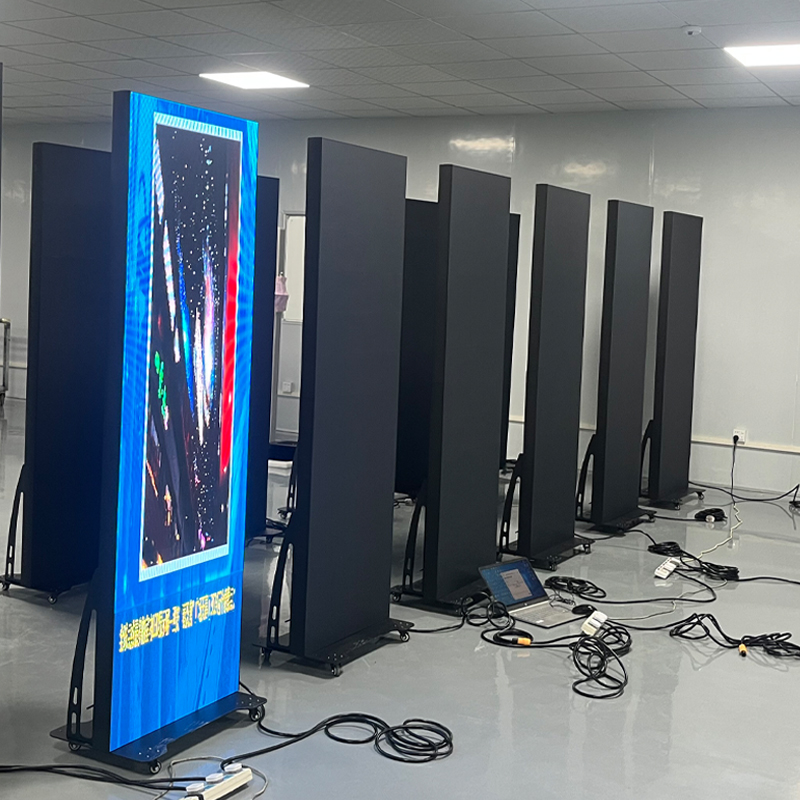
Often referred to as “digital standees” or “mirror posters,” these are standalone display units built from high-resolution LED modules (such as P1.86 or P2.5 pixel pitch). They function like giant smartphones, capable of playing video, scrolling text, and dynamic animations.
- Mechanism: Direct-view Surface Mounted Device (SMD) LEDs emitting colored light directly.
- Content Change: Instantaneous via software, USB, or cloud control.
- Primary Benefit: High engagement, motion capability, and zero recurring printing costs.
The Financial Architecture: CAPEX vs. OPEX
The most common mistake businesses make when evaluating led lighted posters is looking solely at the Capital Expenditure (CAPEX)—the upfront purchase price. If you only compare the invoice for a static frame ($200 – $500) against a digital LED poster ($1,500 – $3,000+), the static option seems like the winner.
However, a true ROI analysis requires a 3-to-5-year view of Operational Expenditure (OPEX).
The Hidden Costs of “Cheap” Static Posters
Static signage carries a “logistical tax” that accumulates silently over time. Consider a retail chain with 50 locations that runs a new promotion every month.
- Printing Costs: High-quality backlit film is expensive. Printing 50 large-format posters monthly adds up quickly.
- Shipping & Logistics: Sending tubes of posters to 50 different addresses incurs significant courier fees.
- Labor & Compliance: Store staff must spend time opening frames and swapping posters. Worse, compliance is often low; audits frequently find stores displaying outdated campaigns because staff “didn’t get around to it.”
- Waste: Once the campaign is over, the plastic or paper material is discarded, creating an environmental and financial sunk cost.
The Economics of Digital LED Posters
Digital led lighted posters, such as the Indoor LED Poster Series from USER, flip this economic model.
- Zero Marginal Cost for Content: Changing a campaign from “Summer Sale” to “Back to School” costs $0 in materials. You simply upload a new file.
- Centralized Labor: One marketing manager at headquarters can update 500 screens globally in seconds. There is no reliance on local staff to physically install signage.
- Inventory Fluidity: Digital screens can react to inventory levels. If a specific product sells out, the ad can be pulled instantly to prevent customer frustration—a feat impossible with printed posters.
The ROI Breakeven Point:
For businesses that change signage frequently (monthly or bi-weekly), the breakeven point where digital becomes cheaper than static typically occurs between months 18 and 24. After this point, the digital solution is pure profit regarding operational savings, while the static solution continues to bleed money through printing and logistics.
Engagement Metrics: Why Video Wins
ROI is not just about saving money; it is about making money. This is where digital led lighted posters aggressively outperform their static counterparts. The human brain is evolutionarily wired to detect motion; it is a survival instinct that marketers leverage to capture “eyeballs.”
The “Banner Blindness” of Static Print
Consumers have developed a filter for static imagery. We walk past billboards and posters without consciously registering them. Static led lighted posters can look beautiful, but they fade into the background scenery after the first viewing.
The Stopping Power of Digital
Digital LED posters break through this sensory filter.
- Motion Capture: A subtle animation—like steam rising from a coffee cup or a model’s dress moving in the wind—increases view rates by upwards of 400% compared to static images.
- Dwell Time: Shoppers stand in front of dynamic displays significantly longer, increasing brand recall.
- Message Density: A static poster conveys one message. A digital poster can rotate through 10 different messages in a minute. You are effectively buying 10 billboards for the price of one floor space footprint.
For high-end retail environments, the P1.86 and P2.5 Indoor LED Posters offer high refresh rates (3840Hz) and brightness levels (800+ nits) that ensure content looks fluid and vibrant, even under harsh store lighting where printed posters might suffer from glare or fading.
Strategic Agility: The Speed of Business
In 2025, business moves at the speed of the internet. Static led lighted posters move at the speed of the postal service. This speed differential is a critical component of ROI.
Imagine a restaurant chain. On a particularly hot Tuesday, they want to promote high-margin cold beverages.
- Static Scenario: It is impossible to print and ship “Cold Drink” posters to arrive that same afternoon. The opportunity is missed.
- Digital Scenario: The marketing team pushes a “Flash Sale: Iced Lattes 50% Off” graphic to all digital standees instantly. They capture the immediate demand, directly driving revenue.
This agility allows for Dayparting—changing content based on the time of day. A digital LED poster can display breakfast menus in the morning, lunch specials at noon, and happy hour offers in the evening. To achieve this with static led lighted posters, you would need three separate easels or constant manual swapping, which is operationally unfeasible.
Technical Deep Dive: The USER LED Advantage
When investigating the market for digital led lighted posters, specifications matter. Not all digital signage is created equal. Commercial-grade solutions, like those manufactured by USER Special Display Technologies, offer distinct advantages over consumer-grade televisions often used as makeshift signage.
Pixel Pitch and Resolution
The “Pixel Pitch” (e.g., P1.86, P2, P2.5) refers to the distance between LED clusters. A lower number means higher resolution.
- P2.5mm: Ideal for viewing distances of 2.5 meters or more. This is the industry standard for retail entrance standees.
- P1.86mm: Perfect for closer viewing, providing a crisp, near-HD experience for luxury retail where customers are standing just a few feet away.
USER’s catalog highlights that their Indoor LED Poster Series utilizes SMD1515 and SMD2020 LEDs to achieve high contrast ratios (4000:1), ensuring that blacks are deep and colors pop, mimicking the cinematic quality of high-end backlit film but with the versatility of video.
Brightness and Visibility
Standard TVs usually output 250-350 nits of brightness. This is often insufficient for retail windows or bright atriums. USER’s digital posters deliver 600 to 1000 nits, ensuring the image cuts through ambient light. For window-facing applications, businesses can opt for specialized high-brightness models that remain visible even in direct sunlight, a capability that standard printed posters (which can wash out) struggle to match.
Seamless Splicing (The “Cascade” Effect)
One of the most powerful features of modern digital led lighted posters is scalability. A single unit is a poster. But pushing six units together creates a massive 16:9 video wall.
USER’s technology allows for “Multi-screen collection” or cascading. You can split one large video across multiple standing posters to create an immersive, architectural art piece. This flexibility allows a retailer to use separate posters at store entrances on normal days and combine them for a product launch event to create a cinema-scale backdrop. Static light boxes are permanently fixed in size; digital posters are modular.
Reliability and Maintenance: The Long Game
Skeptics of digital signage often cite maintenance as a concern. “What if the screen breaks?” However, the durability of modern LED technology often surpasses the fragility of paper and plastic.
Durability of Hardware
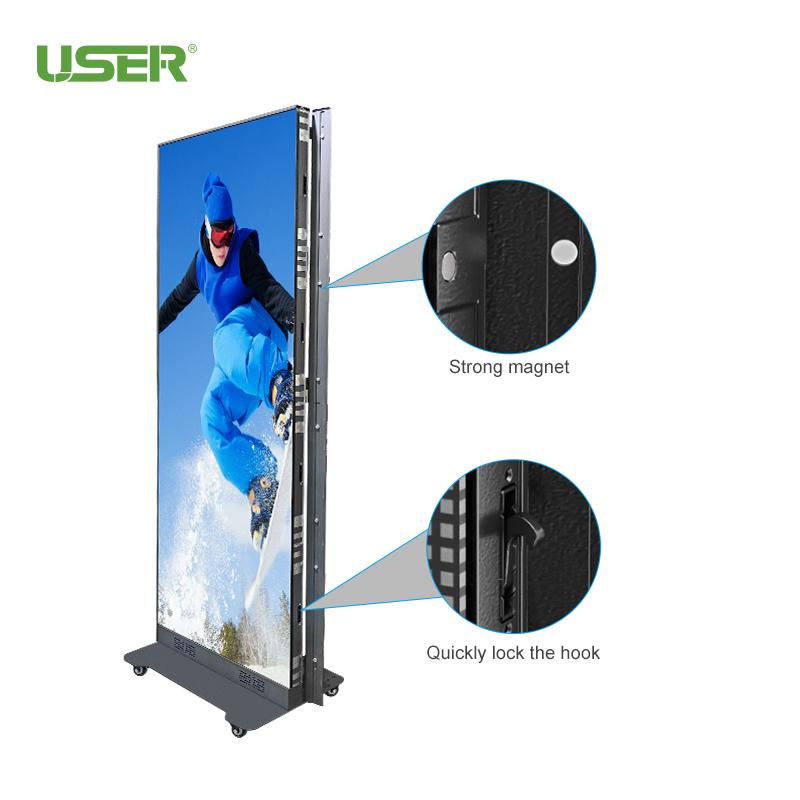
Static led lighted posters are simple, but the media they hold is fragile. Backlit film scratches easily, corners curl, and prolonged exposure to UV light can cause colors to fade, making the brand look cheap. Digital LED modules are rated for 100,000 hours of lifespan (over 11 years of 24/7 operation). Unlike LCD screens which can suffer from “burn-in” or bezel fragility, LED modules are robust. If a specific module fails, it can be replaced individually without discarding the entire unit—a feature known as front-maintenance, which USER prioritizes in their design (such as the KP and TP Series).
Software Security and Updates
Managing a fleet of digital posters requires robust software. USER provides solutions that support remote program publishing, timed startups, and accurate advertising placement. This eliminates the “black screen” downtime fears associated with older operating systems. With Android-based control systems, these posters are as reliable and secure as modern tablets.
Use Cases: Where Digital Delivers Maximum ROI
While digital is superior in many ways, understanding where to deploy digital led lighted posters is key to maximizing return.
High-End Retail & Fashion
In luxury retail, image is everything. A static poster of a model is passive. A digital poster showing the fabric moving, the light catching the jewelry, or the runway walk creates an emotional connection. The Transparent LED Series is also gaining traction here, allowing stores to place digital posters in windows without blocking the view of the merchandise inside.
Trade Shows and Events
Exhibitors spend thousands on printed graphics for every show, only to throw them away because the booth size or messaging changes. Digital rental screens or portable LED posters are a one-time asset that can be reprogrammed for every single event. The lightweight die-cast aluminum cabinets used by USER make transportation easy, reducing drayage and shipping costs over a multi-city tour.
Hospitality and Dining
Digital menu boards are the standard, but eye-level digital posters are revolutionizing the waiting area. Displaying high-definition video of sizzling steaks or pouring drinks to hungry customers waiting for a table has a proven up-sell effect that static text cannot replicate.
Decision Matrix: Static vs. Digital
To assist in your final decision, use this checklist to determine which led lighted poster solution aligns with your business goals.
Choose Static Light Boxes If:
- Budget is extremely tight: Your absolute CAPEX limit is under $500 per unit.
- Content is permanent: You are displaying a wayfinding map, a regulatory notice, or a brand logo that will not change for 12+ months.
- Power is unavailable: You need to place signage in an area where running power cables is impossible (though battery-powered digital options now exist).
- Vintage Aesthetic: Your brand identity relies specifically on a retro, analog, or “cinema lobby” look.
Choose Digital LED Posters If:
- Content changes frequently: You run weekly or monthly promotions.
- You have multiple locations: You need to enforce brand consistency across franchises.
- You sell visual products: You are selling fashion, food, travel, or tech where video enhances desire.
- Space is premium: You need to convey multiple messages in a single square foot of floor space.
- You want a modern image: You want to be perceived as a forward-thinking, tech-savvy brand.
Conclusion: The Verdict on ROI
The era of the static poster is not over, but its role has shifted to niche applications. For the vast majority of commercial businesses seeking to drive sales, increase foot traffic, and streamline operations, digital led lighted posters offer a superior Return on Investment.
The initial investment in digital technology is recovered through the elimination of printing costs, the efficiency of centralized management, and, most importantly, the increased revenue generated by dynamic, attention-grabbing content.
Transitioning to digital is not just an equipment upgrade; it is a marketing strategy upgrade. It transforms your physical space into a responsive, dynamic media channel.
For businesses ready to explore high-performance digital signage, USER Special Display Technologies offers a comprehensive range of solutions, from portable retail posters to transparent window displays, engineered to turn passersby into paying customers.
Explore the future of display technology at https://www.userledscreen.com/ and discover how digital LED posters can illuminate your brand’s potential.