
Introduction: Transforming Business Communication with LED Poster Technology
In today’s digital advertising landscape, B2B LED poster displays are transforming how businesses communicate. They help companies boost brand visibility, engage customers, and convey messages effectively. Unlike static signage, LED poster displays are dynamic, versatile, and cost-efficient. These systems allow enterprises to showcase products, services, and promotions across retail stores, corporate offices, transportation hubs, and public spaces.
B2B poster led displays are sophisticated digital signage solutions designed specifically for business-to-business applications. These displays combine cutting-edge LED technology with slim, portable construction, making them ideal for organizations that require flexible, high-impact visual communication without the complexity of large-scale video walls. Available in standard sizes ranging from 42 to 65 inches, with options for seamless multi-unit splicing, LED poster displays enable businesses to create compelling visual narratives tailored to their specific operational and marketing needs.
LED poster displays differ from other digital signage solutions in performance, portability, and cost efficiency. Traditional LCD displays typically last around 50,000 hours, or about five years. In contrast, quality LED poster systems provide over 100,000 hours of continuous operation. This longer lifespan improves total cost of ownership and benefits organizations investing in long-term digital infrastructure.
Market Growth and B2B Demand Drivers
The global LED display market is expanding rapidly. Market valuations are expected to reach USD 3,754.53 million by 2035. This growth is driven by an 8.8% CAGR between 2024 and 2029. The expansion reflects changes in how businesses manage customer engagement, internal communications, and brand presence across channels and regions.
Several interconnected factors drive B2B adoption of LED poster displays. The transition from static, printed advertising to dynamic digital solutions offers measurable advantages that directly impact business outcomes. The Small Business Administration (SBA) reports sales increases of 15–150% after installing electronic message centers. This shows that LED displays directly enhance commercial performance. Rapid urbanization, especially in Asia-Pacific markets, also drives demand. Government investments in smart city infrastructure further accelerate adoption. As a result, retail, transportation, and public service sectors increasingly rely on advanced visual communication systems.
For B2B decision-makers, LED poster display adoption is driven by lower equipment costs and improved energy efficiency. Cloud-based content management systems also play a key role. These platforms enable remote control across multiple locations. Together, these advances make professional-grade digital signage more accessible. Mid-sized and smaller organizations can now match larger competitors in visual presentation and customer engagement.
Technical Specifications and B2B Selection Criteria
Understanding the technical architecture of LED poster displays is essential for B2B procurement professionals making informed purchasing decisions. The primary technical parameters that differentiate LED poster offerings include pixel pitch, brightness (measured in nits), resolution, color depth, and refresh rate—each directly influencing performance characteristics and suitability for specific applications.
Pixel Pitch and Viewing Distance Optimization
Pixel pitch, measured in millimeters (mm), represents the distance between the centers of adjacent LED clusters on a display module. This specification fundamentally determines image resolution and the minimum comfortable viewing distance for content comprehension. The industry-standard formula for optimal pixel pitch selection is: Optimal Viewing Distance (meters) = Pixel Pitch (mm) × 1.5 to 3.
Common pixel pitch configurations for B2B LED poster applications include:
- P1.2–P1.5 (Ultra-fine pitch): Suited for close-range viewing in exhibition halls, control centers, and retail environments where viewing distances range from 2–5 meters. These configurations support 4K resolution and detailed visual content.
- P1.8–P2.5 (Fine pitch): The dominant segment for commercial LED posters, appropriate for conference rooms, corporate lobbies, and retail displays where viewing distances typically range from 3–8 meters. Offers optimal balance between resolution, cost, and performance.
- P3.0–P5.0 (Standard pitch): Suitable for larger viewing distances (8–25 meters) in applications such as outdoor billboards, stadium displays, and transportation hubs where granular pixel density becomes less critical.
Brightness and Environmental Adaptation
Brightness, measured in nits, determines visual legibility under varying ambient lighting conditions. Indoor LED poster displays typically require 500–1,500 nits to maintain visibility in controlled lighting environments, while outdoor installations demand significantly higher brightness levels, ranging from 5,000–10,000 nits to overcome direct sunlight conditions.
Advanced LED poster systems feature automatic brightness adjustment with built-in light sensors. These sensors adapt display output to changing ambient light conditions. This reduces power consumption while maintaining clear visual impact. The capability is especially valuable in B2B retail environments. Natural daylight and artificial lighting often vary throughout business hours.
Resolution and Color Fidelity
Modern B2B LED poster displays support Full HD (1,920 × 1,080) and increasingly 4K (3,840 × 2,160) resolutions. They deliver 16.7 million colors using 14-bit signal input and 16-bit correction processing. Frame refresh rates of 60–75 Hz ensure smooth video playback and stable animation performance. Advanced gamma correction ranging from −5.0 to +5.0 allows accurate color reproduction across different content formats.
Pricing Architecture and B2B Cost Models
B2B poster led display pricing exhibits significant variation based on technical specifications, manufacturing quality, and geographic sourcing. Market data indicates the following pricing ranges:
- Standard pitch (P4–P6) LED displays: $800–$1,500 per square meter
- Fine pitch (P1.5–P2.5) LED displays: $2,000–$5,000 per square meter
- Transparent LED displays: $1,500–$4,000 per square meter
- Flexible/creative configurations: $1,800–$5,500 per square meter
For B2B organizations evaluating LED poster investments, total cost of ownership (TCO) analysis extending across five-year operational cycles proves essential for accurate financial assessment. Energy consumption represents a substantial component of lifecycle costs, particularly for large-scale installations operating 14+ hours daily. When comparing standard common-anode architecture (consuming approximately 280 W/m²) with energy-optimized common-cathode designs incorporating dual-voltage driver ICs, organizations can achieve 40% power consumption reduction, translating to cumulative savings exceeding $52,500 on a 100 m² installation over five years when electricity costs reach $0.15/kWh.
B2B Applications and Industry-Specific Use Cases
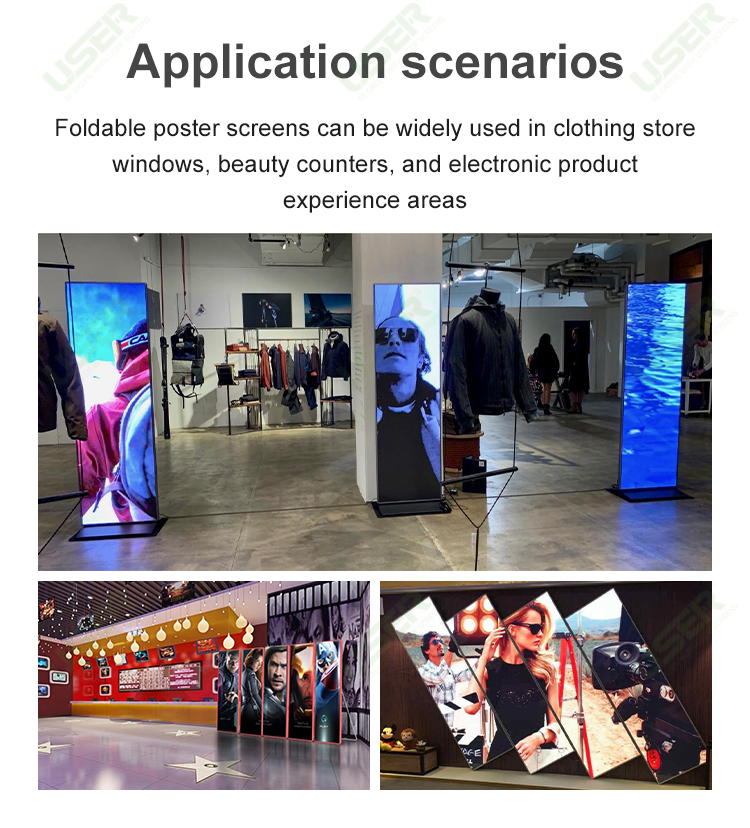
The versatility of LED poster display technology has created standardized deployment patterns across multiple business verticals, each with distinct content strategies, installation requirements, and ROI expectations.
Retail and Point-of-Sale Applications
Retail organizations utilize LED poster displays as strategic assets for promoting product highlights, showcasing seasonal campaigns, and creating immersive in-store experiences that influence purchasing decisions. Strategic placement near entrances and high-traffic zones demonstrates measurable uplift in customer engagement and product consideration. The ability to update content remotely and schedule promotional campaigns across multiple store locations simultaneously provides retail chains with unprecedented flexibility in campaign execution and real-time campaign optimization based on sales performance and inventory status.
Corporate Communication and Meeting Facilities
Corporate environments use LED poster displays for executive presentations, meeting rooms, and lobby installations. These displays strengthen brand identity and improve communication with employees, partners, and visitors. Modern LED poster systems integrate easily with presentation software and videoconferencing platforms. They also connect with corporate calendar systems to show real-time meeting schedules, announcements, and internal messages. This allows organizations to deliver consistent corporate communication without on-site operator support.
Event and Exhibition Venues
Event organizers and convention centers deploy LED poster displays as modular solutions that create dynamic welcome experiences, directional signage, and sponsor showcases. The portability of LED poster systems, combined with rapid setup capabilities (achievable within 10 minutes for standard installations), enables event professionals to create professional-grade installations in temporary venues without permanent infrastructure investments.
Transportation and Public Space Installations
Transportation authorities and municipal governments implement LED poster networks for passenger information, emergency communications, and dynamic wayfinding across airports, transit stations, and public venues. The integration of IoT connectivity and cloud-based scheduling enables synchronized content deployment across geographically dispersed installations, ensuring consistent messaging and real-time operational updates.
Financial Benefits and ROI Framework for B2B Investments
For B2B organizations evaluating LED poster display investments, quantifying financial returns requires consideration of multiple value streams extending beyond initial capital expenditure.
Revenue Generation and Customer Engagement Impact
Research indicates that business establishments implementing electronic message centers experience sales increases ranging from 15% to 150%, depending on industry vertical, customer demographics, and content strategy optimization. For retail environments, this translates to measurable uplift in foot traffic conversion rates, average transaction values, and customer engagement metrics. Corporate environments benefit from improved information retention among employees and enhanced brand perception among visitors and clients.
Operational Cost Efficiencies
LED poster display installations deliver operational cost reduction through multiple channels: elimination of printed material costs (paper, printing, distribution), reduction in manual content updates and administrative overhead, and dramatic improvements in energy efficiency compared to legacy LCD technology. For organizations managing multiple locations, the shift from location-specific printed promotional materials to centrally managed digital campaigns generates administrative labor savings while enabling faster campaign execution and modification.
Payback Period and Long-Term Value Realization
Total cost of ownership analysis for typical B2B LED poster installations indicates payback periods ranging from 9 months to 2.5 years, depending on initial installation size, daily operational hours, electricity costs, and revenue impact assumptions. Following payback achievement, the system operates as a pure value-generation asset, with annual operating costs primarily limited to maintenance and software subscription fees for content management platforms.
For organizations evaluating ROI under conservative assumptions—assuming only 15% sales increase from SBA data—a typical 4×6 meter LED poster installation operating 14 hours daily can generate positive financial returns within the first operational year, with subsequent years delivering ongoing margin expansion as fixed costs are amortized across sustained revenue increases.
Installation, Integration, and Operational Implementation
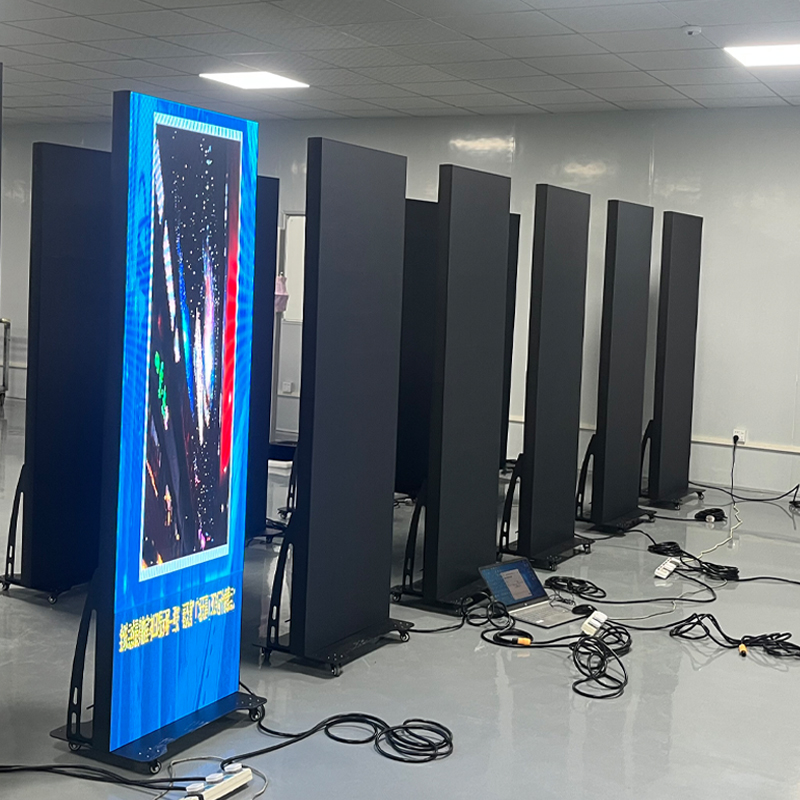
Successful B2B LED poster deployment requires attention to installation methodology, content management system selection, and ongoing operational optimization.
Physical Installation and Integration Considerations
Professional installation of LED poster displays requires assessment of structural load capacity (minimum 50 kg/m² for fixed installations), ambient lighting conditions (measured in lux to determine required brightness levels), and signal source compatibility (DVI, HDMI, SDI, or HD-SDI inputs). Modern LED poster systems support seamless multi-unit splicing, enabling organizations to create panoramic displays (16:9 aspect ratio for cinema-standard presentation) or tall-format installations (9:16 for vertical applications) through mechanical interlocking and synchronized content distribution.
Content Management System Architecture
Integration with professional content management systems (CMS) represents critical infrastructure for realizing the strategic value of LED poster investments. Cloud-based platforms such as Nova’s display management ecosystem enable remote content publishing, scheduled playback automation, real-time content updates across multi-location networks, and integrated performance analytics. Key CMS capabilities that B2B organizations should evaluate include:
- Remote operation: Mobile phone, tablet, and PC interface for content scheduling and immediate updates
- Cluster management: Unified control interface for managing 10–1,000+ displays from centralized dashboard
- Multi-zone display: Single physical screen divided into multiple content segments displaying different promotional messages simultaneously
- Scheduled playback: Automated content rotation based on time-of-day, day-of-week, or event-triggered logic
- Auto brightness adjustment: Light-sensor integrated systems that dynamically modify output based on ambient conditions
- Data integration: Connectivity with business intelligence platforms, social media feeds, and real-time data sources for dynamic content generation
Maintenance and Longevity Management
LED poster display lifespan extends to 100,000+ hours of continuous operation under proper maintenance protocols, representing approximately 11+ years of continuous 24/7 operation. Practical lifespan for typical B2B installations (14 hours daily operation) reaches 18–20 years, substantially exceeding LCD alternatives.
Organizations can extend LED poster operational life through systematic maintenance practices including:
- Environmental control: Maintaining ambient temperature within manufacturer specifications (typically 5–40°C for most commercial systems)
- Power stability: Implementing surge protection and uninterruptible power supply (UPS) systems to protect against voltage fluctuations
- Content rotation: Avoiding static image display that can lead to pixel burn-in; implementing dynamic content strategies distributes pixel utilization
- Proactive cleaning: Regular removal of dust and debris that can obstruct airflow and compromise thermal management
- Professional inspections: Quarterly or semi-annual technical assessment by qualified technicians to identify potential failures before they impact operations
Warranty and Support Infrastructure
Comprehensive warranty coverage represents essential risk management for B2B LED poster investments. The market offers multiple warranty models, each with distinct cost and coverage implications:
- Standard limited warranty (1–3 years): Covers manufacturing defects and workmanship issues but excludes regular wear and tear or preventative maintenance services
- On-site limited warranty: Includes repair or replacement of defective components at customer location without coverage for regular maintenance
- Comprehensive on-site warranty: Encompasses both parts replacement and installation labor, plus preventative maintenance services
- Annual maintenance contracts: Provided following standard warranty expiration to address regular wear and tear beyond defect coverage
For B2B organizations, partnership with manufacturers offering extended warranty options and responsive after-sales support infrastructure proves essential, particularly for organizations with geographically dispersed multi-location installations requiring rapid response to service requirements. Leading manufacturers such as Planar offer tiered service programs including preventative maintenance, priority support hotlines, and emergency on-site repair capabilities that minimize operational downtime and maintain display performance at peak levels.
Strategic Implementation Recommendations
B2B organizations approaching LED poster display procurement should prioritize the following assessment and implementation criteria:
Pre-purchase due diligence: Conduct detailed on-site assessment measuring ambient lighting (lux levels), intended viewing distances, and signal source compatibility. Document specific use cases and content requirements to guide pixel pitch and brightness specification selection.
Total cost of ownership modeling: Develop five-year financial projections incorporating equipment costs, installation charges, electricity consumption, maintenance expenditures, and conservative revenue impact assumptions. Compare energy-optimized display architectures against standard designs to quantify lifecycle cost differentials.
Vendor assessment: Evaluate manufacturer reputation, warranty commitment structure, technical support infrastructure, and customer reference validation. Prioritize partnerships with OEM manufacturers offering direct warranty coverage rather than third-party intermediaries, as OEM providers typically demonstrate greater service reliability.
Content strategy development: Collaborate with marketing and communications teams to establish content governance frameworks, scheduling protocols, and performance measurement methodologies. Select CMS platforms offering integration with existing business intelligence systems and marketing automation infrastructure.
Conclusion: The Strategic Value of B2B Poster Led Display
B2B LED poster display are a mature and mission-critical digital signage solution, enabling businesses in retail, corporate, hospitality, and public sectors to deliver dynamic communication, enhance audience engagement, and drive measurable results. With an expected 8.8% CAGR through 2029, falling hardware costs, and improved system integration, LED poster display adoption will continue to accelerate across global B2B markets.
The business value of B2B poster led display continues to grow, driven by higher energy efficiency, longer lifespan, and proven revenue impact. With proper total cost of ownership analysis, reliable vendors, and structured content management, businesses can achieve payback in under two years and long-term value across display lifecycles exceeding 15 years.
As organizations continue pursuing competitive differentiation through enhanced customer and employee experiences, LED poster displays have transitioned from discretionary technology investments to essential infrastructure components that directly influence brand perception, customer engagement, and financial performance. For B2B decision-makers evaluating visual communication strategies, LED poster technology warrants comprehensive evaluation within broader digital transformation and customer experience enhancement initiatives.
For organizations seeking guidance on LED poster selection, implementation, and ongoing management, professional suppliers like USER LED Screen provide comprehensive consultation services, customized specification development, and ongoing technical support to ensure successful deployment and sustained performance across the equipment lifecycle.